The green league table: How environmentally friendly is your university?
The green league table is making universities think again. Lucy Hodges on the saints and the sinners
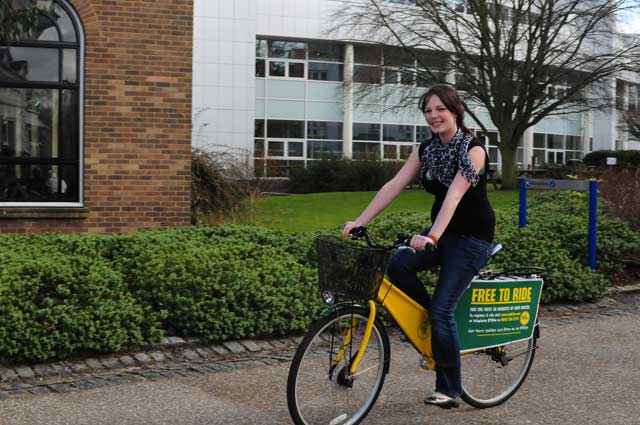
Students who care passionately about the environment should make for the South West. That's the message of this year's green university league table compiled by People & Planet, the student organisation that seeks to end world poverty and protect the environment.
For the second year running, the group has ranked all British universities, giving them a First, 2:1, 2:2, Third or Fail, based on nine criteria, from whether they have an environmental policy to how much recycling they do and their C02 emissions. The three greenest campuses are the University of Gloucestershire, which comes top, the University of Plymouth in Devon (second) and the University of the West of England in Bristol (third).
At the bottom are some of the nation's most prestigious institutions, including Imperial College London and the Royal Academy of Music, both of which were awarded Fails. Some other universities, which excel academically, such as University College London, also do poorly; UCL was given a Third.
"The green league is driving up standards by promoting best practice and shining a spotlight on poor environmental performance," says James Lloyd, head of campaigns at People & Planet. "It is a vital tool for students who want to know exactly how green a university is, giving them the information they need to make decisions based on environmental standards."
The table shows improvement on last year, particularly on the number of universities with environmental policies and staff, though performance on recycling and cutting carbon emissions is not so evident.
Some universities, such as Huddersfield and Exeter leapt up the rankings as a result of a new commitment from their vice-chancellors and other officers. "We have taken the issue of sustainability really seriously," says Professor Steve Smith, vice- chancellor of Exeter, which rose from 66th to 37th position. "We have reduced our carbon footprint by 17 per cent and we have appointed someone to deal with sustainable energy."
Huddersfield zoomed up the league table by 63 places to equal 8th position this year because it set out to do better. "We were given a Third last year," says Jeff Cocker, assistant director of estates and facilities.
"We appreciate the table came out of student interest in the environment, so we got on board with it. We set ourselves new targets particularly in recycling, we employed a full-time co-ordinator as well as a sustainable travel officer, and we produced an environmental policy."
Last year Huddersfield managed to recycle only 8 per cent of its waste; this year it increased that to 46 per cent, after setting itself a target of 25 per cent, and reduced its carbon emissions by 13 per cent.
But not all universities have been able to improve. The University of Abertay Dundee, which appears in a list of 10 institutions that "did not sit the exam" because they failed to submit figures to the Higher Education Funding Council on recycling, emissions or water consumption, says that it is not able to monitor all its work on sustainability.
"We are making substantial efforts but our estate is utilitarian and we have a £28m backlog in maintenance work," says Ian Simpson, head of estates. "So, we have a massive amount to do. We are dealing with a lot of challenges on limited resources. We have cut water consumption by 50 per cent over three years. So, this table is not a fair reflection of what we do."
Another university in this category, Lampeter, failed to return the questionnaire on time, which meant that its replies to questions on environmental policy and staff did not appear. "But we do have an environmental policy," says a university spokesman. "And we are about to appoint a full-time recycling officer and to put in place an ambitious recycling strategy this September."
The University of Westminster, which was also in the "did not sit the exam" group, said that some of its statistics were missing from the table and that this was caused by administrative error on its own part.
A number of London institutions were awarded a Fail grade, including Middlesex and City universities, both of which objected to their positions. Stephen McKinnell, City's energy manager, said he was extremely disappointed to be placed 105th and claimed this did not reflect the university's efforts.
"We have achieved a 14 per cent reduction in our carbon emissions and have recently introduced a green travel plan, encouraging sustainable forms of transport," he said.
Middlesex also complained that the table did not reflect its work on the environment, notably its green travel plan and its closure of three campuses, which reduces traffic on the North Circular.
Unsurprisingly, the universities that come out on top were jubilant. At Gloucestershire where the vice-chancellor Professor Patricia Broadfoot set out to make the university the greenest in the land, there was quiet satisfaction that the strategy had succeeded. "We are seeking to weave sustainability into the DNA of the institution through the curriculum, research, engaging with the public and through the way we run the organisation," she said.
Plymouth praised People & Planet for asking the right questions and forcing sustainability on to universities' radar screens. Alan Dyer, associate director of the centre for sustainable futures at Plymouth, praised the student campaign group for changing the methodology this year to include ethical investment. "Sustainability isn't just about being green, it's about social justice and accountability," he said.
The University of the West of England, which rose from 8th to third position, puts that down to a new strategy with tough performance indicators. "I think this league table shows that universities are beginning to address the sustainability debate," says Jim Longhurst, associate dean of environment and technology.
Eco matters: the students' view
Charon Orjela, 18, is a first-year student in chemical engineering at Loughborough.
"The issue of sustainability is increasingly important to students, and universities are responding by putting on new courses and taking it more seriously. Loughborough has given it high priority, which will encourage students who care to come here."
Harry Giles, 21, is a third-year student in sustainability and development at St Andrews.
"This university is very keen to pursue a green agenda. The degree I am taking has been pioneered by St Andrews and is helping to push environmental issues on campus. This year at People & Planet we have had a campaign called the Green Light project to move to 100 per cent sustainable energy. Plus we waged a successful campaign to persuade the university to adopt an ethical investment policy."
Did not sit exam...
These universities failed to submit answers, or to submit complete responses to the questionnaire, and so were not included in the table.
– Royal College of Music
– School of Pharmacy
– University of Bolton
– University of the West of Scotland
– Buckinghamshire New University
– University of Wales, Lampeter
– Goldsmiths College, University of London
– North East Wales Institute of Higher Education
– University of Westminster
– University of Abertay Dundee
Join our commenting forum
Join thought-provoking conversations, follow other Independent readers and see their replies
Comments
Bookmark popover
Removed from bookmarks