How should we teach British history?
The shadow Schools Secretary has attacked how history is taught, saying lessons should make pupils proud of our past. Is he right?
Tristram Hunt
Writer, broadcaster, and lecturer in history at London university, Hunt, 34, first attracted notice while working for the Labour Party in 1997. He presented the BBC's series on the English civil war.
How do we teach children pride in our island's story?
I used to be wary of the sort of stuff Michael Gove is saying in the sense that we don't want to introduce a way of teaching that is all about glorying in victory. But I now think there is something in it, because no one knows any history any more. If the island's story is told properly and cleverly, it's a progressive, interesting story.
Does that mean learning kings and queens and dates by rote?
You must learn dates, because you can only understand the rhythm of the past by understanding what we used to call the milestones, and you cannot understand our constitutional history without some appreciation of monarchy.
What are 10 of the important dates children should know?
1215 – Signing of Magna Carta.
1649 – Execution of King Charles I.
1688/9 – Forced abdication of James II, when Parliamentary authority and the rule of law were properly established.
1707 – Act of Union between England and Scotland. Even Alex Salmond, the First Minister of Scotland, would have to admit that it was important, even if you don't like it.
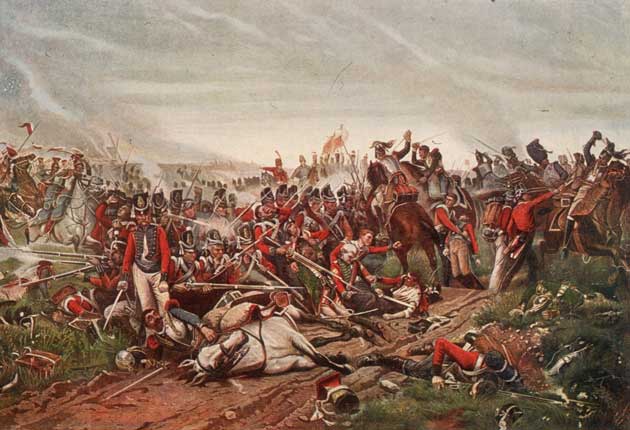
1815 – Battle of Waterloo. Beating Napoleon was a victory for anti-Catholicism, and it codified the British empire.
1832, 1867, and 1884 – The reform acts, a continuous series of events in the spread of parliamentary democracy.
1846 – Repeal of the Corn Laws. he start of Britain as a free trading nation
1857 – Indian Mutiny, which started the high age of British imperialism.
1945 – End of the Second World War and the beginning of welfarism.
1997 – Return of Hong Kong to Chinese rule. This was the symbolic end of the British Empire.
Amanda Foreman
Foreman is the daughter of a Hollywood screenwriter who took refuge in Britain during the McCarthy era. Her bestselling biography of Georgiana, Duchess of Devonshire inspired the film The Duchess, starring Keira Knightley and Ralph Fiennes.
How do we teach children pride in our island's story?
We teach children pride by being proud ourselves. That does not mean ignoring the bad. It means teaching within context, with imaginative sympathy, and with purpose.
Does that mean learning kings and queens and dates by rote?
Of course – timelines are the foundation blocks of history. There is a lot of rubbish about teaching children how to learn and giving them the "tools" to make their own enquiries rather than just plain old teaching children. They need facts, taught in an interesting and meaningful way.
What are 10 of the important dates children should know?
3100 BC – Stonehenge – One of the oldest signs of human activity on the island.
1066 – Arrival of the Normans.
1536 – Dissolution of the Monasteries.
1605 – Guy Fawkes's plot against Parliament, the start an era of conscience and fanaticism.
1704 – The Duke of Marlborough's victory at the Battle of Blenheim.
1837 – Accession of Queen Victoria, whose reign saw the rise of the Empire, the age of the railway etc, and the first Jewish Prime Minister Benjamin Disraeli.
1918 – End of the First World War, the retreat of aristocracy, and the rise of democracy, and communism.
1933 – Rise of the Nazis, which led to Second World War, the end of the Empire, and the atomic bomb.
1948 – Start of the Cold War, and immigration to Britain.
1979 – Election of the first woman Prime Minister, Margaret Thatcher, after which came the Falklands War the collapse of manufacturing, and the rise of the service sector.
Dan Snow
Snow, 29, is a historian and television presenter. He and his father, Peter Snow, made the documentary series Battlefield Britain
How do we teach children pride in our island's story?
Britain's past is bursting with examples of heroism, enlightened thinking and tenacity, as well as treachery and criminality. Politicians who see an advantage in convincing us that our society is "broken" unsurprisingly insist that we have been focusing too much on the latter. We should teach kids about the real contributions that Britons have made to the world, but a return to bland, congratulatory history teaching does no one any favours.
Does that mean learning about kings and queens and dates by rote?
There may be a case for a more linear approach to British history but learning lists does not engender a particularly deep understanding of the past.
What are the 10 most important dates children should know?
54 BC – Caesar arrives. The island is described in writing for the first time.
937 – Brunanburh. West Saxon King Athelstan crushes Scottish, Irish, British and Viking enemies to establish control over the area now known as England.
1215 – Magna Carta. Has inspired reformers ever since.
1314 – Bannockburn. Scotland and England remain as two nations.
1534 – Henry VIII declares himself head of the English church.
1689 – The Glorious Revolution.Britain gets a Protestant, constitutional form of monarchy.
1759 – Britain defeats France in the first battle for global supremacy.
1914 – Misjudgement, bluff, stupidity and pride lead Europe and the world into a terrible war.
1922 – Eire effectively gains independence.
1948 – Empire Windrush arrives.Mass, non-white immigration to the UK begins.
Andrew Roberts
Roberts, 45, is a Conservative historian and writer, and author of acclaimed books about Winston Churchill. He was invited for lunch at the White House after George Bush had read his most recent work,A History of the English-Speaking Peoples Since 1900. How do we teach children pride in our island's story?
The great thing is that you don't need to teach patriotism. All you need to do is teach a completely objective, accurate account and the outcome is naturally patriotic because it is such a great story. I don't think we should just concern ourselves with the Tudors and the Nazis, Harry and Hitler.
Does that mean learning kings and queens and dates by rote?
Dates are the building blocks, the means of understanding the narrative of history, without which nothing is put in context. Every child should know at least 50, preferably 60, dates off by heart. There is a point constitutionally when it doesn't really matter who is on the throne, but in medieval times, it was make or break for people – so, yes, it's important. And it's easy to learn. It goes "Willie, Willie, Harry, Steve..."
What are ten of the important dates children should know?
1066 – Norman Conquest obviously.
1215 – Magna Carta.
1415 – Battle of Agincourt.
1588 – Spanish Armada.
1642 – Start of the first English Civil War.
1815 – The Battle of Waterloo.
1884 – Third great reform act. This is when universal suffrage was introduced and every working man got the vote for the first time.
1914-18 – The First World War. Children should be familiar with these dates, and not just because they have seen them on war monuments.
1939-45 – The Second World War.
1973 – The UK entered the Common Market.
Alison Weir
Weir is the author of a series of popular histories, including biographies of Henry VIII, Elizabeth I, Queen Isabella and Eleanor of Aquitaine. Her first novel, Innocent Traitor (2006), was a fictionalised life of Lady Jane Grey.
How do we teach children pride in our island's story?
History is full of wonderful characters and stories, and it is through these that the subject can come alive. The stress should always be on the positive, of how the triumphs of the past far outweigh the failures. We should never be afraid to encourage patriotism because that is what unifies society.
Does that mean learning kings and queens and dates by rote?
Yes, children should be taught the broad, chronological sweep of our history, and they should learn about the great milestones as vivid set pieces that stir the imagination.
What are 10 of the important dates children should know?
43 – Roman invasion.
937 – Athelstan acknowledged King of England.
1066 – Norman Invasion.
1215 – Magna Carta, the foundation of English liberties, signed by King John.
1485 – Battle of Bosworth. Richard III was defeated and killed, Henry Tudor becomes King.
1536 – Reformation and Dissolution of the Monasteries.
1588 Armada repelled
1689 – Glorious Revolution. Constitutional government established.
1805 – Battle of Trafalgar.
1945 – End of Second World War.
Tracy Borman
Borman, 36, is learning director at English Heritage, and the author of a biography of Henrietta Howard, mistress of King George II.
How do we teach children pride in our island's story?
The story of Britain is one of many different cultures. From the very earliest times, we have been invaded or inhabited by Romans, Vikings, Normans. This has made us a truly multicultural society. Our island has influenced other countries and peoples, often in a positive way. We embraced greater freedom for women well before the rest of Europe. In the 17th century, parliament rebelled against monarchical authority. It took France more than a century to catch up.
Does that mean learning kings and queens and dates by rote?
There is a place for kings and queens, etc, but one of the best ways to get children excited about history is to give them the opportunity to visit castles, country houses, palaces, battlefields, etc. It shouldn't be about dates, but personalities, motivations, stories.
What are 10 of the important dates children should know?
AD43 – Roman invasion of Britain, which transformed our culture, architecture, art, traditions, politics, etc.
1066 – another transformation, this time introducing Norman law and transforming the noble classes.
1170 – Murder of Thomas Becket, which changed the relationship between the monarchy and the church.
1215 – Magna Carta, the first real declaration of rights of man in Britain.
1485 – Battle of Bosworth, the Tudor dynasty begins.
1533 – Birth of Elizabeth I and Henry VIII's divorce, accelerated the English Reformation, establishing the monarch as the head of the church.
1588 – The Armada, the biggest single threat to England since the Norman invasion.
1642 – Beginning of the English Civil War, which temporarily destroyed the monarchy and permanently diminished its powers.
1714 – Death of Queen Anne, and beginning of Hanoverian dynasty, and thus the modern-day royal family.
1939 – Start of Second World War.
Join our commenting forum
Join thought-provoking conversations, follow other Independent readers and see their replies
Comments
Bookmark popover
Removed from bookmarks