Your mission: bring the world to life with a pint of Guinness
Will an epic new campaign be successful for the brand with the greatest legacy in advertising?
This is the story of the making of the most anticipated advertising campaign of the year. It involved a trip to the other side of the earth and a brief to simulate the creation of the world. In a 90-second film.
And so it came to pass that the Manchester-born director Johnny Green, having taken on the greatest challenge of his career, found himself in a New Zealand field facing disaster. Green had been commissioned by Guinness, the client with the greatest creative advertising legacy of them all, to make the campaign intended to reposition the world-famous brand and change the habits of millions of drinkers.
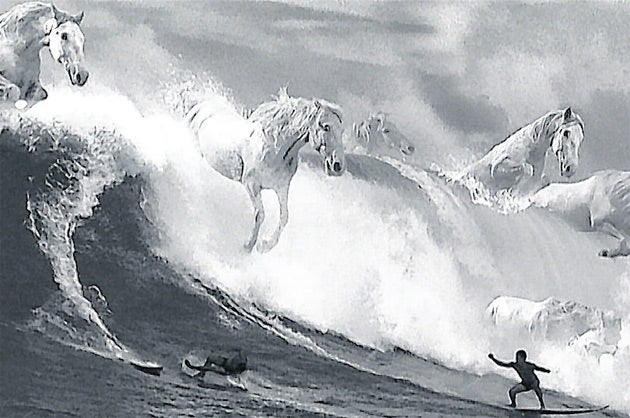
In the back of his mind was some of the greatest advertising of all time: the horses emerging from the waves in Jonathan Glazer's 1999 Surfer, Frank Budgen's epic Snail Race from 2000, Danny Kleinman's Cannes Grand Prix-winning story of the evolution of the Guinness drinker, Noitulove from 2006, and Nicolai Fuglsig's Tipping Point, showing dominoes, fridges and cars toppling through a South American village, two years ago. "I know it all inside out," says Green of this back catalogue. "But you can't get too involved because you get intimidated if you start thinking 'I've got to live up to all those guys'."
The other commercials all featured the famous endline "Good things come to those who wait". Green was tasked with ushering in a brand new era of Guinness drinking, built around a fresh line: "Bring it to life".
His big scene was to feature a vast, lush carpet of green turf, which would be dragged into place by his planet-building group of untrained actors. Except, in growing his turf he hadn't bargained for the New Zealand weather. "It rained so heavily the grass ended up disintegrating," he says. His response was to assemble a team of 45 local New Zealand women and set up a small factory where, over six days, they stitched together an artificial lawn. Last Wednesday, during coverage of the Champions League, millions of viewers saw this green tapestry being lugged over rocks and through the rain by a man whose day job is as a New Zealand fireman.
It is one of a series of memorable shots in a commercial of grand ambition, which tells the story of a rocket-firing alchemist who creates a storm cloud that releases the energy of the earth and its oceans, a process designed to recall a pint of the dark stuff as it settles in the glass. A coral reef was created inland by digging a huge trench, sealing it with cement and filling it with water. That took four months. In another scene, a row of felled fir trees are hauled upright by winches that took three weeks to build.
Green, a relatively inexperienced commercials director, got the job because he wanted to film these scenes for real and not simply rely on computer-generated imagery (CGI). "Building a world and trying to shoot it on a camera is quite a daunting undertaking," he says, though he was helped by the recruitment of Grant Major, the production designer from The Lord of the Rings, and Wally Pfister, the cinematographer on the Batman movie The Dark Knight.
Though Green, 45, can't reveal his budget, the ad clearly cost a fortune. "It was a decent budget [but] all sorts of nonsense gets spoken about budgets in the press – £8m, £10m, £12m," he says. In fact, alongside the scouting of locations and the production design, he cites "the budgetary restrictions" as one of his challenges, and says he was down to the last "few thousand pounds" when he and Pfister flew to Fiji to shoot the ad's missing segment: Green took scuba lessons before they filmed a young diver holding his breath while releasing a shoal of fish from a pot, then planting a forest of coral in the sea bed.
So has Green pulled it off? The reaction in the advertising community is mixed. "This is like being served a Guinness by an Aussie barmaid just off the plane; it's flat and lifeless," was one comment on the Brand Republic website. "I think this is epic. Guinness is a big powerful drink that really does come to life before your eyes," was a more positive response on Creative Review's site. "It's beautiful cinematography but the message is lost," said another.
Ultimately it will be the drinkers who decide. In a faster-moving world where the pub industry is in decline, Guinness found itself saddled with a message that demanded patience and deference to the barman.
"The way that people drink has changed," says Paul Brazier, the executive creative director of Abbott Mead Vickers BBDO, which has a long history of making ads for Guinness. "People are drinking more at home now and it's far more likely they will be drinking from a can. 'Good things come to those who wait' was built on the waiting, built on a negative. It felt out of kilter. The Guinness that I know has a lot of energy and comes alive before your eyes."
The story of how Guinness chose the "Bring it to life" endline stretches back two years and involves exhaustive research of the target audience. Paul Cornell, marketing manager for Guinness, says: "What has become clear is that a lot of our volume is coming from the guys who love the brand, love the product and drink us on many occasions." But the more occasional Guinness consumers had become convinced it was only a drink for special moments, while watching a rugby match, say, or on St Patrick's Day.
Anxious to widen the appeal of his product, Cornell analysed previous Guinness advertising work and decided three elements were crucial to success: epic production, a positive resolution and a shared experience. While Surfer and Tipping Point had those qualities, the famous Rutger Hauer "Pure genius" campaigns had "actually painted a picture of a quite soulless, serious brand".
After countless hours of thought, Brazier finally came up with the new endline on a taxi journey to the Guinness office for a crucial meeting. "I don't know if it's nervous energy but creativity comes out of that last-minute panic. I was in the cab going down there, and I just interrupted the conversation and said, 'I know – it's 'Bring it to life'!" He snatched a pencil to scrawl down the line and presented it to the client on a Post-it note. From there, the team went through around 60 storyboards to get to the finished version.
The campaign has a digital element that allows users to bring to life their own patch of Google Earth landscape, customising it with natural features. Cornell awaits the Six Nations rugby tournament, where advertising will focus not on pre-match anticipation but on "those moments when the game comes alive: the big tackle or the drop goal". He hopes this will persuade occasional Guinness drinkers to no longer "sleepwalk into lager" on Friday evenings after work. Time will tell.
Green meanwhile is on to his next job, shooting a commercial for another drinks client, Carlsberg. Whether or not his Guinness ad joins the brand's pantheon of award-winning work, he knows he gave it his all. "I'm incredibly obsessive and slightly psychotic," he admits. "I've got this drive which probably comes from childhood, and I don't sleep until I've worked out the best way of doing something."
Join our commenting forum
Join thought-provoking conversations, follow other Independent readers and see their replies
Comments