Gerry Jackson: The radio heroine defying Mugabe's heavies
As Zimbabwe clamps down on free speech, Gerry Jackson's British radio station is reaching out to its most helpless citizens, writes Kim Thomas
Barely a day goes by without more bad news from Zimbabwe, whether it's the rigged presidential election, the murder and torture of the regime's political opponents, or the rampant inflation that has reached 2.2 million per cent.
But for people living in Zimbabwe, news is hard to come by. Broadcasters are controlled by the state, most independent newspapers have been banned and foreign reporters are outlawed. Impartial information about what is going on in their own country is a rare and precious commodity.
For many Zimbabweans, one small radio station, broadcasting on shortwave from the UK, offers the only opportunity to find out what is happening. SW Radio Africa has been broadcasting daily to the country since 2001, and continues to do so despite funding problems and attempts by the Zimbabwean government to block the signal.
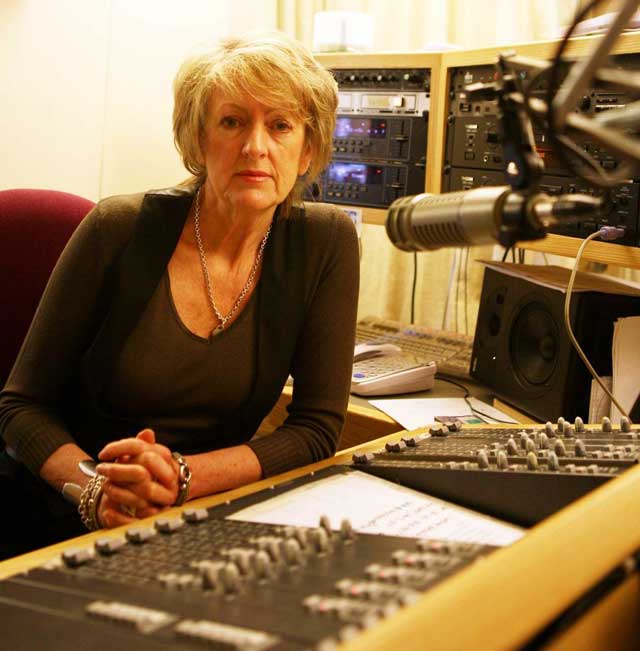
The station was founded by Gerry Jackson, a Zimbabwean journalist who used to present a music programme for the state-run Zimbabwe Broadcasting Corporation (ZBC) in Harare. During the food riots of 1997, Jackson took phone calls from concerned listeners. "People were phoning the studio all the time asking for information, because they were hearing that cars were being stoned. They were very worried and they didn't know where to travel. So I just started allowing people to say what areas to avoid, which I think in a normal country would be the accepted way of dealing with a riot situation."
Zimbabwe is not a normal country, however. After a warning to stop taking the calls, which she ignored, she was marched out of the studio by the station manager, and received her formal notice a few days later. Jackson hatched a plan to set up her own radio station, but she had to go to court to do so. In 2000, she won her case in the Supreme Court and, on the advice of her lawyers, acted very quickly to start broadcasting.
Within days, she had hired two members of staff, imported a transmitter from South Africa and started broadcasting a test signal. But before the station was even up and running, it was closed down. Jackson found out when she took a phone call from her neighbour asking whether she was aware that there were armed men in her garden. Paramilitaries had also surrounded the studio and – again on the advice of her lawyers – she went into hiding.
"I was outraged – this was absurd. This was a real radio station. This was not propaganda. This was not anti-anything – this was real radio that was being attempted. I was very, very angry."
But she was not deterred. Determined to set up a radio station for Zimbabweans, Jackson came to the UK and launched SW Radio Africa with a staff of eight in December 2001. The process of setting up the station was fraught with problems.
"Everything to do with this project has been unbelievably difficult and continues to be unbelievably difficult," she says. Money was hard to come by; the station has had to rely on funding from NGOs that support independent media, such as the Open Society Institute. While the station began by broadcasting three hours a day, a lack of cash means it is now on air only two.
But radio remains the best medium for communicating with people in Zimbabwe. People who don't have a television or a personal computer will generally either own a radio or have access to one – wind-up and solar-powered devices are popular. Shortwave is a powerful tool against dictators and despots – a signal can travel thousands of miles, so broadcasts can be transmitted into Zimbabwe from anywhere in the world.
Each day, SW Radio Africa broadcasts news from north London to Zimbabweans about the events in their country. Much of it comes from people on the ground, who talk to the station on their mobile phones or send text messages. The station's seven journalists are on the phone to Zimbabwe all day, says Jackson, often experiencing difficulty in getting through.
The job is extremely difficult. "You're dealing with incredible violence," says Jackson. "It's a very depressing story to cover on a daily basis. These are not people you don't know – these are friends and acquaintances being killed." Last year, Jackson had to report on the murder of a former ZBC colleague, the cameraman Ed Chikombo.
Many people, increasingly desperate, are turning to SW Radio Africa for help, Jackson says. "They have nowhere else to turn to. So, more and more, they turn to the radio station and send text messages of appeal: 'I'm being attacked – can you help me?'"
The Zimbabwean government has done its best to stop the broadcasts getting through. In 2005, it began jamming the station's signal, with help, Jackson believes, from the Chinese government. The station has got round this by broadcasting on more frequencies: it is difficult and expensive to block multiple signals, according to Bryan Coombes, the broadcast director at VT Communications, which provides the transmission infrastructure for SW Radio Africa. Nonetheless, the blocking of the signal is a constant concern, and the station is now supplementing its broadcasts with SMS messages to people's mobile phones. Currently, it sends 25,000 SMS messages a day, and 1,000 people a week are asking to be added to the service. The station also has a website ( www.swradioafrica.com) where people can listen to live and recorded broadcasts.
Jackson's contacts in Zimbabwe have told her that the "small amount of hope" the station offers is something they can hold on to. This is confirmed by Patson Muzuwa, a Zimbabwean refugee who is in constant touch with friends back home: "People need to know that there are other people still caring for them out there. So many people in Zimbabwe don't know what is taking place in Harare . Without the radio station, they wouldn't know how many people are killed, because the state-controlled media will not publicise that."
The future, for Zimbabwe and the radio station, is uncertain. "I don't know how long the country can keep going," Jackson says. "The economic situation is beyond belief, and people are literally just dropping dead from hunger now." In the meantime, she and her colleagues live with a "very Buddhist point of view – we take it a minute at a time. We just keep going day by day."
Join our commenting forum
Join thought-provoking conversations, follow other Independent readers and see their replies
Comments