'Honesty, integrity, fun – what Charles Wheeler stood for lives on'
To a nervous journalist starting out at the BBC, Charles Wheeler was an inspiration. He cared. He never wanted to be the centre of attention. He just wanted to be where the news was
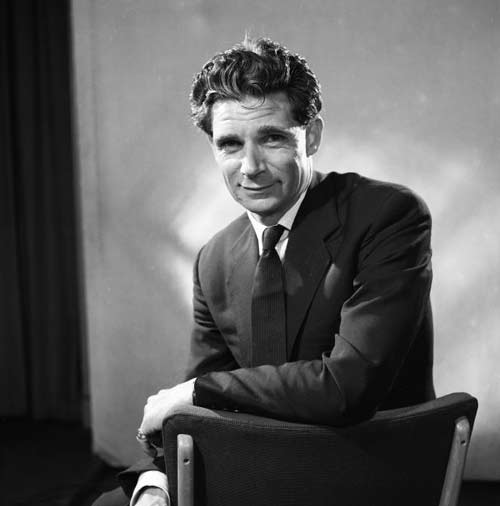
Two words sum up why I am a journalist: Charles Wheeler. As a child growing up in Edinburgh, I wanted to be a doctor. Then I saw Charles Wheeler's BBC reports from the US on the race riots in American cities and I suddenly thought very differently about my career.
In the Edinburgh of that time, I had never seen a black person, and yet night after night I sat transfixed in front of the TV watching Charles explain why I should care. And I did. Looking back at these reports now, what strikes me is their clarity and quiet authority, and also the underlying sense of outrage that human beings could treat each other so badly on account of their skin colour. Charles never patronised his audience, and yet even a child could get the point.
Years later I was offered a three-week contract by the BBC to work on Newsnight. It was three weeks of torture, a ruthless sink-or-swim process which made the X Factor seem kind by comparison – and it was Charles Wheeler who persuaded me that I might not sink.
On the night of my first short report for Newsnight, I was nervous and generally useless. Charles came up to me after the programme and said in that quiet voice of his (so quiet that sometimes you had to strain to hear): "Don't wear such bright white shirts – they look odd on television. The report wasn't bad though."
Bear in mind that I was one of dozens of transient nobodies desperate for any kind of job at the BBC and Charles Wheeler was already a legendary figure, and you will have some idea how much this conversation meant to me. In the years that followed, Charles offered me advice on just about anything and everything – from where to find a good meal in Chicago, to insights about US politics. He constantly reminded me that while there was a "Religious Right" in America, there was also a "Religious Left" – God-fearing people who side with the underdog, who help illegal immigrants and dislike the intolerance of some on the Religious Right. When it came to tired British stereotypes about supposedly "fat and stupid" Americans, Charles would say softly that he had always found "open minds in the wide open spaces" of the United States. And of course he was right.
Then there was advice of a more rudimentary kind. When I presented BBC radio coverage of the presidential election conventions, Charles was my number one guest commentator. On one occasion he shook his head as I poured out bottled water.
"Not fizzy water," he said disdainfully. "Makes you burp."
He was right about that too.
On another occasion I was offered a job that sounded superficially attractive and asked Charles for his advice.
He did not answer directly but instead told me that he had been offered numerous chances to become a BBC bureaucrat, including the offer of the editorship of Panorama on two separate occasions more than 30 years apart. "Why didn't you take it either time?" I asked, baffled that he would turn down one of the supposedly plum editorial jobs in television.
"No fun in it," he said with that twinkle in his eye.
Fun, for Charles, was hugely important. And fun was to be where the news was happening, not stuck in some office in west London sending other people to do what he considered the real work of journalism.
In more than 20 years I never heard him raise his voice in anger, never indulge in TV histrionics, though he could be very direct and cutting when people slipped from the high standards he set for himself. He once described another broadcaster to me as "a shouter". This, for Charles, was a scathing piece of criticism. The shouter could bluster and act the part, but unlike Charles Wheeler, he had not put in the hard work or the brain work to find out facts to justify his loudly voiced opinions. Charles was similarly disdainful of those members of the commentariat who write columns or broadcast opinions from the comfort of their cosy offices, unencumbered by any knowledge of what is really going on.
For BBC managers, Charles could be a nightmare. He was fearless of those in political authority, and equally fearless of those who sought to exercise editorial authority over him within the BBC. On one celebrated occasion, as has been noted elsewhere, Charles was asked to talk gibberish – as he viewed it – to cover for a series of technical problems until these issues were resolved. Charles didn't do gibberish. He sat in stony silence, twiddling his thumbs and looking pained and bored. He was fired as a Newsnight presenter immediately afterwards, though happily he continued as a reporter for many years beyond that day.
Behind the charm and courtesy lay a rocklike certainty of purpose. During one tempestuous meeting with a hapless senior BBC manager, involving many reporters, the manager insisted that journalists should become more "specialised" and cited Charles as an example of a "specialist." Charles interrupted. He pointed out that he was "anything but" a specialist. He was a generalist – someone who might not know what was going on in the world, but who did know how to find things out, and that was what reporting was all about. The hapless BBC manager was left speechless.
In one article, I read the word "Napoleonic" applied to him, which I find extraordinary. I assume the writer never met him, for I have encountered few people less like Napoleon. Nobody could be less bossy, self-obsessed or self-aggrandising. Once, when I was preparing an election broadcast from the States and told him I was going to introduce him to viewers as an expert on American politics, he seemed positively affronted: "You can't call me an expert!" This was no affectation.
On numerous occasions we talked about the differences between his coverage of Washington in the late Sixties and Seventies and my own time there throughout the 1990s and up until now.
"I didn't really do news," he said of his time. "News was done in London."
That was mostly true. Without satellites and working on film, Charles could rarely file live reports on location of the type that we take for granted today. Instead he made short film documentaries, sending the unprocessed pictures in sealed cans, along with his script and his recorded voice, back to London on the overnight flights from the United States. He never saw his own reports as they were transmitted.
Perhaps my fondest memory of Charles is of a very complicated report I was trying to put together on the CIA. The film was 30 minutes long, and I had assembled what looked like a massive amount of evidence pointing to a CIA scandal. But something was wrong, and the film did not look right. Charles happened to be in Washington and I asked him to look at it.
"It's back to front," he said simply. "You put all these bits of evidence and slowly build to a strong conclusion. Turn it round. Assert the strong conclusion at the start and then the viewers will trust you and wait for the evidence."
He was right, of course. Viewers trusted him and waited for the evidence, knowing he would deliver. I'll miss him as an inspiration and a mentor.
But for those of us he did inspire, what Charles Wheeler stood for – honesty, integrity, clarity and fun – lives on.
Gavin Esler is covering the US presidential elections for 'Newsnight' and was chief North America correspondent of the BBC from 1989 to 1997
As he saw it
"Jeremy, this is pure Monty Python."
His comment as Paxman tried to conduct a live interview from the Berlin Wall as it fell in 1989.
"I was going to tell you what happened today. Instead I'll tell you what will happen tomorrow. Nixon will enter the hall. There will be two and a half minutes of applause. He will speak for 15 minutes, when there will be a further standing ovation of 10 minutes."
His report after he got hold of the Republicans' plans for stage-managing the 1972 convention in Miami.
"An inexperienced eccentric at the head of a cabinet of mediocrities."
His description of the Prime Minister of Ceylon, which angered the Ceylonese so much they threatened to leave the Commonwealth.
"I can't believe how lucky I am to be here. Something awful might have happened to me — like retirement."
On his 68th birthday, which he spent in a burnt-out hotel in Kuwait City.
Join our commenting forum
Join thought-provoking conversations, follow other Independent readers and see their replies
Comments
Bookmark popover
Removed from bookmarks