L'Oréal under fire for 'whitewashing' Beyoncé
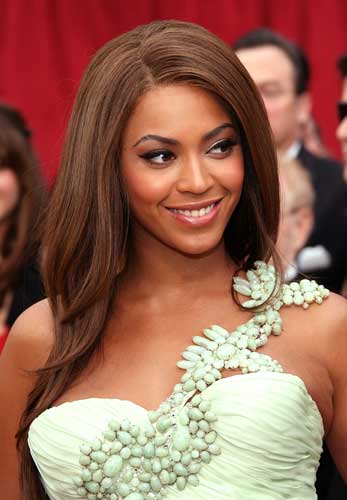
The beauty giant L'Oréal has provoked outrage on both sides of the Atlantic after allegedly whitewashing the face of the singer Beyoncé Knowles for an advertisement in the latest US edition of Elle magazine.
A section of the magazine devoted to L'Oréal Paris includes a full-length head shot of the star with windswept hair as part of an advert promoting the Féria hair-highlighting product.
Knowles's complexion in the advertisement appears dramatically lighter than it is in reality. The singer's skin appears to be washed over with a milky hue.
The 636-page magazine features Jessica Simpson on its cover and contains eight pages of L'Oréal advertisements in all. These are evenly divided between Beyoncé, Scarlett Johansson, the model Milla Jovovich and actress Penélope Cruz.
In a piece called "Beyoncé the Pale", the New York Post described the advertisement as "shocking" and said it made the superstar, who sang the worldwide hits Crazy and Bootylicious, "virtually unrecognisable".
One fan commented on the celebrity gossip website TMZ: "Shame on L'Oréal for doing this. I see no excuse for this. If it was uneven skin tone then they just as easily could have made her a tone darker. But they did not do that. They made her white."
A L'Oréal spokesman denied that the company had digitally adjusted Knowles's complexion.
"Beyoncé Knowles has been a spokesperson for the L'Oréal Paris brand since 2001. We highly value our relationship with Ms Knowles. It is categorically untrue that L'Oréal Paris altered Ms Knowles's features or skin-tone in the campaign for Féria hair colour."
Fashion experts in the UK seized upon the image as a sign of negative attitudes within the fashion industry towards women with darker skin. Shevelle Rhule, the fashion and beauty editor of Pride, a lifestyle magazine for the British black community, said: "We know that this is fairly common practice but that doesn't make it excusable.
"This sort of thing creates a negative perception of African beauty. It's an attempt to impose European values on African beauty and the two simply don't mix in this way. A lot of young black girls out there, who look up to Beyoncé as a role model, will be disheartened to see these images. We need to challenge the idea that being fair necessarily means being more attractive. It doesn't, and models who are proud to be black need to be more in vogue.
"For all the talk of 'black is beautiful', images like this clearly show that we've got a very long way to go yet."
Anne Janas, the senior vice-president at Hachette Filipacchi Media, the US publisher of Elle, said: "All I know is that Beyoncé looks remarkably beautiful on that. We do not get involved in the colouring of adverts that appear in the magazine. That is a matter for L'Oréal."
The black students officer for the National Union of Students, Bellavia Ribeiro-Addy, said suggestions that images of black celebrities were being digitally modified were concerning.
"We believe any such modifications could suggest the view that black is not beautiful. We believe that all people should be celebrated as they are."
In 1994, Time magazine was accused of doctoring a picture of the American footballer and double-murder suspect OJ Simpson to make him look blacker.
Join our commenting forum
Join thought-provoking conversations, follow other Independent readers and see their replies
Comments
Bookmark popover
Removed from bookmarks