FT: The Pink 'Un powers on
The Financial Times's online subscription model is 10 years old and has just posted huge subscription figures. What's its secret?
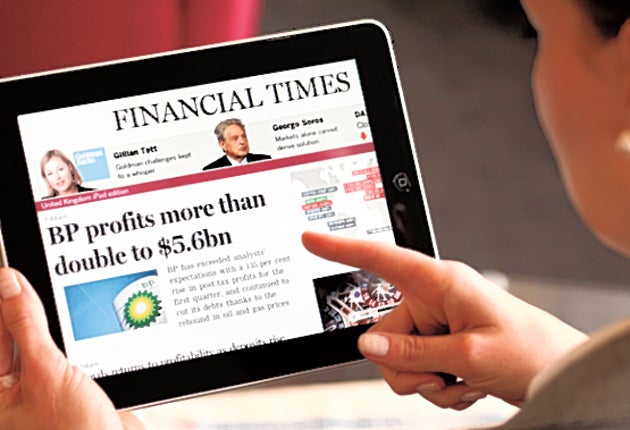
It's the 10th anniversary of the Financial Times introducing subscription charges for access to its digital content. Last week, in what could be seen as a vindication of the FT's approach, The New York Times launched a similar "metered" model that allows users to read a limited number of articles for free, thereafter requiring payment.
No one could argue that the FT's strategy has not worked. News International, which demands payment for any access to The Times and The Sunday Times websites, last week announced that it had 79,000 digital customers. But some of these users will have paid minimal amounts, as little as £1 for a single day's access.
Latest figures from the FT show it has 210,000 digital subscribers all paying a minimum of £250 for a year's access to the title's website and apps. "For a publication that circulates roughly 400,000 in print, that's a big number, and we haven't done that at knock-down prices, we have aggressively increased our prices for digital subscriptions over the past couple of years," Rob Grimshaw, the managing director of FT.com, says. When Grimshaw took up his post in 2007, an FT subscription cost just £99. Digital revenues grew by 56 per cent in 2010, helped by the growth of smartphones and tablets.
That trend has just begun. "The mobile transformation could easily be larger in scale than the shift from print to desktop and it could happen at frightening pace," Grimshaw says. A recent survey of 2,500 FT registered users found that 45 per cent were accessing content via mobile devices. "The numbers were much bigger than any of us expected," he says. "You can only come to the conclusion that mobile will probably become the dominant channel."
Having previously focused on Apple products, the FT has shifted attention to Google's Android. "Android has gone from zero to 30 per cent-plus penetration of the smartphone market in a couple of years," Grimshaw says. Within weeks the FT will make available its Honeycomb app for Android in time for the launch of a string of new tablet formats this year, starting with the Motorola Xoom this month. Grimshaw points to the price of an FT digital subscription in the US – at $389 (£241), it is costlier than a subscription to the newspaper – as evidence of the growing value of digital content to the consumer.
Yet the view that online journalism should be free still largely prevails. Grimshaw is mystified: "There seems to be a real nervousness and lack of confidence amongst publishers about the lack of value of their content. The free content evangelism movement has not helped, neither has giving away content for free over a 10-year period."
Still, the argument goes, the FT is a specialist publisher and its subscribers are paying with the boss's money. Grimshaw says internal research shows only 22 per cent of subscriptions were bought with company credit cards, though others might have been claimed as work expenses. "As far as we can tell, the majority of people who subscribe to the FT are individuals paying from their own wallets." Of course, the FT's many readers in the financial sector rely on the paper and its analysis to do their job, something which is rare with the mainstream nationals.
Quality journalism remains in short supply on the internet and publishers should be more confident of its value, Grimshaw says. "People were saying [in 2001] 'you are not going to succeed with this' and now they are saying 'you guys can do it because you have got niche content but general news publishers would have no chance'," he says. "I suspect The New York Times will prove the commentators wrong all over again."
Join our commenting forum
Join thought-provoking conversations, follow other Independent readers and see their replies
Comments
Bookmark popover
Removed from bookmarks