No fee, no FT: newspaper joins rush to charge for the internet
The Financial Times is in talks to introduce a "pay-per-article" system inspired by the Apple iTunes model, which could change the culture of reading news on the internet.
Senior sources at the FT have confirmed that the group is in discussions with a number of payment processor companies to establish a simple "one -lick" procedure that would enable consumers to pay a small fee for single articles that would otherwise be available only to subscribers.
FT executives, who hope to have the system in place by 2010, have not settled on the price for an individual story, but say that they have been impressed by the "fabulous buying experience" of iTunes, which allows users to buy a single song for 79p.
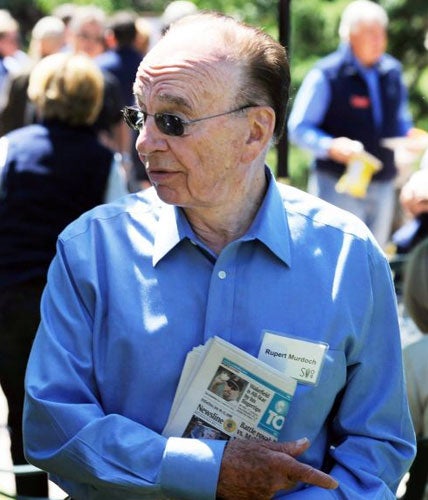
The development follows the announcement this week by Rupert Murdoch that he will introduce charging to all his news websites, including those for The Times, The Sunday Times, The Sun and the News of the World, by next summer.
"Quality journalism is not cheap," he declared in New York after announcing a huge fall in profits in his global newspaper division. "The digital revolution has opened many new and inexpensive distribution channels but it has not made content free. We intend to charge for all our news websites."
John Ridding, the chief executive of the Financial Times, told The Independent: "Our view is that there's significant potential for pricing per piece and per time period. The whole point about the internet is flexible consumption and reader choice."
The FT already has 117,000 subscribers, paying at least £155.48 for a year's access. Mr Ridding believes that adopting a pay-per-article model would encourage some of the site's 1.3 million users who have registered to read up to 10 free articles each month to start paying for access to additional pieces without having to subscribe.
"There is tremendous potential there. It needs to be frictionless, people don't have a lot of time and don't want to go through a laborious transaction process for one article [but] I think there's potential there for monetising a whole new layer of traffic and readers."
Rob Grimshaw, the managing director of FT.com, said that Apple's impact on the music download culture was inspiring for news publishers: "iTunes is a great one to talk about because fundamentally they have created a fabulous buying experience. I'm a great believer that people don't object to buying things online ... they do object to hassle. If you create an experience that's so quick and easy it involves pressing one button, you will find a lot of people are happy to do it."
Media companies needed to pay closer attention to how other industries had used the internet, to offer consumers flexible and attractive payment models. "The obvious example is the way the airlines use the internet," Mr Grimshaw said. "If you buy in advance or travel during the day, they give you a cheaper price. They have managed to have two people on the same flight to the same destination and one has paid £10 and the other £150 but both thought it was a fair price because they both bought it. Media companies as a whole and publishers in particular are miles away from that in terms of their pricing."
Almost all mainstream British news providers have made their content available free on the internet but advertising revenues have failed to meet expectations.
It emerged on Sunday that the Guardian Media Group (GMG) is considering closing The Observer, the world's oldest Sunday newspaper, after the group suffered annual losses of £90m. It has invested heavily in The Guardian website, hoping to make it the world's leading online liberal news brand.
The FT and Mr Murdoch's Wall Street Journal, which also has a subscription model, have persuaded readers to pay for specialist financial information and there is growing confidence within the industry that consumers will be willing to spend on other news forms.
Mr Murdoch suggested that the celebrity content of papers such as The Sun and News of the World could be monetised online. "When we have a celebrity scoop, the number of hits we get now are astronomical," he said.
Bob Satchwell, the chairman of the Society of Editors, said that the "jury is still out" on whether a sufficient number of online readers would be prepared to pay for general news.
"You might find specialist markets in celebrity and maybe in sport and some of the other areas where UK papers have developed a huge expertise in developing the kind of content the UK public wants," he said.
"Rupert Murdoch generally doesn't get things wrong. He was the one who led most of the papers belatedly on to the internet and that has worked in terms of the number of eyeballs now looking at these sites."
Mr Grimshaw said publishers had misunderstood the internet: "The demand for information is larger than it has ever been but for some reason the publishing industry as a whole decided it might be a good idea if they all gave away their primary product. It does not strike me as being a smart decision. There seems to be this belief abroad that the whole mechanics of human nature and economics have changed utterly on the internet and I simply don't believe that's the case. If you need a piece of information or an article and the only way you can get to it is to pay for it, then people will pay.
"Although mass-market newspaper publishers are struggling with this, others, such as scientific journals and specialist vertical titles have been charging for their content online since day one and as a consequence have robust businesses."
The saviour of newspapers? Why paying for news online is vital for media companies
Q. Why is it so important?
A. Despite the fast growth in use of newspaper websites (the Daily Mail's Mail Online site is currently the most popular with 29.4 million unique monthly users), the anticipated surge in advertising revenue has not materialised, with online adverts often earning as little as 12 per cent of those in print.
Q. Who decided that online news should be free?
A. The culture spread from America, where the newspaper industry is even more beleaguered than in Britain and grave doubts exist over the future of famous titles such as the Los Angeles Times and the Boston Globe.
Q. Have they had a change of heart?
A. Murdoch and others in America, including David Simon, the writer of the hit television series The Wire, are leading the debate for paid-for content. But many internet users criticise their position. The New York Times recently asked subscribers to its paper whether they would pay between $2.50 and $5 for access to the newspaper's online archive.
Q. Where does the BBC fit in?
A. As Bob Satchwell, chairman of the Society of Editors, noted yesterday, the BBC, with its well-resourced and free website, represents a major challenge to newspaper sites if they are to attempt to charge British users for content.
Q. Is it not too late to change an entrenched culture?
A. British newspapers produce specialist content that goes far beyond even what the BBC has to offer and the experience of iTunes and other legal music download services has shown a proportion of internet users will pay for content, even if it can be found for free elsewhere.
Join our commenting forum
Join thought-provoking conversations, follow other Independent readers and see their replies
Comments
Bookmark popover
Removed from bookmarks