Celebrity gagging orders see privacy cases soar
Number of cases up by 50 per cent in a year after rash of injunctions
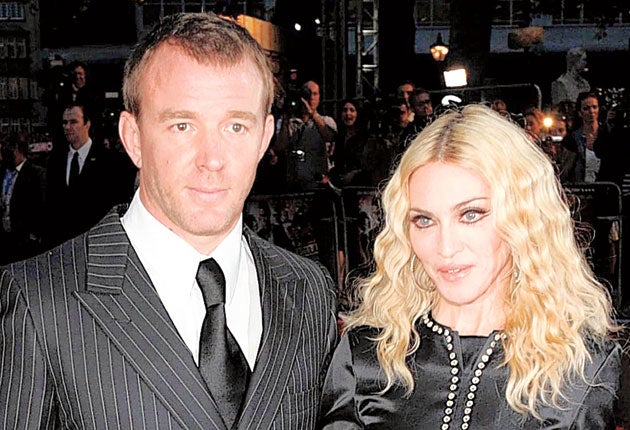
Celebrities who apply for gagging orders to stop the media from publishing details about their private lives have helped to boost privacy cases by nearly 50 per cent this year, new figures seen by The Independent have shown.
Footballers and golfers have led the stampede of high-profile names increasingly willing to go to court to fend off unwelcome interest from newspapers. In the past month, three unnamed footballers are known to have instructed lawyers to hold the line on allegations about their performances off the pitch.
Claims by singers, models and other sportsmen have also supported the upsurge in cases. Wayne Rooney, England's star striker, is known to have taken legal advice over a News of the World exposé of his alleged sexual relations with a prostitute last year.
But he was warned that a court case was doomed to fail as he had already put intimate details about his private life in the public domain when he published his autobiography.
Stars from the world of golf have also hired top privacy lawyers to get them out of the rough. The former world number one golfer, Tiger Woods, and Europe's Ryder Cup team captain, Colin Montgomerie, have both won injunctions in the last 12 months.
Woods succeeded in gagging British newspapers from referring to further claims about his behaviour, while Montgomerie recently won a super-injunction against a tabloid newspaper over claims about his private life.
Montgomerie's injunction was granted by Mr Justice Eady, the judge who ruled that the News of the World had breached the privacy of the former Formula One boss Max Mosley by publishing details of his orgy with prostitutes.
Mosley, who is now something of a standard-bearer for better privacy rights for public figures, is taking his case to the European Court of Human Rights, where he hopes to build on his success in the UK courts.
But there are growing concerns among legal experts that the UK courts are increasingly granting high-profile figures so-called "gagging orders", preventing the media from reporting details of their lives, at the expense of free speech. Privacy cases from high-profile individuals made up 21 per cent of total privacy cases in 2010, compared with just 7 per cent in 2009.
Overall, the use of privacy arguments in UK court cases has soared by 54 per cent in the past year, fuelled largely by a surge in claims against public-sector organisations, says Sweet & Maxwell, the legal publishers. The number of reported court cases where a privacy argument was used is up from 28 in 2009 to 43 in the past year. Lawyers believe that because these figures are based on published cases, the true number is even higher.
Jonathan Cooper, a leading barrister on privacy matters, said: "Privacy rights cannot be used to undermine free speech, and vice versa. Where there is a public interest in interfering with privacy rights, the media must be entitled to publish.
"There is a real fear that emergency injunctions are becoming increasingly common, whereby a judge can grant an interim injunction at very short notice without a full and proper hearing."
It is not only sportsmen who are troubling the courts with privacy actions. The supermodel Naomi Campbell claimed her former employee Vanessa Frisbee had breached her privacy and confidence by selling information to a newspaper about her romantic life.
Some celebrities including Sienna Miller, Lily Allen and Amy Winehouse have started to use harassment injunctions to protect them from being hounded by photo agencies and paparazzi photographers.
Mr Cooper, a barrister at London's Doughty Street Chambers and the editor of Sweet & Maxwell's European Human Rights Law Review, says: "The right to respect for private life is increasingly important in the 21st century. Once your private life has been violated it is very difficult to recreate it. Privacy was once something we could take for granted, but as our privacy is increasingly encroached upon by public bodies, people are resorting to the law to protect themselves."
Gagged: A year of injunctions
Madonna – October 2009
The singer won substantial undisclosed damages for privacy and infringement of copyright last October over a Sunday newspaper's publication of "purloined" photos of her wedding to Guy Ritchie. Her solicitor told the court that the pop star went to great pains to ensure that the December 2000 wedding was wholly private. But in 2003, an interior designer who was working on her home in Beverly Hills surreptitiously copied at least 27 photos from the wedding album and provided them to Bonnie Robinson, who, in June 2008, offered to sell them to The Mail on Sunday.
Tiger Woods – December 2009
The world's number one golfer won a court injunction against the British media last December to try to prevent further intrusions into his increasingly lurid-sounding private life. Lawyers for the troubled golfer went to the High Court in London to seek protection for their client under the Human Rights Act and UK privacy laws. Under the terms of the injunction, which was granted by Mr Justice Eady, newspapers and broadcasters were forbidden from publishing the nature of any material that might be subject to the court order.
John Terry – January 2010
The former England football captain found himself at the centre of another privacy legal battle. But the Chelsea star's experience will serve as a cautionary tale for those who rush to the law without a strong case. Terry's attempt to use a super-injunction, which stops the media from even reporting the existence of the order itself, badly backfired in January. Mr Justice Tugendhat, the judge hearing the case, lifted the gagging order and Terry found details of his alleged affair with the girlfriend of another England footballer covered by almost every newspaper and broadcaster.
Unnamed footballers – August 2010
At least three leading players are currently enjoying protection in the courts over allegations surrounding their off-field antics. Free-speech campaigners are concerned that the trend towards privacy protection is being abused by sportsmen and celebrities.
Robert Verkaik
Join our commenting forum
Join thought-provoking conversations, follow other Independent readers and see their replies
Comments
Bookmark popover
Removed from bookmarks