Democracy can't exist without newspapers
Should Scotland's titles close, there will be nothing to keep an eye on the politicians, says Tim Luckhurst
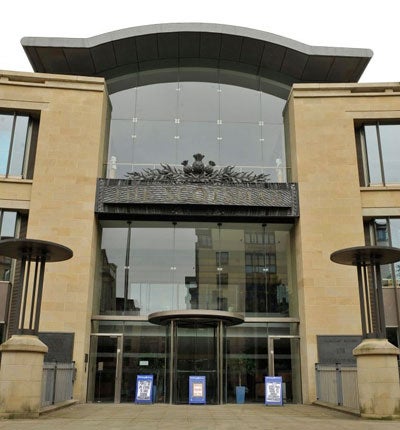
'The Scotsman is dying, so is The Herald," claims Stewart Kirkpatrick, former editor of the scotsman.com website. He is not exaggerating. The Scotsman, the national newspaper for which I once hired foreign correspondents from Washington DC to Beijing and columnists including Michael Portillo and Gavin Esler is now a parochial rag with meagre claim to influence in Edinburgh.
When Johnston Press overpaid the Barclay Brothers to acquire the title in December 2005 the paper was already impoverished and circulation was in decline. The new owners did not stem the bleeding. The Scotsman's average daily sale fell by 9.18 per cent to 50,374 copies, of which only 44,174 were sold at full price, between January 2008 and last month. Even these figures conceal the extent of the problem.
Until recently, Scottish newspapers were the only titles published outside London that could plausibly claim national status. They had to be good. Printing, distribution and online technology long ago destroyed the monopoly market into which they were born. Today, Scottish readers can get The Independent, The Daily Telegraph or The Times with their breakfast. To thrive, Scottish titles must cover the world as well as their London-based competitors, and Scotland better. But with budgets less than half that of those available to their poorest English rival, the Scotsman group titles cannot pretend to do that.
Under Kirkpatrick's editorship scotsman.com peaked at 3.8 million unique users. It was named as one of Google's top news sources and won the Newspaper Society's award for best daily site three times. Since his departure in March 2007 Johnston Press has achieved the feat of slashing online readership to fewer than 2 million.
Things are equally bad at The Herald where circulation fell 9.7 per cent in the year to January and an agonising round of redundancies has seen good journalists departing in droves.
Both papers used to recruit in London. Now the traffic is almost exclusively in the opposite direction. Former staffers now work on every quality title in London, adding to the brain drain of talent from Scotland.
Although there is similar chaos and decline at newspapers worldwide, there is a dimension to the Scottish problem that adds to its significance. Wherever you take your starting point, it is impossible to identify a society in which the scrutiny of a free and diverse newspaper press has not been vital to the development and success of representative democracy. They are so inextricably linked it is alarming to contemplate the possibility of one trying to function without the other.
Devolved Scotland is a new and fragile polity in which debate takes place within a narrow consensus. Its electoral system privileges party over electorate and the ruling elite is self-selecting and jealous of its privileges. The country's broadcasters are ill equipped to fill the vacuum left by its failing newspapers. Broadcasters can never do the job of a free press. At their best they provide balanced, informative news. It is to newspapers that citizens must turn for investigation, exposure and crusading zeal.
In the first years of home rule, Scottish newspapers did vital work to keep the new institutions of government honest and the electorate informed when they were not. Without healthy resources and readerships they will fail in this crucial duty to democracy. That would leave devolved power to be scrutinised by the Scottish editions of London newspapers. With massive investment it might work, but funding is unlikely. The best resourced of the tailored editions have shed staff in recent months.
Devolution is too new, unproven and vulnerable to cronyism to thrive without the bracing scrutiny of robust, independent journalism. But if the newspaper industry cannot provide it some wag of an MSP may propose state-subsidised newspapers. One recent former editor of a Scottish title says: "Scotland is in danger of becoming the first modern democracy without reliable organs of free speech."
Tim Luckhurst is professor of journalism at the University of Kent and a former editor of 'The Scotsman'
Join our commenting forum
Join thought-provoking conversations, follow other Independent readers and see their replies
Comments
Bookmark popover
Removed from bookmarks