'I want to see the decomposing corpse,' says bureau chief
Iain Overton wants more than a whiff of scandal for his new investigative bureau.
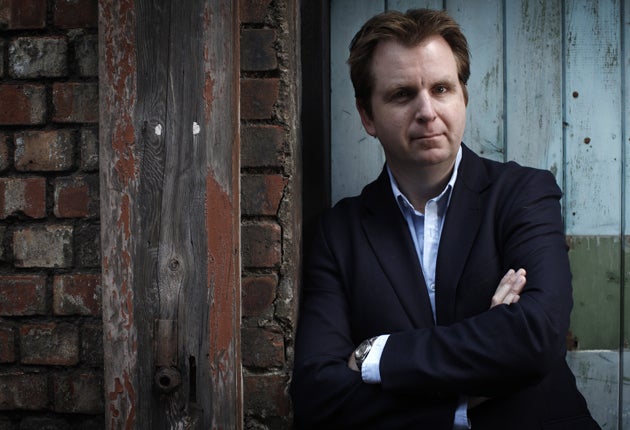
In theory, Iain Overton has one of the best jobs in journalism. As managing editor of the Bureau of Investigative Journalism he enjoys a healthy salary; a central London office; a small staff he has picked himself; a budget of £2m over which he has free rein; and, perhaps cushiest of all, no deadlines. If Tintin were living now, this would be the job for him.
But as "the bureau" – as he wants it to be called – marks its official opening tomorrow, a number of unanswered questions remain: where will it publish its stories? How will they be turned into cash? And when will these stories actually appear?
The bureau's funding – a lump sum of £2m to be spent over five years – comes from David and Elaine Potter, whose aim is to encourage the kind of long-term investigations newspapers no longer have the resources to pursue. She is a former reporter on The Sunday Times, who worked under Harold Evans on the Insight team, while he is the multi-millionaire founder of Psion computers, and the money comes via their charitable trust, which exists to "encourage a stronger, fairer civil society".
Since Overton was appointed in September, he has recruited Angus Stickler, a respected Today programme reporter, and awarded short-term contracts of three to six months to 17 journalists. They occupy airy, grey offices near the Barbican in London, leased from City University for a peppercorn rent, and seem busy when I visit. Yet despite all this activity, the bureau has yet to publish a single story.
"We're not behind schedule," says Overton. "It's about getting the right people and working out what stories you want to investigate."
Finding quality journalists in the current climate can't have been difficult, and his team includes professionals from Channel 4, The Mail on Sunday and The Guardian. Overton's own background is in television, having worked for the BBC, Channel 4 and latterly at ITN as an executive producer.
As for leads, plenty have been offered, but the bureau is not interested in any story: it has got to be big – preferably earth-shattering. And stories like that take time. "Lots of newspapers take the first whiff of a story and run with it," he says. "I've had to forcibly restrain myself from thinking, 'sod it, let's publish on the first thing we find' because, though the whiff may be there, or even the stench, what I want to see is the decomposing corpse."
The danger with this strategy is of being scooped, although Overton says he wouldn't mind a story getting out if it were in the public interest. The bureau's trump card is having the time to dig out gems the main media can't. Government data is a rich seam, which, thanks to the Freedom of Information Act, is more readily available than ever. To that end, he has one staff member developing software for "scraping" data files, scouring spreadsheets for relevant nuggets. The bureau also has over 2,000 FOI requests pending.
He can't discuss investigations, but he hints at stories involving Afghanistan and European politics. The bureau's field of interest is unashamedly high-minded – no celeb stings here – but, as he says, editors tend to glaze over at the mention of Europe, which could make it hard to get published.
How the bureau gets its stories out has yet to be finalised, an issue in danger of becoming the elephant in the room. "We are a bit like an independent TV production company: you get a story, pitch it, make it and then try to raise some cash by selling it overseas. But the problem for us is not knowing what an investigation will throw up: it's a bit of a chicken and egg situation."
Overton will decide how to release each story case-by-case, but it remains unclear how the bureau will sustain itself beyond the five years. If the aim is not to make money, what will be the measure of its success? "I hope we will do stories that get talked about. There are a lot of secrets in the world. Some people have made huge profits or got away with human rights abuses by not being held to account. We want to bring people to account."
Overton, well-connected with TV commissioning editors, has no experience in newspapers, but he hopes the bureau will work in both media equally. Already it is working on an investigation with the Financial Times, and Overton sees the bureau becoming an auxiliary reserve for mainstream media. "Collaboration will be important, and will bring some revenue in to a shared pot."
For all the bureau's time and money, not having a dedicated outlet could be frustrating. There is a website and Overton is open-minded about new media. But with no shareholders to report to and no newspapers to sell, there is an absence of pressure. "All I can say is, wait for the strength of what we have found out when it is published."
Perhaps deadlines aren't such a bad thing after all.
Join our commenting forum
Join thought-provoking conversations, follow other Independent readers and see their replies
Comments
Bookmark popover
Removed from bookmarks