The silence of the arts, the press, science, charities...
A new report by Index on Censorship argues that fear of libel action means that freedom of expression is under threat as never before, writes Ian Burrell
We've had demonstrations outside Television Centre while the BNP's Nick Griffin was smuggled into the BBC; we've had mobs descending on the offices of the law firm Carter-Ruck for its "super-injunctions" on behalf of the waste company Trafigura, and we've had a record number of complaints to the Press Complaints Commission over comments in the Daily Mail over the death of pop singer Stephen Gately. Freedom of expression in the British media has rarely been the subject of such fiery debate.
And it is against this backdrop that Index on Censorship will next week release a report Free Speech is Not for Sale: The Impact of English Libel Law on Freedom of Expression, a document it hopes will convince politicians of the urgent need to change the law on what you can write or broadcast without being liable for defamation damages. It is attempting to find out how many media super-injunctions are in existence in Britain, and estimates a figure of between 20 and 50.
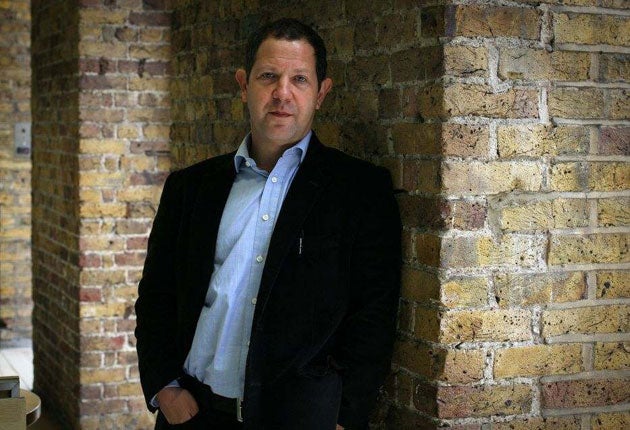
The Index research has been timed to precede the much-anticipated report by Parliament's Culture, Media and Sport Committee entitled Press, Standards, Privacy & Libel. John Kampfner, chief executive of Index and the former editor of the New Statesman, says the issues at stake go to the heart of a society that is at risk of becoming mute in its criticisms of political and, particularly, corporate institutions. "It's not just about the press," he says. "The really damaging thing is the self-censorship that is becoming ingrained."
Kampfner talks passionately of British scientists who "are talking in euphemisms in their research documents" for fear of being sued by multinational companies, and of NGOs refraining from criticism of foreign politicians and military figures who commit human rights abuses, due to the high risk of crippling legal actions.
It is an extraordinary time, when the largely anonymous users of sites such as Twitter can come together and, in comments of 140 characters or fewer, bring pressure to bear on institutions, including media companies, yet identifiable critics are increasingly being cowed into silence. "It's a strange world we inhabit," agrees Kampfner, "when the only people that can take action are anonymous, or have huge safety in numbers."
Over the past decade, the right to uncover information and to criticise the powers-that-be has been undermined, says Kampfner. "This Labour government ... [is] working from the assumption that the public has no right to know unless it hammers on the gates."
That is part of Index's role, along with lobbying, providing affidavits to judges and constantly speaking out publicly. "In an ideal world we would be less busy because we would have a political culture in the UK that took the American approach that something is open unless there are very specific and compelling reasons to make it secret. I think we are a long way off from that yet."
The publication of the Free Speech report (which has been compiled in partnership with English PEN, the literature and human rights group that includes writers Claire Tomalin, pictured, Doris Lessing, Philip Pullman and Monica Ali), will be followed by the formation of a new Libel Coalition, which will continue the struggle for changes in the law. Among the prominent members of the coalition will be Simon Singh, a science writer who is fighting a libel action brought against him by the British Chiropractic Association.
Singh's case is "just a microcosm", says Kampfner, whose organisation works closely with the charitable trust Sense About Science. "There are dozens of similar science and medical writers here and in the US and elsewhere who are frightened of making fair and reasonable scientific comments because they could be sued in the UK courts," he says.
British law, argues Kampfner, has become "balanced heavily against free expression". He is also involved with the Arts Council, being chair of the Turner Contemporary gallery in Kent, and says that some galleries are now resorting to canvassing opinion on future exhibitions to ensure that they do not cause offence. "It's pretty much impossible to put on any artistic or cultural event which does not cause offence," he complains. "The whole point of art and culture and journalism is to challenge. There do need to be certain safeguards but the balance has gone completely the other way."
The introduction of conditional fee agreements (CFAs) to give wider access to the libel courts has had the reverse effect of what was intended, he says. "You now have the rich and famous taking on legal firms who string out cases for as long as possible to break the will and cash flow of small publishers."
Kampfner would like to see the libel laws changed so that large companies, like governments, are beyond libel – unless they can prove malicious falsehood. He would like the public interest defence to be broadened and for the burden of proof in a libel action to be shifted from the defendant to the litigant. "This is not just about the rights of the media," he emphasises. "We are here to define the right to know and the right to free expression."
Join our commenting forum
Join thought-provoking conversations, follow other Independent readers and see their replies
Comments
Bookmark popover
Removed from bookmarks