Was Lord Triesman on to something? Just ask Jennings
Matthew Bell meets the journalist who's dedicated 20 years to exposing corruption in sport
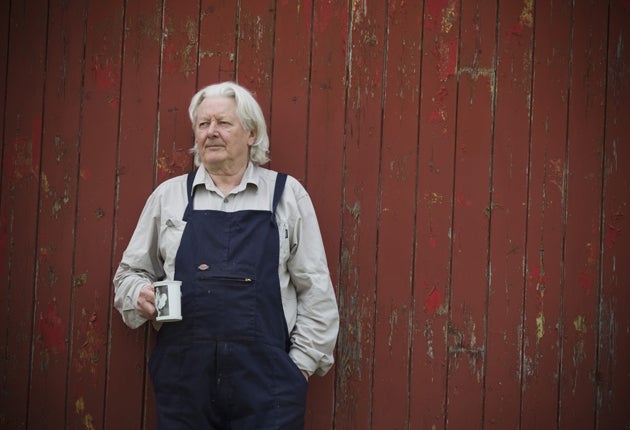
If you stand in the garden of Andrew Jennings's Cumbrian farmhouse, looking across the Eden Valley to the Pennines on the horizon, the sordid details of the Lord Triesman affair seem far away.
The chairman of the Football Association resigned last week after The Mail on Sunday published a secretly recorded conversation in which he made allegations of bribery between Russia and Spain. All week, the newspaper has been loudly condemned for endangering England's bid for the 2018 World Cup, and Triesman's comments have been dismissed by sports journalists as far-fetched.
But if you follow Jennings into his study and listen to him talk about the rich history of corruption in international football, you begin to feel the world has turned topsy-turvy. "Why didn't The Mail on Sunday investigate Triesman's allegations?" he asks. "If Russia is guilty of bribing Spanish referees, that's a story. Instead of going after that, they punished the source. Nobody wants to touch the real story."
And he should know. Jennings, 66, is a veteran investigative reporter who has dedicated the past 20 years to exposing corruption in sport. He has been banned from Fifa press conferences since 2003, when he wrote a story claiming the Fifa chairman, Sepp Blatter, had taken a secret bonus. At times, he says, he's "like a madman outside the castle walls, shouting to be heard".
Jennings may be single-minded, but his research is thorough. Both his books – the first, The Lords of the Rings, an exposé of the International Olympic Committee; the second, a look at the murky side of Fifa – were based on leaked documentary evidence. Tellingly, he has not been sued for either.
It comes as no surprise to Jennings that Lord Triesman's comments have been widely poo-pooed. According to him, sports news reporters are guilty of wilfully ignoring major stories of corruption for fear they will lose access to players and matches.
"On every other section of a newspaper, an editor requires his reporters to have audacity, determination, and to hold the buggers to account. Not in sport. As long as they turn up at a football match on time and file the copy, that's all they're interested in. So we have a cabal of sports reporters who succeed by assiduous arse-licking."
Jennings, highly regarded among investigative reporters, had a long career in newspapers and TV before turning to his pet subject. "The most important thing is to develop your sources," he says, "There are corrupt and stupid people at the top of every institution. But as you go down the company, you find people are more decent. There are moral, straight people trying to do their jobs, who get upset about what they see happening. And they might just pass you the document you need."
He fell into journalism by accident in 1968. After failing to finish his degree in social administration, he got caught up in the Hull trawlers disasters, when three boats sank within as many weeks, with the loss of 58 lives. He soon became a reporter on the Burnley Evening Star before heading to Manchester, in those days a hub of newspaper journalism. Stints on the Daily Mirror and The Guardian were followed by a contract with Radio 4, where he worked with Roger Bolton, and Granada, where he worked with the acclaimed film director Paul Greengrass.
It was Greengrass who pointed him in the direction of investigating sports politics, and the ensuing book on the Olympics landed a number of major scoops, revealing the murky process by which countries bid to host the games: several IOC members subsequently resigned and others were sacked. He says the bidding process for countries hoping to host the World Cup is similarly at risk of corruption. "Look, Russia has made it clear they want the World Cup in 2018," he says with a meaningful expression. "Governments want the World Cup purely for the prestige, but the benefits are greatly exaggerated. Take South Africa – they don't need a 90,000-seat stadium, when people in the townships can't afford the bus ride to get there."
But Blatter is Jennings's special subject, and his book about Fifa, Foul!, is almost entirely dedicated to bringing him down. Before sport, Jennings covered corruption in police forces and consumer fraud. "When children ask me what exactly I do, I say I make a living out of chasing bad people." This has not been without its reprisals: his phone line has been tampered with so often he now only communicates with contacts via Voip (Voice Over Internet Protocol), a system like Skype that scrambles data and cannot be traced to a geographical address.
Needless to say, he has already turned his attention to Lord Triesman's allegations, and is constantly updating his website, transparencyinsport.org, a blizzard of extraordinary allegations that would make any libel lawyer blench. As he shows me yet another YouTube clip of him doorstepping Sepp Blatter, I ask if the internet has been good for journalism. "The internet is a great tool," he says, "but it's never as good as talking to people. There's a story behind every front door."
Join our commenting forum
Join thought-provoking conversations, follow other Independent readers and see their replies
Comments