Summertime and the sunglasses war is raging
The usual beachwear and books will be glued to the covers of July's glossies. Joy Lo Dico asks what benefits they bring the publishers
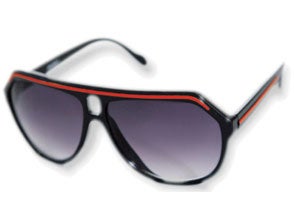
Tortoiseshell sunglasses and cotton canvas flip-flops, totes designed by Liz Hurley, free designer sarongs and Katie Price's "sexy beach read", Angel. If you're looking to stock up on cheap essentials for your summer holidays, you can pretty much pick up an entire beach bag full of stuff, and the bag itself, from this month's magazine rack. The July issues of the monthly women's glossies are out. Wrapped up in cellophane and bulging with their carefully chosen goodies, Marie Claire, Tatler, Glamour and Red are spilling out of the newsagents shelves, tempting the casual buyer to pick up a copy, if only for the sunglasses.
This magazine-cum-bazaar has become a trade standard for the summer editions of glossies. Editors are known to be privately horrified that their beautifully designed front pages and hard-fought-for covergirls are obscured by the promotional wrappers screaming "free make-up". It's not often that Sarah Jessica Parker, on the cover of this month's Marie Claire, is upstaged by a pair of cotton canvas flip-flops.
Easy Living, a Condé Nast title, is one of the many magazines that regularly puts on a summer giveaway. This year it's going with a Laura Ashley bag. For Chris Hughes, the publishing director, the rationale is simple. "If you believe you have a great magazine then any device to get it sampled by the consumer is worth it," he says. Ask the consumer and it certainly works. Women pick up a magazine with flip-flops because, they say, at £3 or £4 it's cheaper than buying the shoes in a store.
This simple bit of maths triggers what has become known in the industry as the flip-flop wars. It's an expensive campaign, with extra production and distribution costs, but given the uplift in sales and rivalry between magazines for the most desirable products, it's commercial suicide for a publisher not to join in. Vogue stands alone in being the only publication that doesn't engage.
There's an obvious irony that magazines driven by high-fashion advertising manage to put on sales by handing out cheaply made giveaways. To get round this uncomfortable truth, publishers of higher-end titles are using high-street brand names to give the covermounts some credibility. This month alone, along with the Laura Ashley-branded bag, there's an Elizabeth Hurley tote with In Style – though if you wish to read an interview with Hurley about pig-keeping, turn to Red – and Benefit lip gloss given away with Glamour magazine.
"Branded products are preferred if they are the right brands," says Patricia Stevenson, publishing director at Tatler. "They are of course negotiable, but often they [the companies] provide branded goods. It's an incredible opportunity to appear on the front cover of the magazine."
Clothes retailer Hobbs, which has provided a bag for July's Eve, in either spotty red or blue, also knows it's an easy way to get its name around. "It's all about brand awareness," says a spokesman. "We have it as part of our regular marketing schedule."
The covermount in turn says something about the magazine "Covermounts do affect brand image," says Simon Kippin, publishing director at Glamour, "which is why we ensure that the product is suitable and of a high quality to match our upmarket readership profile."
It all sounds like a round of cosy consumer back-slapping but in reality the covermount has become an essential, and expensive, way for magazines to maintain sales against their competitors. It is rare that the product would be worthy of the magazine's editorial pages. A notable exception was last September's relaunch of Harper's Bazaar, which set the standard for luxury branding. Its logo was studded with 200 Swarovski crystals and it sold itself as a collector's item. However, the summer deals are rather more mundane. One publisher, who did not wish to be named, admitted: "We're essentially dressing up cheap Chinese goods."
While major names may be brought on for the design, the magazines will often arrange the outsourcing through broker companies, such as Geevaz or Giftpoint, which specialise in covermounts. They are approached to come up with ideas and commission a factory in the Far East that can match the high demand with the low costs required. Typically, a budget will be a percentage of the magazine's cover price, and rarely cost more than 50p to make.
Though the flip-flops may be cheap, cheerful and expendable, there are some basics. Publishers, and Condé Nast in particular, do insist on materials and production being ethical, and the broker companies are keen to flag up their credentials on this. Also up on the agenda is the environmental costs of such promotions, an issue that is being addressed by the Periodical Publishers Association, which is drawing up a series of guidelines on the carbon footprint created by the industry.
Magazines are reluctant to say what their ethically sourced free sarong does to circulation but there is a general understanding that without a covermount, when all your rivals carry one, summer sales suffer. It's a pact with the devil of freebies that the readers have come to expect them.
Glamour publisher Kippin insists his magazine sticks strictly to four giveaways and they are there purely to gain "new readers, not to defend against other covermounts". As the biggest -selling women's glossy, Glamour may not feel the heat of the competition, or the costs attached to covermounts, as fiercely as its smaller competitors.
Chris Hughes at Easy Living reckons there's unlikely to be a ceasefire in the flip-flop wars. "Rather like the desire for world peace and everyone being kind to animals, lovely ideas are not always practical," says Hughes. "I'm not sure it's legal to ever have a discussion about such things with any other company, so we don't."
In this vicious circle, the Chinese factories keep pumping out the goods. However, there is one potential way out. Publishers are cagey about releasing sales figures for individual months, thereby showing the effectiveness of their marketing campaigns. The Audit Bureau of Circulations, which collates half-yearly figures for consumer magazines, does not as yet keep a record of how many covermounts are used in a season, but the subject is increasingly raised in the reports standards meeting, where publishers, advertisers and advertising agencies discuss how it skews sales stats. "Obviously the rules are based on what is agreed at the meeting between the buyers and sellers," says Hughes. "There haven't been detailed conversations but I wouldn't be surprised if it was brought up at a future meeting." It might just show that those flip-flops weren't worth it, after all.
Join our commenting forum
Join thought-provoking conversations, follow other Independent readers and see their replies
Comments
Bookmark popover
Removed from bookmarks