Tribute: A legend who was never dull, ordinary or safe
Dave Trott remembers Paul Arden, the maverick creative who rose to become one of the British advertising industry's great talents
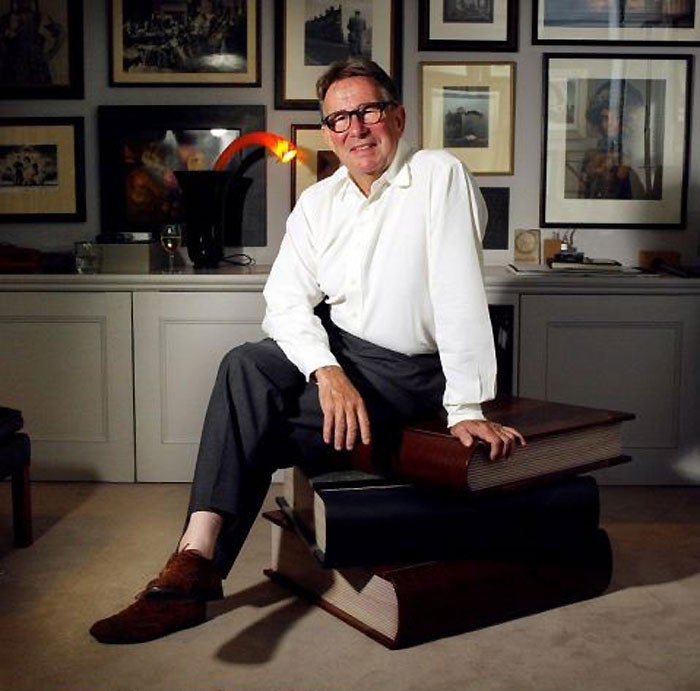
Paul Arden's death came as a shock. I'd got used to Paul ignoring the normal little everyday rules that restrict the rest of us; it just never occurred to me that he'd find a barrier he couldn't ignore.
When Paul was diagnosed with an incurable lung condition, a condition that eventually restricted his movements to the length of the oxygen tube stretching from his breathing machine, I thought Paul's life would wither as his lungs did.
But during that period, and while attached to the oxygen machine, Paul directed commercials, wrote advertising campaigns, opened and ran a photographic gallery, and wrote three best-selling books. I told him I admired the way he hadn't let his condition slow him down and that he'd accomplished more during that period than most able-bodied people do in their life.
Toni, Paul's wife, told me: "You have to understand, the only way to cope with this is to live in complete denial." That is why Toni was the perfect wife for Paul. He lived his life in denial of the sort of barriers that stop the rest of us before we start.
Fear of failure, fear of embarrassment, fear of what other people might think, fear of losing our job. All the things that look like insuperable obstacles, Paul just didn't see them; he went right through them as if they weren't there. So they weren't.
When Paul wanted to quit his job as a creative director at one agency to be an art director at Saatchi, it didn't look like a smart move to me. It was a step down to go from creative director to art director. But he wanted to work at an agency that he admired, with people he admired, so he saw it as a step up.
And in his first year at Saatchi, he won a prestigious D&AD award for a brilliant Health Education Council ad highlighting old people dying from hypothermia. He said he wanted to learn to be great at TV ads, not just press ones. I thought, "He won't find that so easy."
But over the next couple of years, he won several D&AD awards for television, including a Solid Fuel Advisory Service ad that showed a cat, a dog and a mouse sleeping together in front of a fire. He said he wanted to be the overall creative director at Saatchi. I thought, "Lotsa luck."
He became creative director, and was behind Saatchi's best decade ever, with work such as the slashed purple material that signified Silk Cut cigarettes, The Independent's "It is. Are you?" campaign, a British Airways ad that had a huge face made up of people from all over the world, and the Castlemaine XXXX campaign that claimed "Australians wouldn't give a XXXX for anything else". When he said he was going to leave Saatchi to direct commercials, I said, "Paul, you're mad. Don't do it."
In his first year as a director, his production company Arden, Sutherland-Dodd won the Palm d'Or at Cannes. Then came his debilitating breathing problems.
And so he said he really fancied being a best-selling author. And I said, "You know, advertising books have a very limited market. It probably won't sell outside of London."
Paul's son, Christian, told me last week that Paul's first book has sold another 100,000 copies just in the first three months of this year, and it's already in its fourth year of printing. Wherever I've been in the world, I've seen copies of it in German, Chinese, Spanish, Italian, Japanese... whatever is the local language. In New York, CEOs buy it by the crate to give a copy to everyone in their company.
The last thing you could ever accuse Paul of was being ordinary. In fact, to most people, Paul Arden looked like a complete nutcase. Which Paul, of course, would take as a huge compliment. Because he didn't aspire to the same things as those people.
He was irascible, awkward, tempestuous and sulky. He was also brilliant, original, electrifying and inspiring. He was going to do his job to the best of his ability, no matter what. And his job was to make ads that knocked your eyes out.
It wasn't until he worked for Saatchi that he found someone smart enough and powerful enough to understand the value of a true creative maverick. What Charles Saatchi and Jeremy Sinclair spotted in Paul was someone who didn't think like other people. It gave them another dimension to the talented department they already had (like Alex Ferguson bringing Eric Cantona into Manchester United).
Paul would look at the same things everyone else did, but he'd see things no one else did. He was once telling me about a night he'd had at the theatre. "It started off marvellously," he said. "We sat down and they opened the curtains, and there it was: a massive wall filling the stage. Nothing else; just a huge brick wall confronting the audience. I was stunned. And then they went and ruined the whole bloody thing by bringing on actors, just like any other play."
Paul didn't want the predictable, or the expected, the ordinary, or dull, or safe – what was the point? He wanted the risky, the unusual, the daring, which brought with it fear, insecurity and adrenalin. Wasn't that the whole point of being alive?
Instead of trying to make Paul another tame creative director, Saatchi gave him his head. He demanded Paul shock him; it was a marriage made in heaven.
The next years were the best in Paul's or Saatchi's history: ads that had the visual style and class of the legendary agency Collett Dickenson Pearce at its best. But ads that also had the confrontational aggressiveness of Saatchi's at its best. And – something no one had seen before – influences derived directly from fine art.
He certainly changed advertising. Suddenly, art directors had to know where the art galleries and museums were, not just the fine restaurants. Paul introduced artistic influences from Duchamp to Cocteau, from Man Ray to Ruscha.
But Paul not only changed advertising; he changed the way films are directed, he changed book publishing – in fact, he changed everything he turned his hand to. The title of Paul's first book is the title of Paul's life: It's Not How Good You Are, It's How Good You Want To Be.
Dave Trott is creative director of CST (Chick, Smith, Trott)
Join our commenting forum
Join thought-provoking conversations, follow other Independent readers and see their replies
Comments