C4 tests boundaries of broadcasting with Sri Lanka exposé
Graphic footage showing summary executions during campaign against Tamil rebels to be shown next week
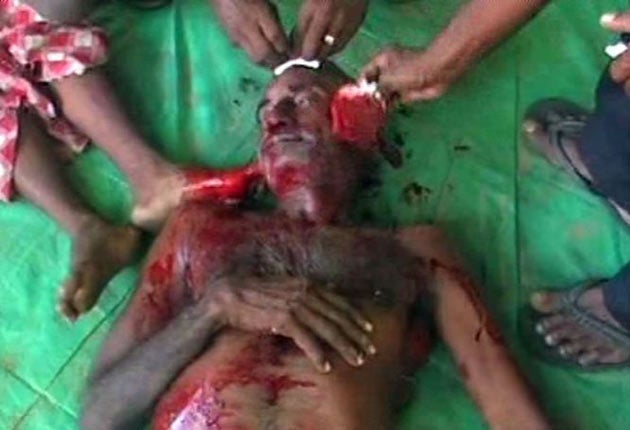
Channel 4 has sanctioned the broadcast of the most graphic and disturbing images that the network has ever screened, showing summary executions and the corpses of women who appear to have been sexually abused, to highlight evidence of alleged war crimes by Sri Lankan soldiers.
The footage, much of it taken by the troops themselves on their mobile phones as war trophies at the end of the 2009 conflict with Tamil rebels, has been identified by the United Nations Special Rapporteur on Extrajudicial, Summary or Arbitrary Executions, Christof Heyns, as evidence of "definitive war crimes".
That will put pressure on the Secretary-General of the United Nations, Ban Ki-moon, to order an investigation into war crimes by Sri Lankan armed forces and Tamil Tiger fighters, which he has so far resisted.
The documentary, Sri Lanka's Killing Fields, shows the undressed bodies of bound Tamil women who appear to have been sexually abused being thrown on to trucks by laughing Sri Lankan soldiers. At one point in the film, one soldier tells his comrade: "Pose with the bodies!" The programme also contains footage shot by Tamil civilians on personal cameras and mobile phones showing systematic shelling of hospitals.
It contains testimony from UN officials, including Gordon Weiss, the UN spokesman on Sri Lanka, who alleges that there had been "roughly 65 attacks on medical points that were treating civilians". He says: "It probably constitutes a war crime." Vany Kumar, a British biomedical technician who was caught up in the fighting when visiting Tamil relatives and was under fire in the hospitals, gives witness evidence of the attacks.
In The Independent today, C4's most senior news executive defends the decision to broadcast the images but actually warns viewers against tuning in. Dorothy Byrne, head of news and current affairs, said: "I don't urge you to watch this programme. It's horrific. The images will remain in your mind, maybe for years."
Last week, the film was shown at the United Nations Human Rights Council in Geneva and watched by an audience that included the United States, the United Kingdom and Indian ambassadors to the UN. An early day motion has been tabled in Parliament by the Conservative MP Lee Scott, calling "on the UN to establish an independent, international mechanism to ensure truth, accountability and justice in Sri Lanka". It advises all MPs to watch the documentary, scheduled to be shown on Tuesday evening.
Ms Byrne says that the programme has been made so that the most harrowing imagery is shown well after the watershed to protect children. "But there are probably many adults who shouldn't watch; people who can't watch horrible stuff on the news," she said. "I would definitely say pregnant women shouldn't look at it. I would rather I had never seen it."
At the start of the programme, C4 presenter Jon Snow issues a warning to the audience: "This film contains very disturbing images depicting death, injury, execution and evidence of sexual abuse and murder, much of it filmed on mobile phones or small cameras." Last night he told The Independent that the film was "the most important I have ever reported". He said: "I have reported civil wars before, not least in Central America in the 1980s but I have never seen such graphic evidence, often at the hands of government soldiers themselves, of what have all the hallmarks of war crimes."
Sam Zafiri, Amnesty International's director for Asia Pacific, said he hoped that the broadcasting of the new evidence would ensure that there was no cover-up of the atrocities. "The Sri Lanka government really tried very hard to make sure this was a war without any independent witnesses," he said. The programme also contains footage of atrocities committed by Tamil Tiger rebels against civilians.
Channel 4 first showed images of Sri Lankan troops committing alleged summary executions in 2009, soon after the end of the war. The Sri Lanka government accused the broadcaster of fabricating that footage.
In a statement issued to Channel 4, it also rejected the new evidence of atrocities and claimed that the broadcaster failed to meet "the 'standards and fairness' expected of a responsible TV channel".
The 26-year struggle
After 26 years of fighting for an independent homeland, the Liberation Tigers of Tamil Eelam (LTTE) were crushed in a government offensive that ended in May 2009. A UN report found that tens of thousands of people died during the final months of ferocious fighting. The UN panel in April found that government troops repeatedly shelled so-called "no-fire zones" where they had encouraged civilians to gather. Some hospitals in the zones were repeatedly hit. The LTTE also committed atrocities. The government of President Mahinda Rajapaksa dismissed the panel's findings. Mr Rajapaksa was swept back to power at elections in 2010.
Join our commenting forum
Join thought-provoking conversations, follow other Independent readers and see their replies
Comments