Hit & Run: Don't call them autocuties
Peter Sissons took a swipe at young, pretty newsreaders last week, suggesting they lacked "front-line reporting experience." Mary Nightingale, co-presenter of ITV Evening News, retaliated yesterday, "It's a bit of a tired old chestnut that if a woman is pretty than she can't be bright." Is it? Are female newsreaders now less bright (or prettier) than when Sissons was a pink-faced ITN hack?
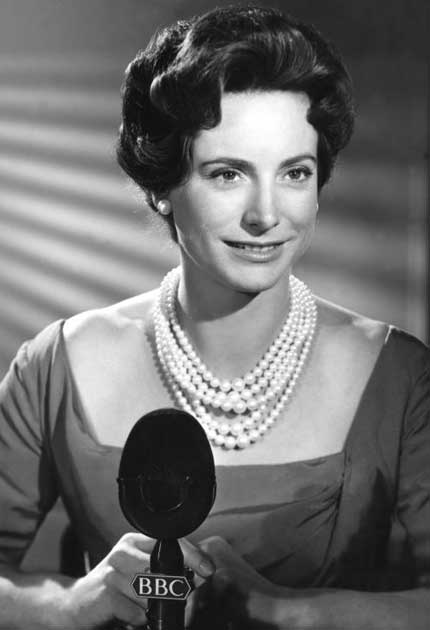
One of the first women allowed to read the national news was Nan Winton in 1960. She wore a triple string of pearls and an evening gown and was soon dropped with an audible shudder. BBC One's first permanent newsreader, Angela Rippon in 1974, had fiercely intelligent eyebrows and resembled a no-nonsense nanny; men adored her. Anna Ford on ITN was a fine-art lecturer at Christie's and a social studies tutor before going into television. She was both feminist icon and male fantasy. The cool, liquid-voiced Afro-Caribbean Moira Stuart spent 34 years as continuity announcer and newsreader while also serving on the board of Amnesty International. Selina Scott read the News at Ten from 1980; described as "that birdbrain" by Libby Purves, she proved her worth with a string of documentaries. Today, Fiona Bruce and Mishal Husein have fresh, school-captain good looks: the former read languages at Oxford, the latter has two law degrees from Cambridge and Florence. Charlotte Hawkins from Sky News, she of the china-blue eyes and blonde hair, read English at Manchester and reported from the Paddington train crash.
Even Natasha Kaplinsky, for whom Sissons reserved a special animus, is an Oxford graduate who worked for the Labour party. Not a ditz, a dingbat or a bimbo among them. Sorry, Pete. John Walsh
Time to close the '-gate'
You're an Australian newspaper editor and your Prime Minster is embroiled in a scandal involving his former neighbour, a used car dealer whose application for a government loan may have received preferential treatment. You need a snappy tag for your headlines. Easy – you call it "Utegate" (after the Aussie abbreviation for utility vehicle).
The affair now rocking Kevin Rudd is just the latest to earn the "-gate" suffix. It all started, of course, with Watergate, named after the Democrats' offices burgled in 1972 by men linked to President Nixon. These days it doesn't take a President-toppling conspiracy for lexicographically-lazy journalists to reach for a "gate".
The first post-Watergate gate was Winegate (a 1970s dispute involving French vineyards). Since then we've had Squidgygate (the Princess Diana/James Gilbey phone tapes); Sachsgate (the Ross/Brand affair) and Smeargate (the recent McBride emails). Even less consequential gates include Skategate (a scoring row at the 2002 Winter Olympics); Towelgate (the state purchase of $400 towels for the Mexican president); Nipplegate (Janet Jackson's "wardrobe malfunction"). We've even seen the retrospective dubbing of pre-Watergate scandals. What was wrong with the Profumo Affair, now sometimes dubbed "Profumogate"? What's next? Suezgate? Applegate (randy first couple eats forbidden fruit)? At the risk of instigating "gategate", Hit & Run formally calls time on this morpheme. Simon Usborne
Can you get rich by being a great economist?
It's a remarkable thing that "Dr Doom" – the brilliant US-based economist Nouriel Roubini – manages to make money as well as think and write about it so insightfully: few do. Dr Roubini not only told the world that a dreadful crisis was coming (hence his nickname), he acted upon that instinct, foresight, judgement – call it what you will – by selling his shares and piling into cash. He has also made a few bucks, on paper at least, on his $2m New York loft. "It's open-plan, with some great views across the city," he told one paper this weekend, also disclosing an income of "you can say six figures". He combines the academic life – professor of economics at New York University – with his private consultancy firm Roubini Global Economics, and is a regular at Davos. He enjoys a party, and says on Facebook that his friends "are members of the creative class". Few economists have been able to turn their professional interests into filthy lucre on their ownaccount, mostly living comfortable rather than opulent lives.
However, Dr Roubini is in good company; the great John Maynard Keynes. In the 1920s and 1930s Keynes invested with considerable success for himself, for the investment companies he advised and his own Kings College, Cambridge, where he served as Bursar. His techniques were "contrarian" – buying stuff when everyone else thinks you are mad to do so (and vice versa). In some respects, Keynes was rather like a hedge fund manager. He made many millions. He also founded the Arts Council of Great Britain. Perhaps Dr Roubini will leave a similarly creative legacy. Sean O'Grady
Join our commenting forum
Join thought-provoking conversations, follow other Independent readers and see their replies
Comments
Bookmark popover
Removed from bookmarks