Cashing in, the couple who dreamed up Tesco Clubcard
Britain's biggest supermarket owes much of its success to a husband-and-wife team who started a data-mining business in their spare bedroom.
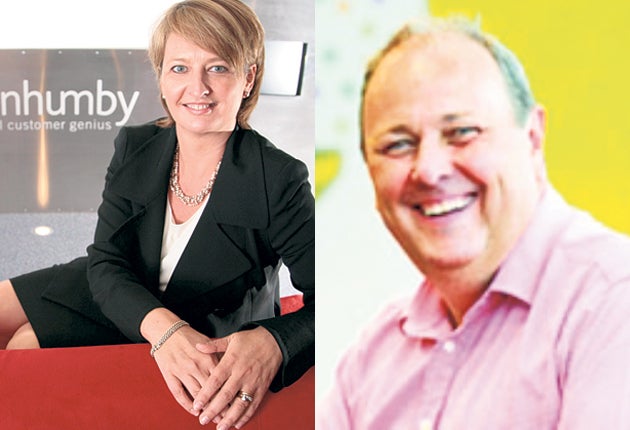
It is the husband-and-wife business which has grown from the spare bedroom of a west London family home to put Big Brother in your shopping basket. In the process, it has turned Tesco into the unrivalled retail behemoth of the modern age.
Yesterday, Edwina Dunn, 52, and Clive Humby, 55, banked their share of a £17m dividend payout from the company they founded. It was a handsome reward for their work in helping the supermarket giant build its vast databank of consumer information through its Tesco Clubcard.
The couple have gone from business start-up wannabees to multi-millionaires by leading a quiet revolution in understanding the way we spend our money. Although critics fear the abuse of the vast power of the information that they collect, consumers seem largely unconcerned and have signed up in their millions.
They have instead been eager to swap personal data on which kind of cheese or nappies they buy in return for small discounts on their weekly shopping bill. Tesco has tripled in size since 1995 when it agreed to the work with the couple following a now legendary presentation to the board in which Lord MacLaurin, Tesco's chairman, scrapped Green Shield stamps. The couple's company, Dunnhumby, is now 90 per cent- owned by its most important client.
Though its name might be little known outside the unfashionable world of forensic retail analysis, its work and the information held on its 40-terabyte database now affects shoppers across the world.
The meteoric rise began in the mid-1980s when the couple, now said to be worth £30m, were both working for market analysts CACI. Mr Humby, a mathematician by training who was already well known in the business of "data mining", resigned his post as his wife's boss. Ms Dunn was fired on the same day. The catastrophe of both salaries disappearing overnight and the prospect of a massive mortgage focused the couple's ambition, not least in the middle of a recession.
"You could say we were mad, but here is a time in your life when you are young and you just want to go for it," Ms Dunn said yesterday. With business meetings held around the kitchen table, and busy schedules juggled around the needs of bringing up two children, the company grew steadily if modestly until the first contacts were made with Tesco, which was then then being outstripped by its main rival, Sainsbury's, and on the look-out for a new loyalty card that could help it to make up the shortfall. The results of the trials of the couple's product impressed Tesco because, for the first time, bosses could see what was being bought by which customer. Assumptions about the way people shopped– notably that they bought everything from the same store – were shattered.
What became clear was a more complex picture of modern-day retail habits and the Clubcard, with its offer of personalised incentives to persuade people to fill these troubling gaps in their shopping baskets, proved both an eye-opener and a massive money-spinner.
At the end of the first presentation of the results of the trials, the board fell silent for 30 seconds – a heart-stopping experience for Mr Humby. But the spell was broken by Lord MacLaurin himself who declared: "What scares me about this is that you know more about my customers after three months than I know after 30 years."
Ms Dunn recalled yesterday: "I remember Clive ringing me when he had the meeting and he was so excited, and so was I. We all went to the pub to celebrate and forgot to tell him where we were going," she said. Today, billions of pieces of data have been amassed with each purchase. They are able to elicit dozens of nuggets of information to tell vendors exactly what kind of shopper a consumer is.
Once you have signed up to the loyalty scheme, you have become what you buy, as far as Tesco is concerned. And that's the case whether you are a budding MasterChef entrant or a budget cook scouring the two-for-one offers in the out-of date shelves.
Ms Dunn conceded she could understand people's concerns over the use of the information but said all information was anonymised before it was used and that all efforts were taken to protect people's identities from falling into the public realm.
"It becomes a very big market-research panel," she said. "It is very powerful but the connection with customers is carefully managed."
It has been estimated that Dunnhumby has helped save Tesco in the region of £350m a year since the companies joined forces.
Among those to profit from its success was the then marketing director, Terry Leahy, who went on to receive a knighthood and become Tesco chief executive on the back of the astonishing growth the card helped to bring.
Nina Hampson, the co-founder of the luxury lingerie firm Myla, was a senior analyst at Dunnhumby and worked on the Tesco account in the late 1990s. She recalls a firm where the average age of employees was 25 or 26, where three of the directors were women with families, and where the ethos was one of work hard and play hard.
"It was the first time that anyone had used the data they had," she said. "The art was in the execution and while others may have had intelligence, Tesco actually did something about it. There were about 60 of us at the time and it was a very innovative and close-knit team.
"Edwina is great at getting the strategy and Clive is great at the innovation. They built a great team around them where everybody was driven and loved what they did which was very important," she added.
From the relatively humble beginnings, Dunnhumby now employs 1,237 people in 16 offices across 30 countries. Information from the massive database is sold on to other clients – big producers which want to know who is buying their products – and the company is now working on loyalty projects with the Casino supermarket chain in France and Home Depot in the United States.
With a turnover of £199m and operating profits of £53m, it is a considerable contributor to its parent company, Tesco.
But Ms Dunn said there were no plans to retire yet and the company was still on course to turn over $1bn (£640m) a year. "We have no plans to do anything else or go anywhere else in the foreseeable future," she said.
Join our commenting forum
Join thought-provoking conversations, follow other Independent readers and see their replies
Comments