Grunts from the front: From Roman tablets to army blogs
Humans have always fought each other, but the written narrative of warfare begins about 6,000 years ago with documents detailing a conflict between Elam and Sumer (modern-day Iran and Iraq). Since then military history has been dominated by the official story of leaders and their strategic political and military decisions. Wars have rarely been narrated by the ordinary foot soldier, pilot or sailor.
A notable exception to this is the fragmentary records from Vindolanda, some of which give us a soldier's eye view of army life at a Roman fort between 90 and 120 AD. Information that we can glean from the tablets includes the fighting tactics of the Brittunculi (that's what the Romans used to call us Brits), as well as details about the daily diet, the cold and messages to far-away families and friends. Other examples of letters written by soldiers in the Roman army have been found at Doura-Europos (modern-day Salhiye in Syria) and Oxyrhynchus and Karanis (Kom Aushim) in Egypt.
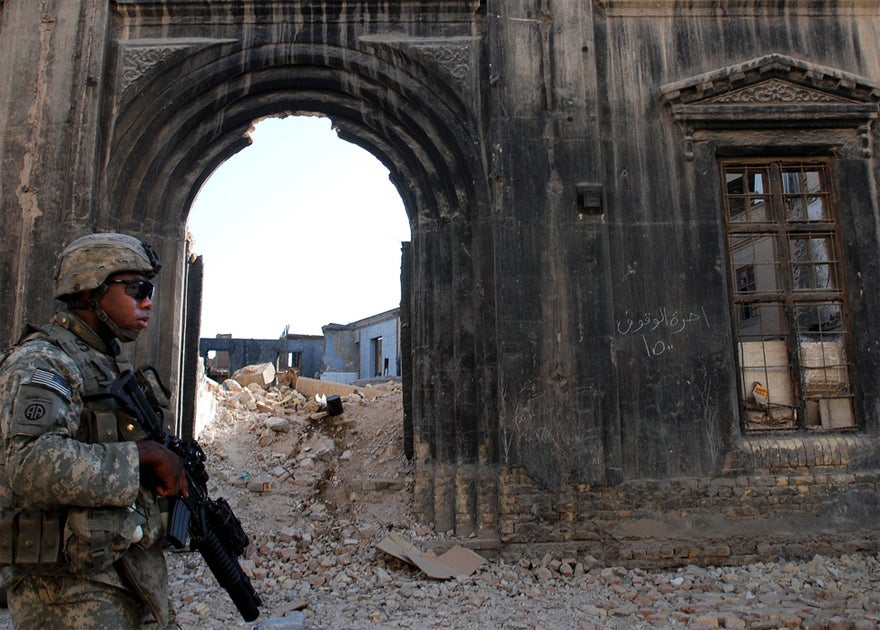
It is likely that Roman soldiers would also have been fighting in the area of modern-day Iraq, or Mesopotamia, which was occupied by the Parthians until the second century AD. The emperor Trajan sought to expand the empire into much of Parthian Mesopotamia in 116 AD, but Hadrian relinquished some territory in 118 AD, realising that the empire's defences were stretched. To this day, the occupying forces in Iraq also have to deal with the fragile heritage dating from the Babylonian empire - although not always with much success. So from the earliest records of fighting in Elam and Sumer some 6,000 years ago, we come full circle to the most modern war narratives - this time the soldier's personal point of view through the soldier blogs from modern-day Iraq.
The Vindolanda 'postcards' were written on thin veneers of local British woods using Roman-style ink. They were probably sent through army convoys: a far cry from the near-instant and global messages that modern-day soldiers are able to send to their families and friends, or even to complete strangers. But despite the vast difference in communication between now and 120 AD, some of the messages aren't so different to those of US and UK soldiers stationed in Iraq since 2003. While the Roman soldiers were eager to hear news of their families and friends, the soldiers on duty in Iraq also posted messages emphasising how important family ties are to them.
One of the most well-known soldier blogs to come out of the Iraq war was Colby Buzzell's My War (Killing Time in Iraq), written in a witty, Bukowski-esque style. Buzzell, an American infantry soldier, began writing about his experiences of fighting in Mosul in 2004 and his reports quickly became one of the most popular soldier blogs written during that conflict. One of the early entries alluded to the danger of working in a combat zone:
“I can hear small arms fire right now coming from outside the wire as I write this entry … From a cement shelter I observed three very large dust mushroom clouds from right outside the wire from where the explosions took place. You could feel the concussion of the explosions from where I was standing. No word yet what just happened. The craziness begins...” [24 June 2004]
Other blogs from the multi-national troops posted in Iraq have also been flying around the blogosphere. Many of them mention the hard conditions that the soldiers are living in – for example this post from American Soldier (written by an anonymous soldier in the US army):
“I can say that I live in probably the shittiest and most dangerous part of Iraq. The barracks are cramped, the season is cold but when it comes to missions all is forgotten. I don’t care what you read, the insurgency is consistent. Every day my FOB gets mortared. We send our counter fire out and square them away but they are at it again the next day.” [23 January 2006]
Other non-official voices from the Iraqi conflict have included several Iraqi bloggers as well – including a teenage girl going by the name of Najma Abdullah, writing in her blog A Star from Mosul. Her blog gives a frank perspective of civilian life during the conflict:
“We reached school, the first thing I saw was a classmate crying, I hurried asking what happened and she told me "I saw him dying there! We couldn't do anything." [18 December 2004]
Many of the bloggers are supportive of their mission in Iraq and some are also supportive of the Bush administration that instigated the conflict – although in some cases this support seems to wane as the war progresses. One infantryman known as Kevin, wrote in his blog, Boots on the Ground:
“100+ people kidnapped in broad day light from the Ministry of Higher Education and Scientific Research. I CAN'T BELIEVE THIS. This is just so outrageous. Someone needs to do something about this, the situation is TOTALLY out of control. I am so furious about this, is this the kind of crap me and my close buddies put our lives on the line for!? … I can't believe how bad things have gotten, this is just incomprehensible. I think it is time to pull our troops out, they're doing the best damn job they can, but it is incompetence all the way to the top and our presence does not improve things at all.” [17 November 2006]
Despite strict US Army rules on communications, modern soldiers are relatively free to express their opinions about the validity of their operations and their leaders – provided they have the anonymity of a blog, as American Soldier acknowledges. In contrast, infantry in the Roman army may have been less likely to criticise their leaders or their mission. The practice of decimation, in which every tenth soldier would be beaten to death by the other soldiers was used during republican times up until the Augustan era. It was chosen as a method of punishing a cohort or group of soldiers for cowardice and, while it was a brutal punishment, it was chosen by commanders as an alternative to killing the whole group.
While blogs on the internet are certainly the way to go when it comes to getting your personal message across from remote locations, some prominent people today are still dipping their pen into ink to write their thoughts down on paper. However, it's an ages-old technique that didn't work too well for UK prime minister Gordon Brown, who got into trouble recently for penning an apparently almost illegible letter of condolence to the mother of Jamie Janes, a 20-year old guardsman killed in Afghanistan in October. While Gordon Brown's intention was to convey his condolences to the grieving mother, Jacqui Janes took exception to the apparent mis-spelling of her son's name as well as the messy handwriting.
Letters from the Legions: a Personal View of World History
US Army Sergeant Creating Map of 1200 Archaeological Sites in Iraq
Join our commenting forum
Join thought-provoking conversations, follow other Independent readers and see their replies
Comments
Bookmark popover
Removed from bookmarks