How We Met: Dr Joe Berke & Matisyahu
'I embarrassed everybody. I fell asleep during Sting, but as soon as Matis started, I woke up'
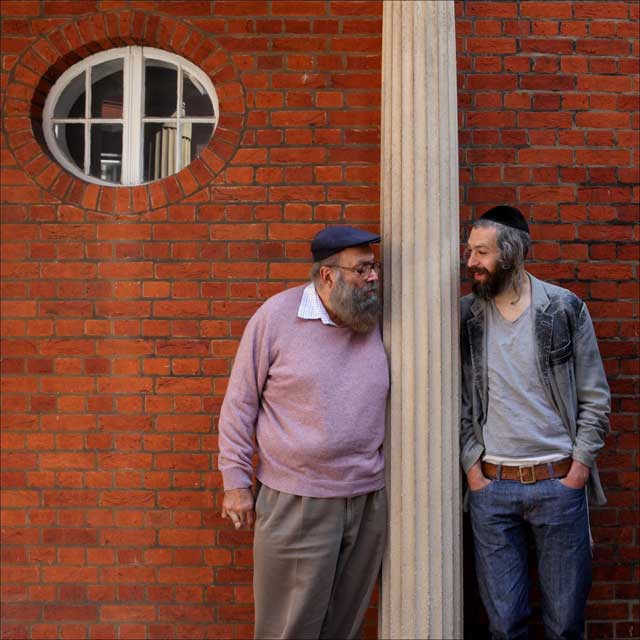
Matisyahu, 30, is a Hasidic reggae musician whose work crosses over into rap, scat and beatboxing. "One Day", from his new album 'Light', was the official theme song of the 2010 Winter Olympics. He lives in Brooklyn, New York, with his wife and two sons.
I moved to Brooklyn in 2002, where I went to a yeshiva [an academy for the study of Judaism] for two years. I cut myself off completely from the outside world. I didn't see my old friends, I changed my style of clothing, I stopped listening to music, I spent all day learning Torah and I got indoctrinated into the whole religious mindset in an attempt to recreate myself.
There is a very healthy way of making changes in your life, but there's also a very fine line of where you're disconnected from who you are. I got a little bit shaky in the process.
When the people who ran the yeshiva found out I sang, they asked me to perform at a reunion. One of the guys there, his daughter was getting married two days later and he asked me to perform at the wedding. This guy also happened to be a healer and he said, "Let me work on you for a little bit." Later on I got a bill for, like, $1,000, but among the things he told me to do – to ride a bike, eat certain foods – he said I should meet Ephraim Rosenstein, a therapist in Brooklyn.
So I went into therapy with Ephraim, which helped me tremendously. And after the therapy ended, we became friends and started learning together: philosophy, psychology... Then he became a co-writer on my music, on my lyrics.
Ephraim mentioned to me that this Joe Berke was his mentor in psychotherapy. Joe had started out working for RD Laing, who was, in the 1960s one of the first psychotherapists to use LSD with his suicide patients. Joe would sit in the room with the patient who was tripping on acid and make sure they were OK. And Joe had become religious later on in his life [as I had]. So I was kinda interested in him.
When I was in London for some shows one time, in 2006 or 2007, I went to Joe's house. We sat together and just talked. He's extremely wise and funny, and I feel a very strong closeness with him, even though we don't see each other that often. You don't see it that much these days that you have a friend from another generation like that, but he really gets me.
I like to ask him about his life. He just had a trip with Ephraim to the Ukraine – they went to the graves of the Hasidim and he saw all these sights; and he's run a psychiatric centre for 30 years. So I talk to him about these things, his experiences.
With Joe, there isn't anything I need from him or that he needs from me. It's just a simple love we have for each other. It's not as though we're spending hours on the phone or seeing each other all the time. It is what it is. There's just a certain appreciation each of us has for the other.
Dr Joe Berke, 71, is a psychotherapist who moved to London from New York in 1965 to work with RD Laing at the therapeutic community at Kingsley Hall. He established the Arbours Crisis Centre in north London in 1973 to offer psychotherapeutic alternatives to traditional psychiatric treatment, where he worked until his recent retirement. He lives in Highgate, north London, with his wife.
I was introduced to Matis by a friend of mine, Ephraim Rosenstein. Ephraim is a psychotherapist and a close friend of his. What happened that first time we met? I don't remember. It was just, "Hey Joe, I think you should meet this really cool guy." That was in Israel, in Jerusalem, about six years ago, and we've been close ever since. We meet up in Jerusalem, in New York, we've hung out around here [in London].
Matis had a big concert in Ramat Gan [in Tel Aviv] with Sting about three years ago. I embarrassed all my friends, my wife, everybody. I fell asleep during Sting, but as soon as Matis started the gig, I woke up. They sang together, it was great.
The last concert I went to in Jerusalem, in a place called Sultan's Pool, just outside the Old City, I went with my wife and I think we were the oldest people, amid 15,000-20,000 kids. After the concert, a bunch of kids came up to us. "Thank you very much for coming," they said. "Why are you thanking us?" I asked. "You have such a nice son." They thought he was my son!
I love his music, it's full of energy. Matis is one of the great singers of our generation. There was a singer called Shlomo Carlebach, a rabbi, and he electrified the Jewish world from the 1950s on by singing these beautiful Hasidic songs he'd written. The kids in the 1950s and 1960s were transformed by the energy coming out of that guy; people still play his songs all the time. The same thing with Matis now. The kids love the energy that comes from him. It's Hasidic Jewish reggae, it's wild. It's totally unexpected.
There's a book called Jewish Pirates of the Carribean [in which it's explained that] Jamaica was the first place where the Jews, after being expelled from Spain in 1492, could go and not be persecuted. It was the island. So maybe it's not surprising that Matis plays with a Jamaican beat.
When Matis comes to Jerusalem, we hang out at Ephraim's place; he lives in a settlement outside of Jerusalem, overlooking the Judaean Hills; he grows vegetables and flowers and trees down there and you can see for miles. It's like we're all part of a family together.
Matisyahu's third studio album, 'Light', is out on 21 June on 100% Records
Join our commenting forum
Join thought-provoking conversations, follow other Independent readers and see their replies
Comments