Julian Assange: Wikileaks founder is a hacker fighting for freedom of information
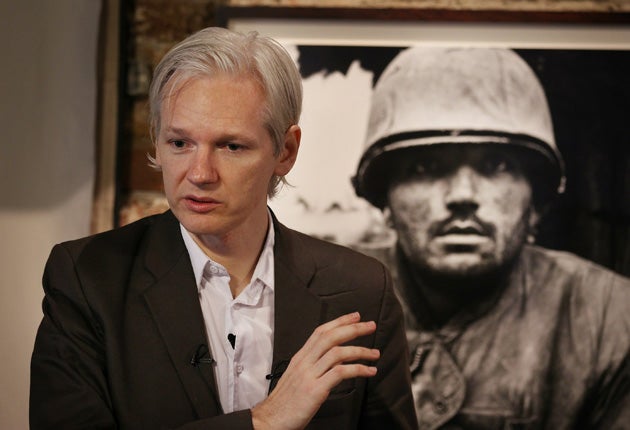
The founder of Wikileaks has built his life around an uncompromising quest for information. At the age of 39, he has no home and travels the world with one bag containing his clothes, and another holding his computer. Acquaintances who have worked with him on some of Wikileaks' biggest scoops point to a man who is "precise and obsessive", and who talks, with equal knowledge, of computer security and geopolitics.
The Afghan papers mark the biggest case in the short history of Wikileaks, which he set up in 2006. But for Mr Assange, it was the latest stage in a life of action against vested interests.
His parents met at an anti-Vietnam demonstration. His mother believed that a formal education would instil an unhealthy respect for authority on her son and he moved 37 times before he was aged 14. During one of the moves, he lived opposite an electronics shop and went there to write programmes on an early home computer, quickly learning to crack into programmes. "The austerity of one's interaction with a computer is something that appealed to me," he told last month's New Yorker magazine.
With his sharp mind, growing computer skills and outsider mentality, he entered the nascent world of hacking, setting up a group that came to be known as International Subversives. He is said to have broken into the US Defence Department and other supposedly secure sites.
Australian investigators finally caught up with him after he hacked into a telecoms company. He admitted 25 charges, but the judge ordered him to pay a token sum because his activities had caused no damage.
After a series of jobs — including as a computer security consultant – Mr Assange studied physics, but appears to have become depressed about the conformity of his academic colleagues. He explained his thinking in a document, "Conspiracy as Governance". It detailed how leaks could be an instrument for breaking down unrepresentative government that thrived on keeping information secret. As a hacker and as a physicist, he has come to define his life as one of the individual battling the institution. With Wikileaks, he attempted to break down those networks.
Since it went online, his site has secured an enviable number of scoops that have included corruption in Kenya to working procedures at Guantanamo Bay. But the release of the Afghan papers is by far its biggest production, planned from a London basement. And yesterday he came out to promote his scoop.
With his thin frame and long, white hair – which is said to have lost all its colour after a stressful custody battle over a son in the 1990s – he cuts a striking figure. His accent is hard to place. He thinks carefully before answering questions, knowing the sensitivity of his position. He says that he and other colleagues have been targeted. "We understand from the word of a national security reporter in Australia that the Australian government was asked by the US to engage in certain forms of surveillance to my person and other Wikileaks people in Australia," he said yesterday. "That source says most of those requests were rejected by the Australian government."
Mr Assange works with a small team of "dedicated and overworked" staff, as well as 800 part-time volunteers and thousands of supporters.
The group's most high-profile previous success came with the release of a helicopter cockpit video that showed civilians shot in Baghdad. To prepare the work for publication, he hunkered down in a house in Reykjavik with a small group of allies. Two colleagues went to Iraq to try to verify the claims while Mr Assange worked long hours in the "bunker", said Smari McCarthy, of the Icelandic Digital Freedoms Society.
"I have been involved in this freedom of information for a decade, but I just don't have the energy and drive that he has," said Mr McCarthy. "He has structured his life around this quest for freedom of information."
The publicity brought by the video added $1m (£6.5m) to the group's coffers this year. It also prompted more people to come forward with leaks of their own. "Courage is contagious," says Mr Assange.
At a talk to journalism students earlier this year, the Wikileaks founder said he had come into contact with soldiers after publishing a vast database of army equipment used in Afghanistan and Iraq. Soldiers found that the database helped them to track down spare parts for their vehicles.
Those contacts appear to have provided Mr Assange with a useful source of military revelations. He promised yesterday that there was much more to come.
Join our commenting forum
Join thought-provoking conversations, follow other Independent readers and see their replies
Comments