Making history: The world's oldest archaeologist
Part-Indiana Jones, part-Miss Marple, Beatrice De Cardi's thirst for adventure remains undimmed – at the age of 93
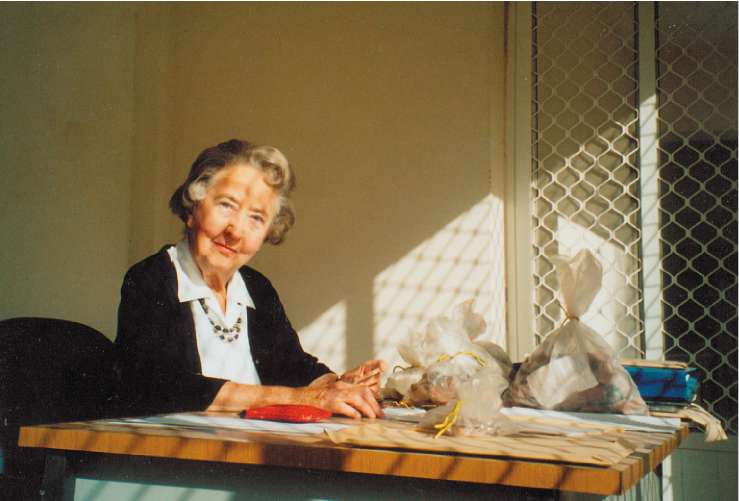
Beatrice De Cardi is in little doubt about what has driven her these past nine decades. Travelling to some of the world's most inhospitable places, coping with boiling heat, ruthless bandits and wild animals with a disarming, old world insouciance, it is, she says, her insatiable curiosity that has kept her going.
"It is exactly the same as if I am walking around a very bendy road," she explained as she prepared for the Society of Antiquaries' Women in Heritage Day at Burlington House in London where she will meet the Culture minister Margaret Hodge. "If I see another curve in the hillside I have to go around it to see exactly what is there."
At 93, Miss De Cardi can lay claim to being the world's oldest practising archaeologist. An expert on the pre-Islamic history of the Lower Arabian Gulf states and the civilisations of her beloved Baluchistan, she is part-Indiana Jones, part-Miss Marple. Her life is an extraordinary testament to a woman whose intense motivation has never left her. One who steadfastly refused to compromise in what was – and many argue still is – an avowedly man's world.
"I have never had any difficulties," she said. "I am not a woman or a man when I am working in the Gulf or anywhere else. I am a professional and they have always accepted that."
For Miss De Cardi, archaeology allowed her to visit places and meet peoples unheard of among the girls of her social class.
Her family lived in an "enormous home" overlooking Ealing Common but ill health interrupted her education at St Paul's Girl's School. Following a year-long convalescence, she took a place at University College London in the 1930s where she was able to indulge her "innate interest" in archaeology. This led her to her first dig and the ignition of a passion that remains undimmed.
A first job as a secretary at the London Museum was interrupted by the war and she found herself "lent" to the Foreign Office for a dangerous mission to Chungking to assist the British diplomatic effort in one of its fiercest theatres, the main requirement for which was "unflappability". Upon the cessation of hostilities she found her old job in London had gone but the urge to travel remained. A transfer to the Board of Trade in Delhi followed, but after partition she moved to Karachi, lured by the ancient Indus sites there.
Having obtained maps, a jeep and a driver as well as a small team led by an illiterate Punjabi tribesman called Sadar Din, who remains her greatest teacher in the field, she set out to prove that Baluchistan was an "archaeologist's paradise". It took only a couple of weeks to make her point.
But by 1957 she was forced to return to a desk job in Britain to assist in the effort of dealing with the archaeological legacy of the Luftwaffe. From then on visits to the region had to be self-funded, taken in saved-up annual leave and, because of work commitments in the UK, conducted in the cauldron of the region's summer.
She describes a pioneering time, fraught with peril. "We camped out sharing a water channel with a pack of wild dogs who raced past our tent to drink twice daily," she said. "At night the howls of wolves in the adjacent hills served as a reminder that Baluchistan was a wild and dangerous place. The impression gained substance when we moved back to Surab and were not allowed to camp at Siah-damb on account of a djinn [spirit] greatly feared by our workmen. I suspected a more material power and accepted a revolver lent by the local official."
In 1960 the region was closed to foreigners and Miss De Cardi was forced to approach from the Iranian side at Bampur. Finds here led her to the lower Gulf, now part of the United Arab Emirates. In the northernmost state Ras al-Khaimah, she discovered lost tombs now obliterated by new motorways funded by the petrodollar billions. Eventually she was forced to quit the country because of encroaching hostilities. But not before she had come to the attention of the emirate's ruler and later that of the government of Qatar, who asked her to lead an expedition charting the country "from Stone Age to Oil Age", something she was required to do in just 10 weeks.
Miss De Cardi, who never married, continues to travel to the region each year to catalogue new finds at the national museums she was instrumental in founding.
She concedes that hers was a different era, though she insists young archaeologists still have opportunities for adventure. "I just happened to be rather a pioneer in outlook and go to some rather wild spots where I could conduct primary research which arrested my attention. Today too many people are over-concerned with dotting all the 'I's and crossing every 'T'."
Join our commenting forum
Join thought-provoking conversations, follow other Independent readers and see their replies
Comments
Bookmark popover
Removed from bookmarks