Manal al-Sharif: 'They just messed with the wrong woman'
She is the Saudi woman who became a symbol of female emancipation when she was filmed behind the wheel of a car. In a rare interview, she tells Guy Adams of the persecution she has endured in her fight for equality – and why she will not be silenced
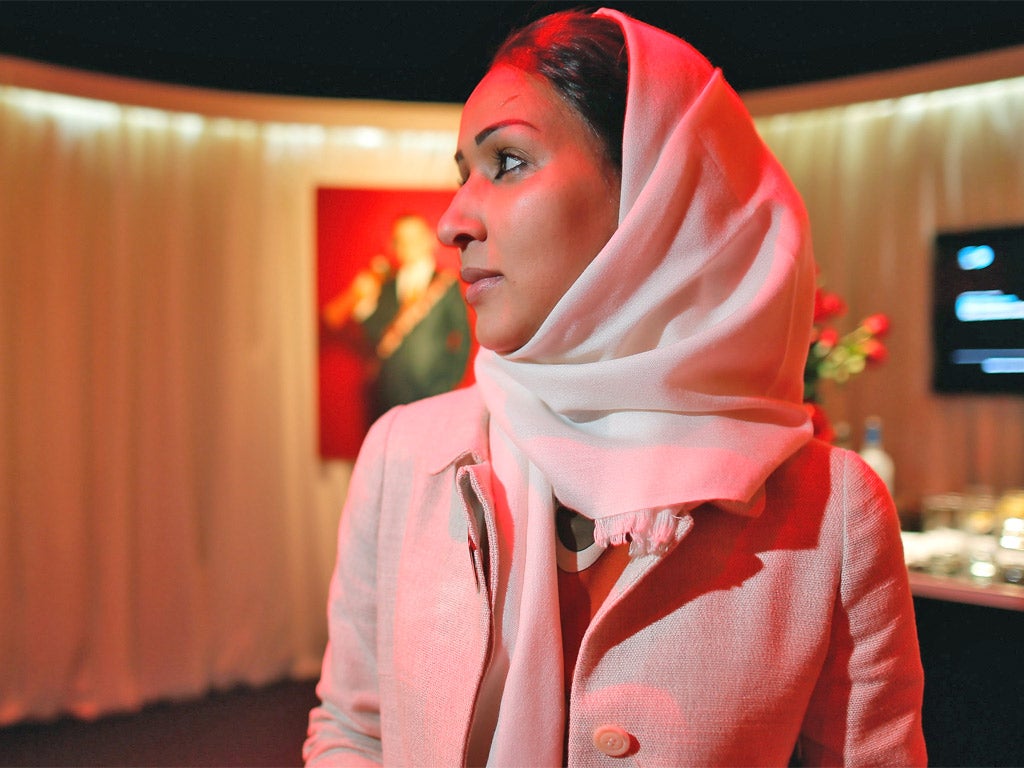
She was the plucky young woman who, in splendid defiance of one of the world's most repressive societies, steered a car through the streets of the city of Khobar, railing as she went against the misogyny of laws that make it illegal for women in Saudi Arabia to drive.
Manal al-Sharif was arrested for her pains and spent nine days in jail on suspicion of a crime called "incitement to public disorder". She emerged, almost a year ago, to worldwide fame: an eight-minute film of her protest drive, shot on a friend's smartphone, spread across YouTube, in various iterations, at a rate of a million hits per day.
Since then, Ms Sharif has used her notoriety as the "Saudi Girl Driving" to pursue radical change. She has led mass "protest drives", filed lawsuits against her nation's chauvinistic traffic laws, and recently started a feminist pressure group, My Right to Dignity, which aims to undermine the conservative excesses of an Islamic state which treats women as second-class citizens.
Her struggle hasn't all been plain sailing, though. For all the plaudits (she recently joined Barack Obama and Pippa Middleton in Time magazine's list of the world's "100 most influential" people), she is subjected to daily death threats, and fears for the safety of her parents and her six-year-old son. "I measure the impact I make by how harsh the attacks are," she says. "The harsher the attacks, the better I am doing."
[Following sentence updated:] A few months ago, Saudi "sources" convinced several media outlets that Ms Sharif had been involved in a fatal car crash that was the subject of a report carried by the news agency AFP. "The whole idea was to say 'see, God is punishing her; women really shouldn't drive!'," she recalls. She soon rang her family, before informing her 90,000 Twitter followers that rumours of her demise were "rubbish".
This month, Ms Sharif has suffered the ultimate sanction for any single mother: the loss of her livelihood. The oil company Aramco, her employer for more than a decade, told her she faced the sack for daring to stick her head above the political parapet.
We meet in Norway, where she has just given a barnstorming speech to the Oslo Freedom Forum, an annual gathering of global human rights activists. A film of her extraordinarily moving presentation, which received an ovation, hit YouTube last week. A quarter of a million people have already watched.
"After I was invited to speak here in Oslo, I asked for four days off and my company refused," she says of her sacking. "My boss called me and said, 'If you are going to talk at another conference, you could lose your job. You are not allowed to go. We don't want our name to be associated with you'."
Ms Sharif went anyway and, at 33, now finds herself jobless and homeless (her flat was owned by Aramco). A lesser woman might feel ground down by that pressure but, looking impressive and poised in her very un-Saudi business attire, she seems energised instead. In a hotel lobby, she angrily rattles through the daily indignities of life in a country which, despite her university education and high-flying CV, forces her to live according to a set of ultra-conservative Islamic protocols which hark back to the Dark Ages.
The lot of Saudi women is shaped by Wahhabism, the most unbending form of the Muslim faith, she explains. The Koran is effectively her nation's constitution and gender apartheid is a cultural obsession. Shops, restaurants, schools and workplaces are sexually segregated, while strict rules, enforced by shadowy religious police, govern every aspect of a woman's existence.
"I'm a single mother and I'm 33 but it's hard to even rent my own apartment without getting my father to sign a piece of paper saying he gives permission," she says. "I went to renew my passport the other day and they told me to come back with my male guardian. That is life, for a Saudi woman; wherever we go, whatever we achieve, we are the property of a man."
A Saudi woman who is beaten or raped by her husband and goes to the police must bring that husband along to formally "identify" her, she adds. Saudi women are forbidden from playing competitive sports and are not due to get the vote until 2015.
The irony of Ms Sharif's life is that she has a deeply conservative background. Born in 1979, she grew up in Mecca, the holiest of holy cities. Her working-class home had separate entrances for men and women. As a child, she remembers burning her brother's pop cassettes in the oven after mullahs told her music came from "Satan's flute".
Later, at university in Jeddah, her class of 60 women was taught computer science in a segregated campus, by professors lecturing from remote locations via closed-circuit television. In keeping with convention, she wore a vast black niqab and long gloves.
Her life changed, almost overnight, on 9/11, orchestrated by her countryman Osama bin Laden. "The extremists told us it was God's punishment to America," she recalls. But on the news that evening, she was sickened by footage of office workers jumping from the twin towers. "I said to myself, 'something is wrong. There is no religion on earth that can accept such mercilessness, such cruelty.'"
Ms Sharif began questioning literalist aspects of her faith. "I realised it is impossible to live with the rules they give Saudi women," she says. "Just impossible. You trying to do everything by the book but you can never stay pure."
After leaving university, she gained further independence by landing a job in information security for Aramco, which had been US-owned. It was a lucky break: of Saudi Arabia's five million women graduates, only about 500,000 are employed. At 24, she got engaged to a co-worker and at 25 they married.
It didn't work out. While Ms Sharif is reluctant to dwell on the details, she says that the kingdom's staggeringly high divorce rate of 60 per cent is rooted in tensions surrounding gender inequality. "My father's generation of Saudi men are more liberal than the men of my generation," she says. "But with women it's the opposite. Women are much less conservative than the men now, and that leads to clashes."
After her divorce, she spent a year in family courts. She won custody of her son but has no legal recourse to maintenance. The experience further convinced her that Saudi women must stand up for their rights. "I cannot make him pay, and this is one of the things we are fighting for," she says. "To have family courts and family laws which protect women and children from abuse."
In 2009, Ms Sharif's employer sent her temporarily to its US office, in Boston. "I remember just thinking it was so incredibly normal," she says. "There were no complications. I could just live a normal life. I could go and look at apartments and sign a contract myself. I went to the bank, and opened an account."
Most importantly, she drove a car. "I thought, 'This is how life should be'."
Not long after returning home, Ms Sharif took her now-famous car journey. It was the start of a long campaign that she says will end only when women in Saudi Arabia become the equals of men. It is a tall order, but she is adamant that it can be done.
"You know what?" she tells people who ask the secret of her success. "They just messed with the wrong woman."
Fight for rights: Worst places to be female
Yemen
Rated the worst of 135 countries for women by the World Economic Forum's Gender Gap Report 2011. With limited access to education, Yemeni women take only two per cent of skilled jobs. Around 14 per cent of girls are married before the age of 15, and some are forced to marry as young as eight, Human Rights Watch says.
Chad
Three times as many men are enrolled at university as women in the central African country, one of the poorest nations in the world. From 2005-11, Chad closed only 52 per cent of its gender pay gap – the lowest out of all countries surveyed.
Pakistan
Women have greater than average political empowerment in Pakistan (which came one place above the UK in the ratings), but health, education and economic participation are areas of inequality. The nation's labour force is made up of four times as many men as women.
Mali
Women are treated as second-class citizens in Mali, where more than half are married by the time they are 18 and 69 per cent of women aged 15 to 24 are illiterate, according to Unicef. Under the new Family Code law adopted this year, which had been heralded as a step forward, women's rights have been set back to the original 1962 Bill, which rules a woman must obey her husband.
Join our commenting forum
Join thought-provoking conversations, follow other Independent readers and see their replies
Comments