A computer dating revolution (of the archaeological kind)
Innovations in programming are changing archaeologists’ perception of how settled life and early agriculture spread through Britain, David Keys, Archaeology Correspondent, reports.
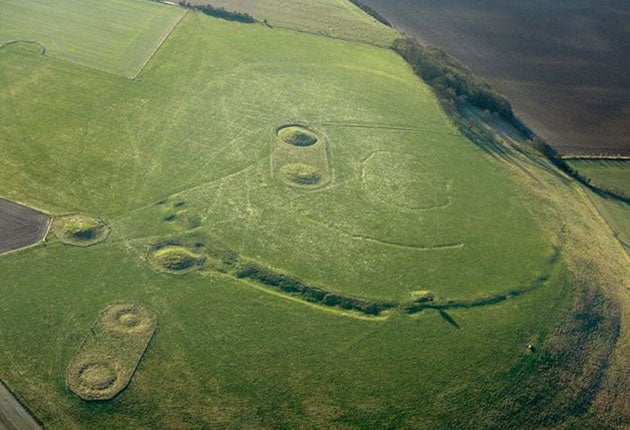
The long-lost ‘history’ of prehistoric Britain, including our island’s first wars, is being re-discovered - courtesy of innovations in computer programming as well as archaeology.
Using newly refined computer systems, developed over recent years by programmers at Oxford University, archaeologists from English Heritage and Cardiff University have for the first time been able to fairly accurately date individual prehistoric battles, migrations and building construction projects.
After eight years of research, the team has been able to create a ‘historical’ chronology for the first 700 years of settled life in Britain.
“In effect, we have been able to turn pre-history into history. In the past we knew about events in prehistory – but we weren’t able to date them sufficiently precisely to put them into a chronological sequence,” said Dr. Alex Bayliss, English Heritage’s chief dating specialist.
“Now, for the first time, we’re able to tell the real story of how settled life in Britain began,” said her colleague, one of Britain’s leading experts on the period, Professor Alasdair Whittle of Cardiff University.
The new dating revolution is completely changing archaeologists’ perception of how settled life and early agriculture first spread through Britain and how, some 800 years before Stonehenge, Britain’s first monumental buildings came to be constructed.
For the first time ever, computer programmers and archaeologists have now fully developed and utilized on a mass scale a technique – known as Bayesian Chronological Modelling – to be able to glimpse the real political and even military events which shaped Britain’s prehistoric past.
The new research, based on computer-refined radiocarbon dates, strongly suggests that farming life-styles were introduced from the continent through Kent and Essex by immigrants – not simply through the transmission of knowledge and ideas. The work also reveals that for the first 200 years, roughly the first 8 to 10 farming generations, the agricultural revolution spread very slowly – from Kent/Essex in around 4050 BC to the Cotswolds by 3850 BC (on average just over half a mile per year).
But the research also suggests that in around 3850 BC, the new farming culture reached some sort of demographic or political ‘critical mass’ – for the new dates reveal that suddenly the agricultural lifestyle (also being adopted by Britain’s indigenous pre-agricultural inhabitants) spread throughout Britain within just 50 years – at an average speed of around 9 miles per year – ie. some 15 times more rapidly – vastly faster than most archaeologists had previously thought.
The new study – partly funded by the Arts and Humanities Research Council – has also discovered that this farming explosion in around 3850 BC seems to have triggered the construction of Britain’s first monumental buildings – the great communal tombs known today as long barrows. But the new more precise dating system has also indicated, contrary to previous archaeological belief, that most of them were only in use for two or three generations – not normally the centuries prehistorians had always assumed.
Yet the most intriguing new discovery seems to be a political one – a finding that hints at ferocious competition for power between competing groups, possibly even competing traditions and ideologies.
The new study, ‘Gathering Time’, published this month, has revealed that the introduction of continental-style ceremonial/political complexes into Britain – massive circular enclosures, each up to 300 metres in diameter – met with a mixed reception.
The new dating analysis reveals that at first (around 3700 BC) large numbers – around 40 to 50 – were built within 50 to 100 years. However some were violently attacked, their palisaded ramparts burnt down and their people killed. By around 3625 BC, attempts to build new enclosures had almost ceased.
This pause – potentially the result of opposition to the new order – lasted around half a century. A brief revival of enclosure-building between approximately 3575 and 3525 BC, detected by the new dating analysis, may represent a temporary political/military comeback for what had been briefly a dominant new tradition. This later period of monument building and subsequent ongoing occupation is also associated with terrible violence – with several of these ceremonial centres coming under attack from massed prehistoric archers.
Gradually, by around 3300 BC, the monumental enclosures (known today as ‘causewayed camps’) were abandoned – and an entirely British (as opposed to continental European-originating) style of monument, great processional avenues associated with funerary rituals, began from 3550 BC, to take their place as the dominant monumental (and probably ideological) tradition in Britain.
The ability of the refined dating system (precise to within around two and a half decades rather than two and a half centuries) is therefore transforming archaeologists’ understanding of pre-history. In the future it may even be possible to work out what the political/military events actually represent – whether they in fact represent tensions between continental immigrants and people of indigenous origin (who had adopted agriculture from those immigrants) – or whether they represent tensions between tribes or other groups of a single or related ethnic and cultural tradition. Only future research using the newly refined dating techniques plus DNA and other technologies will finally reveal the full story.
The Bayesian computer programme
The technique which English Heritage and Cardiff University has used to discover the chronology of Britain’s early agricultural ‘history’ (the early Neolithic) uses computer programs to narrow down the date ranges provided by conventional radiocarbon dating tests.
Typically radiocarbon dates in the early Neolithic have been so imprecise that they could only be expressed as wide date ranges, typically some 250 years long.
The Bayesian computer program solves this ‘imprecision’ problem by systematically checking each year in a given radiocarbon date range against other archaeological dating information, mainly the original stratigraphic relationships between the archaeological items being tested.
When literally hundreds of pieces of radiocarbon and stratigraphic data from a given site have been systematically analysed by a Bayesian computer program, the precision can typically be improved to a 25 year rather than 250 year date range.
The Bayesian software, which the archaeologists have been using, has been developed principally at Oxford University. The first program was brought out in 1995, but over the past 16 years constant improvements have been made to the system. Perhaps most importantly, however, the just completed English Heritage/Cardiff University investigation into the early Neolithic has enabled archaeologists for the first time to learn how to apply the new technique on a grand scale.
Re-discovering Britain's First Wars
Reconstructing the chronology of the early Neolithic has enabled English Heritage and Cardiff University archaeologists to re-discover Britain’s first wars – a series of conflicts which the new dating analysis shows occurred mainly between 3675 and 3475 BC.
The archaeologists have now succeeded in giving relatively precise dates to eight out of Britain’s eleven known early Neolithic battles. In almost all cases the targets for attack were the early Neolithic monumental enclosures known as causewayed camps – and the attacks were carried out through a mixture of massed archery and the use of fire.
In some cases enhanced defences appear to have been built in particularly insecure periods only to be attacked and burned down relatively rapidly. The wars were between agricultural peoples – but whether those peoples were from the same or different ethnic or cultural groups is not yet known.
Join our commenting forum
Join thought-provoking conversations, follow other Independent readers and see their replies
Comments
Bookmark popover
Removed from bookmarks