Arctic ice set to match all-time record low
Satellite measurements reveal that volumes have fallen consistently over past 30 years
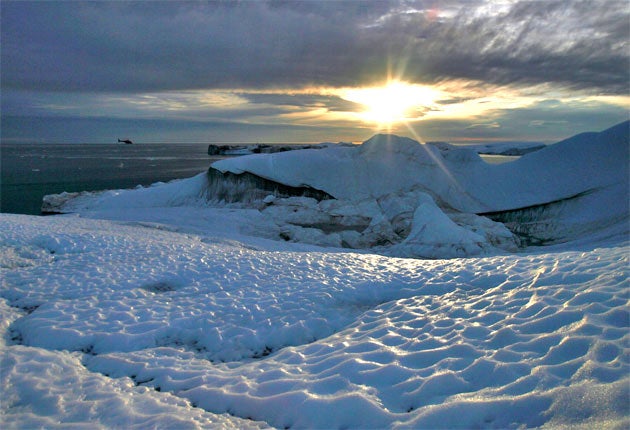
The area of the Arctic that is covered by floating sea ice at the end of this summer's period of melting is likely to match the all-time record low of 2007, scientists said yesterday.
Some researchers believe that the actual volume of sea ice in the Arctic has already fallen to a record minimum this summer. The extent of the Arctic covered by sea ice this summer has also continued to decline – a trend seen since 1979 when the first satellite measurements were collected.
Although satellites are good at measuring the surface area of ocean that is covered by the floating sea ice, it is not so easy to assess ice volume, which requires accurate measurements of ice thickness over wide regions.
Satellites have produced clear evidence that the sea-ice extent – the area covered by at least 15 per cent of ice – has fallen consistently and significantly each summer over the past 30 years. Since 1979, sea ice extent in summer has fallen by around 30 per cent, according to satellite data.
Walt Meier, of the US National Snow and Ice Data Centre in Boulder, Colorado, said that at the moment the Arctic sea ice is on track to be second or third lowest in terms of sea-ice extent, although there is still about another week or so until the summer melt period finally comes to an end.
"A lot still depends on the weather. If a warm front comes through, there could still be some rapid melting. But at present we think it could be close to or as low as the 2007 record minimum," Dr Meier said.
The sea ice in the Arctic goes through annual cycles of melting in summer and reforming each winter. However, as average temperatures in the the Arctic region have increased in recent decades – faster than in most other regions of the world – summer sea ice has disappeared faster than predicted, and winter ice has not reformed as readily as it once did.
In 2007, there was a "perfect storm" of driving winds that piled the sea ice up against the Greenland coastline and high pressure that removed cloud cover at the height of summer season to create idea conditions for the melting of the sea ice. This year the sea ice is more dispersed, but in terms of total surface area covered by ice, it probably ranks close or equal to 2007, Dr Meier said.
The last four summers have experienced the four lowest minima since satellite readings were first gathered and eight of the ten lowest summers have occurred in the past decade, he said. At the same time, there has been a marked decrease in thick "multi-year" sea ice that is older than five years, and an increase in the proportion of thinner, younger ice which is more likely to melt away completely in summer.
Scientists at the University of Washington in Seattle estimated that the actual volume of sea in the Arctic is already at an all-time low, lower even than in 2007 because then the ice that was left was older, multi-year ice several metres thick. However, estimating ice volume is notoriously difficult.
Join our commenting forum
Join thought-provoking conversations, follow other Independent readers and see their replies
Comments
Bookmark popover
Removed from bookmarks