Autism and genetics: A breakthrough that sheds light on a medical mystery
Scientists have discovered the first significant link between autism and DNA, in a study that could revolutionise understanding of this disturbing behavioural disorder which affects more than half-a-million Britons.
The researchers believe the changes they have found to the genetic make-up of autistic children play a significant role in causing the developmental illness. Their findings could eventually lead to early diagnostic tests for autism and new forms of treatment, based on counteracting the fundamental errors in a patient's genetic code.
However, the researchers have cautioned that their discovery, which emerged from the biggest international study of its kind into autism, is still preliminary and it will take many more years of intensive investigation to understand and treat the genetic alterations that increase an individual's susceptibility to the disorder.
The results emerged by analysing the genomes of nearly 1,000 autistic individuals and comparing their DNA against that of more than 1,200 unaffected people. Scientists found a series of important differences between the DNA of the two groups that they believe could account for why autism has a strong genetic component that may trigger the condition under certain circumstances.
"Our results substantiate the importance of genes as susceptibility factors in autism. Our results will lead to a paradigm shift when it comes to understanding the root causes of autism," said Stephen Scherer, of the Hospital for Sick Children in Toronto one of the lead authors of the study published in Nature. "We find that the genetic variations we discovered are actually rare in their frequency, meaning that most individuals with autism are actually probably genetically quite unique, each having their own genetic form of autism."
Autism is a complex neurological disorder that is normally diagnosed in the first few years of infancy, but can go unrecognised for years. It inhibits a child's ability to communicate and to develop normal social relationships.
Autism spectrum disorder – which can range from mild to severe – affects nearly 1 per cent of children and the incidence has increased dramatically in recent years, partly as a result of wider diagnostic criteria and improved recognition of the problem. Autism tends to run in families and is known to have strong genetic and environmental components.
The Autism Genome Project, involving more than 1,500 families from across the US, Canada, Britain and the rest of Europe, attempted to identify the genetic side to the disorder through genome-wide scans of the DNA of patients. The researchers concentrated on a type of genetic difference that distinguishes one person from another, called copy number variations (CNVs), where the same stretch of DNA containing up to 20 genes is replicated several times.
They found that autistic children were likely to carry about 20 per cent more CNVs than ordinary children. They also found that many of the CNVs found in autistic children were not carried by their parents, but were newly arisen, probably prior to conception during the formation of the egg or sperm – like the chromosome changes leading to Down's syndrome.
Some of the CNVs also involved genes already known to affect brain development. Three of the disrupted genes, for instance, are involved in communication between nerve cells, and one of them had already been associated with autism and some other mental disabilities.
"Our research strongly suggests that this type of rare genetic variation is important and accounts for a significant portion of the genetic basis of autism," said Professor Tony Monaco of the Wellcome Trust Centre for Human Genetics at the University of Oxford, who led the British arm of the international project.
"By identifying the genetic causes of autism, we hope in the future to be able to improve the diagnosis and treatment of this condition which can affect children and their families so severely. Just knowing about these genetic changes can help the families involved come to terms with why their child has autism, but it can also be important where there are siblings too in determining their future risk."
Some of the genes involved in the genetic changes have been linked with aspects of brain development such as the growth of nerve cells or the proper functioning of the nerve junctions (synapses) that allow one set of brains cells to communicate with another set.
"This is good evidence that this type of genetic variation is important to understanding the causes of this condition," said Alistair Pagnamenta of the University of Oxford, one of the lead authors of the study.
The scientists hope that by understanding the metabolic pathways in the developing nervous system that the genes control, they will be able to identify promising new targets for the development of drugs to treat autism.
Dr Scherer said: "We're able to tie these genes together in the same biological pathways, they seem to be involved in how the brain functions. Hopefully we can design therapies to target these pathways."
They believe that eventually it may be possible to devise genetic tests to determine a child's predisposition to autism so they can be diagnosed before more obvious symptoms become apparent. Such tests are unlikely to be able to provide an unequivocal result – just a probability for the chances of developing autism.
Case study: 'We couldn't go to the cinema, or even on family holidays'
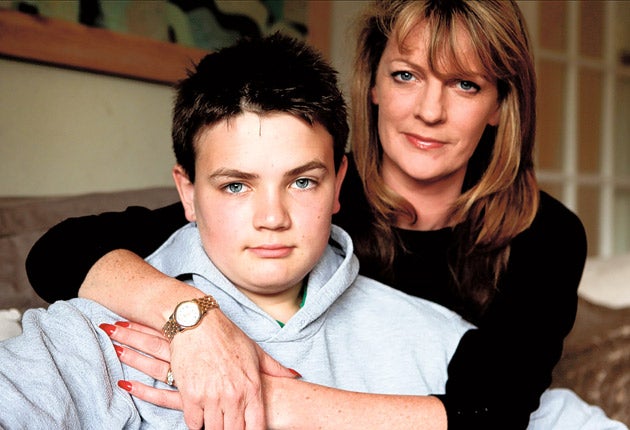
Polly Tommey, 43, Middlesex
My son was diagnosed with autism when he was two and a half. For a mother to hear that her child is autistic is utterly heartbreaking. I remember going to the library and looking up a definition of autism as "the most severe form of mental illness. Most patients, if not all, end up institutionalised". It took us a year to get over the diagnosis.
Billy started off "low-functioning" and couldn't speak. He had no idea that we were his parents and would constantly bang his head against the floor. We couldn't take Billy outside the house because he would run off. He had no understanding of danger. The only safe place we could leave him was in the car with all the doors locked. There were no possibilities of cinema outings, and even family holidays were a non-starter.
Autism makes it very hard to live like a normal family does. There is very little treatment available on the NHS, and with multiple trips to America for treatment we have incurred thousands of pounds of debt.
The most prominent steps we have made towards helping Billy have come by addressing health issues. Autism sufferers are picky eaters, and for years all he would eat was Weetabix and milk. Once we addressed diet issues, things improved. He later got into an excellent school, which helped build confidence.
Now, at 14, Billy is classed as a "high-functioning" child. He can speak, read and write and he's doing things again. He has a level of awareness of things going on around him. And he's number three in the world on Mario Kart Wii.
Most concerning is the fact that there is very little support for adults with autism and this country is not properly equipped to handle the hundreds of children who are going to grow up with autism. It has to be more carefully looked at and planned for in the future.
I know a pub owner who bought a house and is letting it out to autism sufferers and making profits on it. But this sort of solution is unethical – there has to be more done to help the older generation before it's too late.
What we know...
* Autism is a lifelong developmental disability that appears early in childhood but it is sometimes diagnosed later.
* It affects how a person communicates and relates to the world around them. It is a spectrum condition, which means that it affects people in different ways.
* There is a strong genetic component to autism, which can run in families, but it is likely that genes are not solely responsible.
* Boys are four times more likely than girls to be diagnosed. According to the National Autistic Society, it is estimated that more than half a million people in the UK are affected.
... and what we don't
* There is no simple test to detect autism in early childhood. Such a test would be important because it could lead to early interventions.
* The genetic basis for autism is not understood. A wide number of genes or genetic changes appear to be involved but there is no single "autism gene".
* Environmental influences are also thought to be involved in triggering autism but it is not clear how this works.
* Many people are still without a diagnosis and the support they need. Many have not been diagnosed into their 60s.
Join our commenting forum
Join thought-provoking conversations, follow other Independent readers and see their replies
Comments
Bookmark popover
Removed from bookmarks