Billions of tons of water lost from world's glaciers, satellite reveals
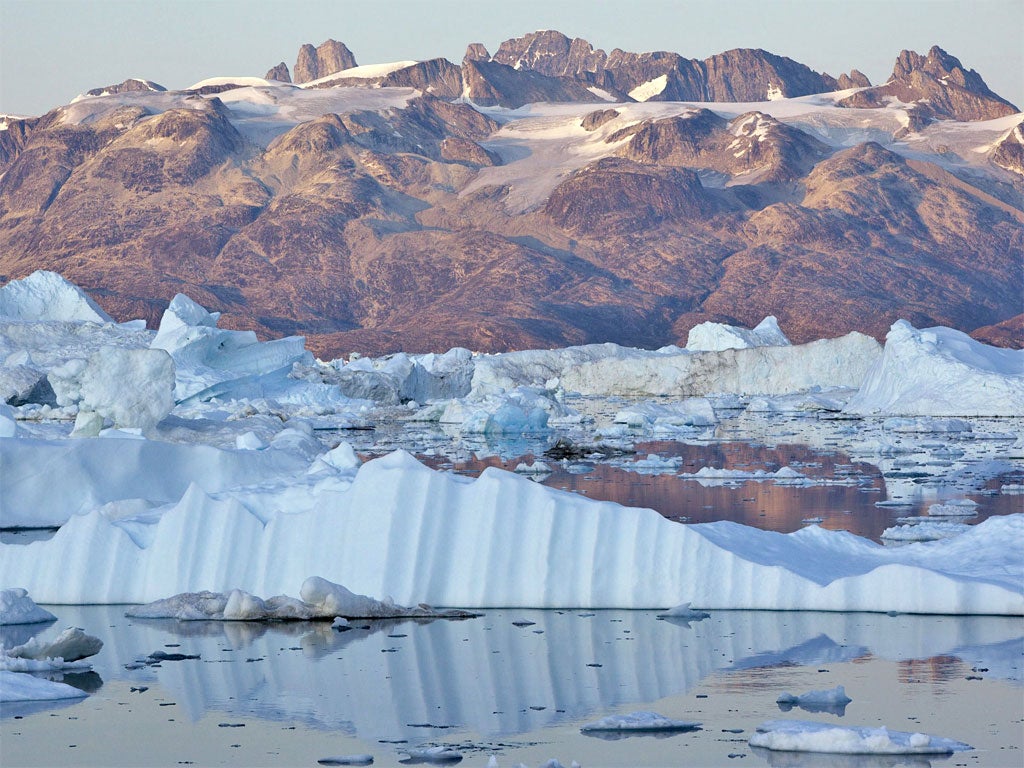
The total volume of water that has melted from all of the world's polar ice sheets, ice caps and mountain glaciers over the past decade would repeatedly fill Britain's largest lake, Windemere, more than 13,000 times, according to one of the most comprehensive studies of the Earth's frozen "cryosphere".
Using a unique pair of satellites that have monitored the disappearing ice over the entire surface of the globe, scientists estimated that some 1,000 cubic miles of ice has disappeared between 2003 and 2010 – enough to cover the US in one-and-a-half feet of water.
The survey found that the melting of the cryosphere has been responsible for raising sea levels by about half an inch over the same period, equivalent to a rise of about 1.5mm a year. This was on top of sea-level increases due to the thermal expansion of seawater caused by rising ocean temperatures.
Data gathered by the Gravity Recovery and Climate Experiment (GRACE), a joint satellite project run by Nasa and the German government, also found that the amount of ice melting from the mountain glaciers and ice caps that were not in Greenland or Antarctica was actually significantly smaller than previous estimates had suggested.
Instead of contributing nearly 1mm of sea level rise per year as previously suggested, some of the Earth's glaciers and ice caps, especially in the Himalayas and other mountain ranges in Asia, were melting significantly slower than expected, contributing about 0.4mm of sea level rise per year – less than half the amount predicted.
One explanation for the previous overestimates could be that most of the glaciers that have been studied intensively are at lower altitudes and therefore more prone to melting. Higher glaciers are colder and less susceptible and yet only 120 glaciers out of 160,000 glaciers and ice caps have been directly measured from the ground.
The GRACE satellite experiment, however, covered the entire globe and found that all the world's glaciers and ice caps combined, apart for those in Greenland and Antarctica, had lost about 148 billion tonnes of ice, or about 39 cubic miles, annually between 2003 and 2010. The individual glaciers on the fringes of Greenland and Antarctic contributed an additional 80 billion tons over the same period, the study published in Nature found.
"This is the first time anyone has looked at all of the mass loss from all of the Earth's glaciers and ice caps with GRACE," said John Wahr, professor of physics at the University of Colorado at Boulder, who was part of the research team that analysed the satellite data.
"The Earth is losing an incredible amount of ice to the oceans annually, and these new results will help us to answer important questions in terms of both sea-level rise and how the planet's cold regions are responding to global change."
Professor Jonathan Bamber, of Bristol University, said: "Melting glaciers are an iconic symbol of climate change... they seem to have been receding, largely uninterrupted, almost everywhere around the world for several decades."
1,000
Cubic miles of ice has disappeared between 2003 and 2010 from polar caps.
Join our commenting forum
Join thought-provoking conversations, follow other Independent readers and see their replies
Comments
Bookmark popover
Removed from bookmarks