Breakthrough in fight against malaria
Killer bites are caused by older insects – so scientists have developed a pesticide that attacks only them
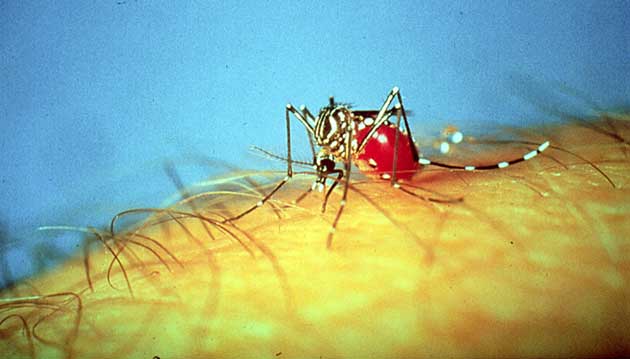
The fight against malaria has entered a new phase with an insecticide specifically targeted at older mosquitoes, which scientists believe will be more effective than existing pesticides.
Most malaria infections, which kill about one million people a year, result from humans being bitten by older mosquitoes. Yet existing insecticides kill mosquitoes of all ages and, as a result, the chemicals soon become ineffective because the insects develop pesticide resistance. Killing the younger creatures encourages the development of that resistance.
Researchers have begun the development of slow-acting pesticides that kill mosquitoes only after they have reached a certain age in their lifecycle, when they are most likely to transmit the malaria parasite to human hosts.
"If we killed only older mosquitoes we could control malaria and solve the problem of resistant mosquitoes," said Andrew Read, professor of biology and entomology at Penn State University. "It is one of the great ironies of malaria. Most mosquitoes do not live long enough to transmit the disease. To stop malaria, we need to kill only the old mosquitoes."
Female mosquitoes transmit malaria when they feed on blood, which they need to make their eggs. After they pick up a malarial parasite, it takes between 10 and 14 days, or two to six cycles of egg production, for the parasite to migrate to the insect's salivary glands, from where the malarial parasite can be transmitted.
Existing pesticides kill mosquitoes of all ages which exerts immense selection pressure on the insect to develop resistant strains, which can then quickly spread, making the chemical useless as a means of malarial control.
"Insecticides sprayed on house walls or bed nets are some of the most successful ways of controlling malaria, but they work by killing the insects or denying them the human blood they use to make eggs," Professor Read said. "This imposes an enormous selection in favor of insecticide-resistant mosquitoes." A study, in the online journal Public Library of Science, found that late-acting insecticides will not have much, if any, impact on the spread of resistance because younger mosquitoes will already have bred several times. Professor Mathew Thomas, of Penn State, said: "We are working on a fungal pesticide that kills mosquitoes late in life. We could spray it on walls or on treated materials such as bed-nets, from where the mosquito would get infected by the fungal spores."
It would take between 10 and 12 days for the fungi to kill the insects, so destroying the old, dangerous mosquitoes, and dramatically reducing the demand for the insects to develop resistance, Professor Thomas said.
Using data on mosquito lifespan and malaria development from hotspots in Africa and Papua New Guinea, the scientists found that insecticides killing only mosquitoes that have completed at least four cycles of egg production reduce the number of infectious bites by about 95 per cent.
Critically, the researchers also found that resistance to late-acting insecticides spreads much more slowly among mosquitoes, compared to conventional insecticides, and that in many cases, it never spreads.
Mosquitoes: The killer facts
* Only female mosquitoes transmit malaria because, unlike males, they need a blood meal to make their eggs. They produce several batches of eggs during their lifecycle.
* Mosquitoes find their human hosts by detecting carbon dioxide on peoples' breath, from up to 1,000ft away.
* When she gets closer, the female mosquito makes her final choice using body odour, other volatile chemicals and sight, which accounts for why some people get bitten more than others.
* Most mosquitoes remain within about a mile of their breeding site. They need water to lay their eggs and for the larvae to develop. But they can cross continents on aeroplanes.
* Mosquito bites often do not hurt. But the immune reaction of the body to the foreign proteins released into the bloodstream can result in a painful swelling.
* The malaria parasite, or plasmodium, infects the mosquito when the insect feeds on an infected host. But the mosquito itself does not become infectious until the plasmodium migrates from the insect's gut to its salivary glands.
Join our commenting forum
Join thought-provoking conversations, follow other Independent readers and see their replies
Comments
Bookmark popover
Removed from bookmarks