Britain's 'father of IVF' wins the Nobel Prize
Maverick scientist is rewarded for his pioneering research into human fertility
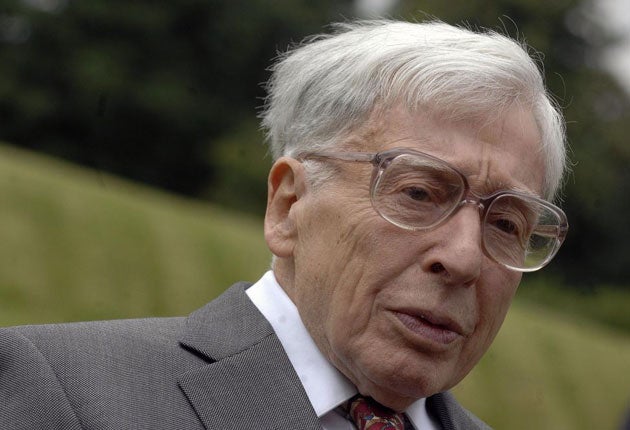
A maverick British scientist, who became known as the "father of IVF" despite once being considered an outsider to the medical establishment, has won this year's Nobel prize in medicine.
Professor Robert Edwards, 85, won the 2010 Nobel Prize in Physiology and Medicine for his pioneering work on the in vitro fertilisation of human eggs that led to the birth of the world's first IVF baby, Louise Brown, in 1978. Professor Edwards, whose funding request for IVF research was turned down by the Medical Research Council (MRC) in the 1970s, is the sole recipient of this year's prize, which cannot be awarded posthumously. His co-worker, the gynaecologist Patrick Steptoe, died in 1988.
The Nobel Assembly at the Karolinska Institute in Sweden said that Professor Edwards' contributions represented a milestone in medicine. His work led to widely used IVF techniques which have allowed an estimated 4.5 million "test tube" babies to be born worldwide over the past 32 years.
Tributes to Professor Edwards flowed in yesterday from colleagues, scientific leaders, politicians and the research council that once denied him funding – a private donation in the end allowed him to continue the work that led to the world's first successful IVF pregnancy.
"The MRC is delighted by the award which recognises Professor Edwards' dedication to ensuring his early research translated into clinical practice," said Declan Mulkeen, director of research at the research council.
"The MRC didn't fund Edwards' work in the 1970s for a range of reasons, including safety and ethical reservations present at the time. In the 1970s, infertility research was given a lower prominence in research funding priorities and in clinical practice," Dr Mulkeen said.
Professor Edwards, a blunt-speaking Mancunian, started studying IVF using the egg cells of rabbits. He achieved his first successful fertilisation of human eggs in a test tube in 1969 and had the insight to realise that human fertilised eggs would not develop beyond the first cell division unless he allowed them to mature within the ovaries before removal.
The Nobel committee said that he clarified how human eggs mature, how different hormones regulate the maturation process and at which point the eggs are most susceptible to being fertilised by sperm. With Dr Steptoe, he also found ways of obtaining eggs from patients in a safe way, using the then relatively controversial technique of laparoscopy.
Professor Edwards, who is in frail health, said in 2008 that he still remembers when he created the first human blastocyst – an early embryo consisting of a microscopic ball of cells. "I'll never forget that day I looked down the microscope and saw something funny in the cultures... and what I saw was a human blastocyst gazing up at me. I thought: 'We've done it'," he said.
Louise Brown was born in a hospital in Oldham, and Steptoe and Edwards went on to create the first IVF clinic at Bourn Hall in Cambridge in the teeth of fierce opposition from religious authorities and scientific colleagues, who believed they had not carried out the necessary safety work on primates.
Ms Brown said yesterday it was "fantastic news" that Professor Edwards had won. "We hold Bob in great affection and are delighted to send our personal congratulations to him and his family," she said.
Martin Rees, president of the Royal Society, said yesterday: "The work of Professor Edwards exemplifies the ethos of the Royal Society... applying visionary, extraordinary research to change the lives of people all over the world."
David Willetts, the Science Minister, said that Professor Edwards' achievements in IVF research brought hope and happiness to millions of families, while Sir Ian Wilmut, a pioneer of cloning, said the technology had provided the opportunity to study and understand early human development.
His career
1925 Born in Manchester Robert Edwards completed compulsory military service before studying biology at the University of Wales in Bangor and at Edinburgh University where he was given a PhD in 1955 for his thesis on embryonic development of mice.
1958 Becomes staff scientist at the Medical Research Council's National Institute for Medical Research, where he begins work on the study of the human fertilisation process.
1963 Moves to Cambridge University where much of the pioneering work that leads to his Nobel prize is carried out. Later sets up the world's first IVF clinic at Bourn Hall, which he founded with colleague Patrick Steptoe.
1978 Louise Brown, the world's first IVF baby, is born on 25 July following research carried out by Steptoe and Edwards.
2010 Wins the Nobel Prize in Physiology and Medicine.
Join our commenting forum
Join thought-provoking conversations, follow other Independent readers and see their replies
Comments
Bookmark popover
Removed from bookmarks