Danger from the deep: New climate threat as methane rises from cracks in Arctic ice
Scientists shocked to find greenhouse gas 70 times more potent than CO2 bubbling from deep ocean
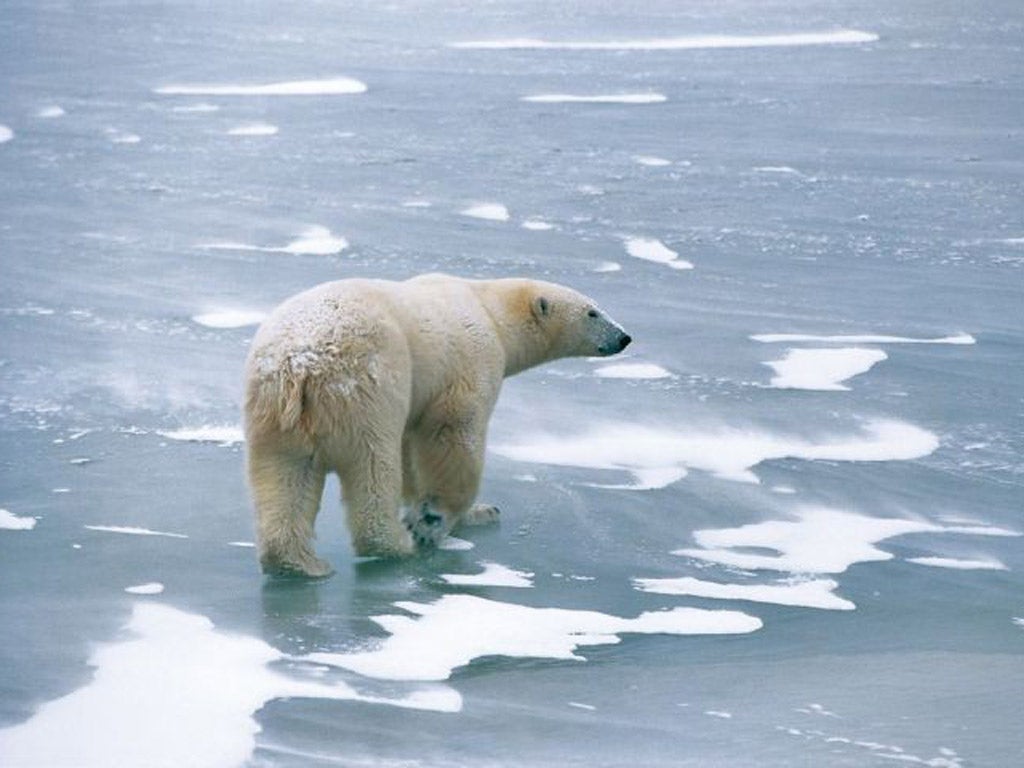
A new source of methane – a greenhouse gas many times more powerful than carbon dioxide – has been identified by scientists flying over areas in the Arctic where the sea ice has melted.
Click here to see 'The deadly depths - Methane release in the Arctic' graphic
The researchers found significant amounts of methane being released from the ocean into the atmosphere through cracks in the melting sea ice. They said the quantities could be large enough to affect the global climate. Previous observations have pointed to large methane plumes being released from the seabed in the relatively shallow sea off the northern coast of Siberia but the latest findings were made far away from land in the deep, open ocean where the surface is usually capped by ice.
Eric Kort of Nasa's Jet Propulsion Laboratory in Pasadena, California, said that he and his colleagues were surprised to see methane levels rise so dramatically each time their research aircraft flew over cracks in the sea ice.
"When we flew over completely solid sea ice, we didn't see anything in terms of methane. But when we flew over areas were the sea ice had melted, or where there were cracks in the ice, we saw the methane levels increase," Dr Kort said. "We were surprised to see these enhanced methane levels at these high latitudes. Our observations really point to the ocean surface as the source, which was not what we had expected," he said.
"Other scientists had seen high concentrations of methane in the sea surface but nobody had expected to see it being released into the atmosphere in this way," he added.
Methane is about 70 times more potent as a greenhouse gas than carbon dioxide when it comes to trapping heat. However, because methane is broken down more quickly in the atmosphere, scientists calculate that it is 20 times more powerful over a 100-year cycle. The latest methane measurements were made from the American HIPPO research programme where a research aircraft loaded with scientific instruments flies for long distances at varying altitudes, measuring and recording gas levels at different heights.
The study, published in the journal Nature Geoscience, covered several flights into the Arctic at different times of the year. They covered an area about 950 miles north of the coast of Alaska and about 350 miles south of the North Pole. Dr Kort said that the levels of methane coming off this region were about the same as the quantities measured by other scientists monitoring methane levels above the shallow sea of the East Siberian Arctic Shelf.
"We suggest that the surface waters of the Arctic Ocean represent a potentially important source of methane, which could prove sensitive to changes in sea ice cover," the researchers write. "The association with sea ice makes this methane source likely to be sensitive to changing Arctic ice cover and dynamics, providing an unrecognised feedback process in the global atmosphere-climate system," they say.
Climate scientists are concerned that rising temperatures in the Arctic could trigger climate-feedbacks, where melting ice results in the release of methane which in turn results in a further increase in temperatures.
"We should be concerned because there's so many things in the Arctic where the warming feeds further warming. There are many things in the Arctic that do respond to warming," said Euan Nisbet, a methane expert at Royal Holloway University of London.
Join our commenting forum
Join thought-provoking conversations, follow other Independent readers and see their replies
Comments
Bookmark popover
Removed from bookmarks