Decoded: The Mystery of Human Migration
A new study aims to analyse modern DNA to track how man spread across the globe. Steve Connor persuades a series of high-profile figures to take the test – with fascinating results
It is the greatest journey in history, and now the story of how the first members of our species walked out of their African homeland to colonise almost every corner of the world is being told by reading the DNA of their living descendents.
Click here to see the graphic 'The maternal journey of OF mitochondrial DNA'
Half a million people from around the globe are participating in an ambitious project to reconstruct some of the ancient migratory routes that took Homo sapiens from their ancient African homelands to the relatively new territories of Asia, Europe, Oceania and America.
Hidden within the genetic makeup of people alive today is the encoded story of how their ancient ancestors made this epic journey, which covered many thousands of miles over many tens of thousands of years to complete.
The Genographic Project, a landmark study into ancient human migrations, aims to decode these hidden signposts within our DNA. By doing so, the project hopes to unravel the complex movements of the earliest men and women who were driven through necessity or curiosity to explore new territories and establish fresh roots in strange lands.
Human palaeontology, the study of ancient remains, suggests that the species Homo sapiens originated in Africa, probably East Africa, about 200,000 years ago, but it was only about 60,000 years ago that anatomically modern humans began their long and arduous journey out of Africa.
In recent years, with the ability to decode the human genome quickly and cheaply, it has been possible to compare the palaentological record with historical information on human movements stored within our DNA.
Over time, human DNA has amassed a bewildering variety of mutations that scientists can now exploit to build a picture of how men and women today are descended from the first people who moved along these ancient migratory routes.
One of the first big surprises of the Genographic Project, for instance, is the discovery that the initial journey out of Africa may not have been through the "northern route" of the Sinai Peninsula and Middle East, as initially proposed. Instead, they seem to have moved out of Africa by a "southern route" at the Bab-el-Mandeb straits at the mouth of the Red Sea separating East Africa from southern Arabia.
This migration may have required boats to traverse the shallow waters that would have existed there 60,000 years ago. But even with this apparent physical obstacle, scientists believe that the DNA analysis of the female X chromosome of present-day humans suggests it is still the most likely route taken out of Africa. "This was really the first study that had used that kind of genetic information to look at global patterns of human variability," said Spencer Wells, director of the Genographic Project and explorer-in-residence at National Geographic, one of the project's sponsors.
"What it confirmed was that the earliest migration out of Africa, and probably the major migration, had gone out through the Bab-el-Mandeb Strait to India. There could have been subsequent migrations out via the Middle East but certainly the majority of people trace back to that original migration event, and we're still tracing out the details of exactly what happened."
The DNA evidence shows clearly and unequivocally that Africa was the homeland of anatomically modern humans, neat, independent confirmation of the palaeontology. The genetic variation within people living in Africa, which is related to the length of time spent on the continent, is greater than all the variation in the rest of the world put together. "We see more variation in Africa than in any other group so that tells us we've been accumulating variation for longer than in any other group," Dr Wells added.
"Outside of Africa, we see more variation in India than anywhere else which tells use we've been living in India for longer than any other place outside Africa. The question is, how many waves of migration out of Africa were there, and what were the timings of those events?"
The information being gathered by the Genographic Project is starting to put dates to the key crossroads in the greatest journey of human history.
The Maternal Journey of Mitochondrial DNA
The haplogroups of our five UK-resident volunteers originated from different parts of the world many thousands of years ago.
Lionel Shriver, American author: V haplogroup
One of the great migrations west from Central Asia eventually resulted in the haplogroups found in western Europe. Lionel Shriver’s V haplogroup is relatively new, probably about 15,000 years old, suggesting that it came about as the ice sheets retreated at the end of the Ice Age, allowing small bands of early Europeans to expand their range from their southern refuges into the ice-free territories further north.
Evgeny Lebedev, Russian-born businessman: H haplogroup
Closely related to the V haplogroup, the H group of Evgeny Lebedev is one of several that are associated with the European expansion that occurred at the end of the Ice Age. This colonisation is associated with the spread of the Aurignacian culture, which is known for significant innovations in the design and use of tools. H is considered a western European lineage, but it is also found further east.
Bonnie Greer, British-American author: L3 (Subclade L3b)
The “L” haplogroup is closest to “Mitochondrial Eve”, a woman who lived about 150,000-170,000 years ago. It is commonly found among Africans today. The L3 subclade of Bonnie Greer’s maternal line eventually left Africa about 60,000 years ago and is ancestral to all non-African mitochondrial groups.
Shazia Mirza, British-Asian comedian: M haplogroup
The M haplogroup of Shazia Mirza is one of two that are known to have split off from the L3 group soon after emerging from Africa. People carrying the M haplogroup are likely to have travelled across the Bab-el Mandeb Straits into Arabia from the Horn of Africa. From there they went on to populate India, south Asia and Australia. The Mhaplogroup is common in southern parts of Pakistan and north-west India.
Ching-He Huang, Taiwanese-born chef: B haplogroup
The B haplogroup of Ching-He Huang is commonly found in East Asia and derives from a nomadic migration across the steppes of Central Asia between the Caspian Sea and Lake Baikal. It is about 50,000 years old, one of the founding populations of East Asia and today comprises about 1 in 5 of the Chinese population. It is also found among Polynesians and Native Americans, indicating just how far this ancient genetic group has travelled.
Indigenous tribes
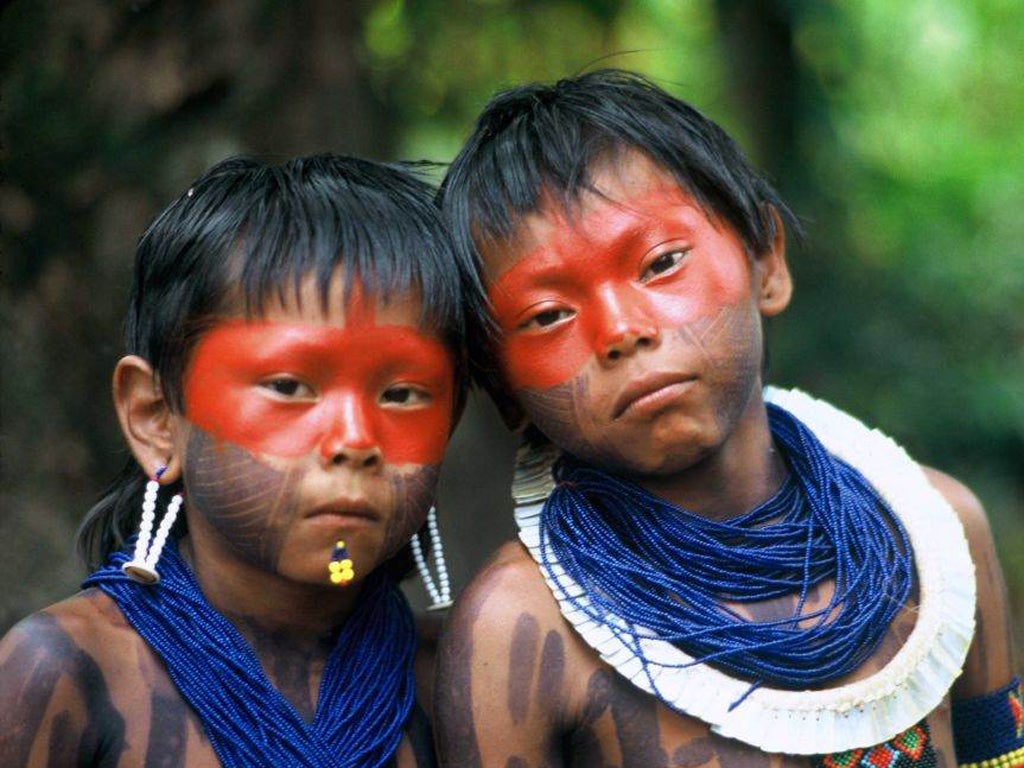
In addition to analysing DNA from about 425,000 members of the public, the Genographic Project has so far taken about 75,000 DNA samples from indigenous tribes around the world. The aim is to study the genetic roots of traditional people to shed light on their origins and broader relationships with people living elsewhere.
An intriguing journey of discovery of my chromosomes' origins
Paul Nurse
I was very interested to take part in this analysis as in my lifetime as a geneticist, sequencing the human genome has made possible extraordinary advances in understanding our origins. This analysis identifies tiny changes on the Y-chromosome that do not interfere with the function but do identify where the chromosome comes from.
The changes are markers that can help trace back the origin of the chromosome. Different changes arose in different places in the world, at different times. This allows you to determine the journey your own Y-chromosome has taken before it ended up in you. For example knowing you have a particular change can tell you that one of your ancestors lived in Central Asia 35,000 years ago.
I have known for years the general pattern of migration of Homo sapiens from East Africa to western Europe but it somehow feels more real when you realise that your own Y-chromosome has actually taken that journey. I had not fully appreciated how far east the common migration routes of my ancestors are likely to have gone, taking them deep into Central Asia.
It is strangely reassuring to know that two out of three people I see on my way to work will have a Y chromosome related to my own.
Sir Paul Nurse, Nobel Laureate, is president of the Royal Society
Join our commenting forum
Join thought-provoking conversations, follow other Independent readers and see their replies
Comments
Bookmark popover
Removed from bookmarks