DNA found in Oregon rewrites the book on the first native Americans
News in pictures
News in pictures
On Facebook
From the blogs

More than half of Afghanistan’s families live in extreme poverty

Leila is watching her baby intently, as his mouth moves trying to swallow the small blob of yellow p...

Time for a new approach to alcohol

Ambulances were called and three drunk teenagers were brought to my care. One was so drunk we had to...

Bahrain: One year on

I am used to endless lies and criticism from the BNP and its favourite blogster, as well as Islamist...

Paul Volcker stands tall against the banking lobby

Why is Europe, which likes to present itself as an opponent of speculative "Anglo-Saxon" finance, li...

Textbook accounts of how the Americas were first populated may have to be re-written following the discovery of the oldest DNA of prehistoric humans who lived 14,300 years ago in what is now Oregon.

Scientists said that the DNA is about 1,200 years older than the previous oldest human artifacts produced by the Clovis people, who are named after the site in New Mexico where the exquisitely shaped spearheads of the first Americans were found.

However, the latest discovery suggests that the Clovis people were actually preceded by much earlier cultures who had lived along the west coast of North America when much of the continent was still in the grip of an ice age.

"The data suggests that the Clovis-first hypothesis is basically dead because we find evidence of an older occupation," said Eske Willerslev, the director of the Centre for Ancient Genetics at the University of Copenhagen.

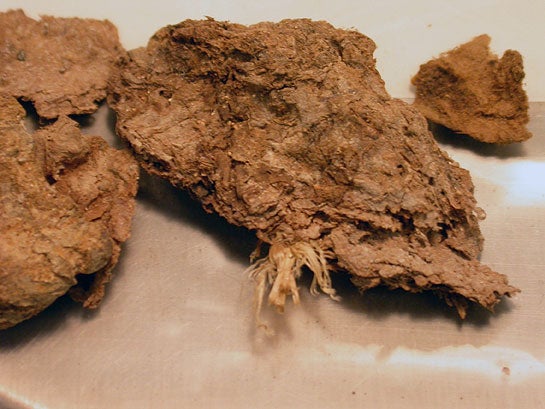
The human DNA was extracted from coprolites – fossilised faeces – found in caves near the town of Paisley in the west coast state of Oregon. Carbon dating confirmed that the material was more than 1,000 years older than the Clovis spearheads.

"The Paisley cave material represents, to the best of my knowledge, the oldest human DNA obtained from the Americas. Other pre-Clovis sites have been claimed, but no human DNA has been obtained, mostly because no human organic material had been recovered," Dr Willerslev said.

The study, published in the journal Science, went to extraordinary lengths to try to rule out the possibility that the DNA was the result of modern contamination. The DNA of nearly 70 scientists, archaeologists and students was cross-checked to make sure that it had not inadvertently contaminated the fossilised material.

An analysis of the DNA showed that it contained two sets of genetic sequences which are shared with modern-day native Americans and people who are native to East Asia and Siberia – confirming that the first Americans came over the Bering land bridge from Asia during the last Ice Age. Dennis Jenkins, a senior archaeologist with the University of Oregon's Museum of Natural and Cultural History, said there is a lack of bones dating from the time of the Clovis people so extracting human DNA from coprolites is critical to understanding more about the first Americans.

"We are not saying that these people were of a particular ethnic group. At this point, we know they most likely came from Siberia or Eastern Asia, and we know something about what they were eating, which is something we can learn from coprolites," Dr Jenkins said.

"If our DNA evidence and radiocarbon dating hold up on additional coprolites that are now undergoing testing at multiple labs, then we have broken the Clovis sound barrier, if you will."

Independent Comment
blog comments powered by Disqus
Career Services

Day In a Page

How an abortion divided America

How an abortion divided America

Single mother who took a pill to end her pregnancy is now fighting a landmark prosecution in a conservative state
Can you master a language in a weekend?

Can you master a language in a weekend?

Ed Cooke insists he can use his techniques as a memory expert to help novices learn even the hardest tongues.
The 10 best heaters

The 10 best heaters

From the DeLonghi Retro Fan Heater to the Dimplex MicroFire
Coming soon to a shelf near you: The publishing industry has gone mad for film-style trailers

Coming soon to a shelf near you

The publishing industry has gone mad for film-style trailers
Mad, bad and delightful to know: How Lord Byron became a cultural superstar

How Lord Byron became a cultural superstar

As the poet takes centre stage in the West End, Boyd Tonkin looks into the life of the outspoken champion of the poor
Did they all live happily ever after? That's up to you...

Did they all live happily ever after? That's up to you...

New digital novel will overturn centuries of literary tradition by allowing readers to choose how they would like story to end
How to look good for less – Primark in copycat row

How to look good for less – Primark in copycat row

With London Fashion Week starting tomorrow, designers are closeted in studios putting finishing touches to their collections
James Lawton: Arsène and Arsenal are living in the past

James Lawton

Arsène and Arsenal are living in the past
How Docherty's resurgent Reds beat Dutch greats

How Docherty's resurgent Reds beat Dutch greats

United have met Ajax only once before in Europe, in 1976. The key performers recall an electric occasion
Civil war at Ajax

Civil war at Ajax

A rift between two club legends has torn the Dutch giants apart
Lewis Moody: For an idea of where England are headed, look at Wales now

Lewis Moody column

For an idea of where England are headed, look at Wales now
Geoff Toovey: Little gem with huge incentive to become king of the world

Geoff Toovey interview

Little gem with huge incentive to become king of the world
Picture preview: Portrait of London

Portrait of London

Picture preview
No secularism please, we're British

No secularism please, we're British

Arguments about the role of religion in national life have recently acquired a new urgency
Harold Tillman: 'Chinese tourists can save the high street – if we let them'

Harold Tillman interview

'Chinese tourists can save the high street – if we let them'