Fundamentalism will damage society, says top scientist
The existence of a supernatural being in the form of a god who can dish out punishment in the afterlife may have been an important force in the past that helped to keep societies together as co-operative entities – but not so in the future.
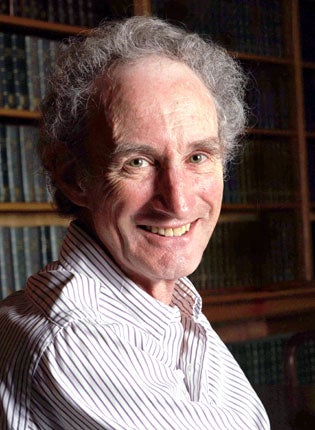
Lord May of Oxford, the president of the British Science Festival, said that although religion may have once helped to stabilise human societies, the rise in fundamentalism could make it more difficult to bring about the sort of high-level co-operation needed to tackle the global problems of climate change and a growing human population.
The former chief scientific adviser to the government warned that the rise of fundamentalist religions in both the east and west will have a detrimental impact on the ability of the world to cope with the problems of the 21st Century.
Lord May, a mathematical biologist, said in his presidential address to the conference, that co-operation between people globally will be needed more than ever in the coming decades but added he feared that to make sure it worked there had to be some kind of mechanism that punished those who cheated others. In the past, the ultimate punisher was God.
He said that punishment was much more effective if it came from "some all-seeing, all-knowing, all-powerful deity that controls the world", rather than from an individual person.
"In such systems, there is unquestioning respect for authority. Faith trumps evidence. But if indeed this is broadly the explanation for how co-operative behaviour has evolved and been maintained in human societies, it could be very bad news. Because although such authoritarian systems seem to be good at preserving social coherence and an orderly society, they are, by the same token, not good at adapting to change."
The rise of fundamentalism, not just in the Muslim world but in the United States, and within the Catholic church, could actually make global co-operation more difficult at a time when an unprecedented level of teamwork was needed, Lord May said. "If you take the view that in times of stress, authoritarian hierarchies tend to resist change, what the history of religion has been has been towards a softening, less dogmatic values, but under stress you simplify complex problems to simple mantras," he said.
Join our commenting forum
Join thought-provoking conversations, follow other Independent readers and see their replies
Comments