Galilee cave reveals secrets of hunter-gatherers
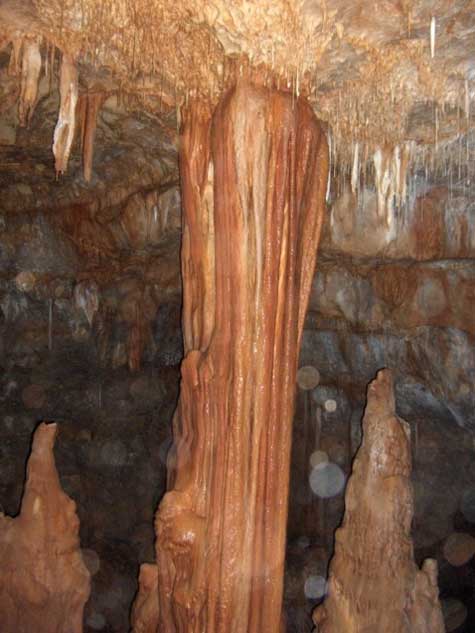
A wealth of new information about the way of life of early man in the eastern Mediterranean, long before the invention of the wheel, is likely to be uncovered after the startling discovery of a cave inhabited by hunter-gatherers between 20,000 and 40,000 years ago.
Workers constructing a sewage line through a forest in northern Israel stumbled across a large cave containing stalactites and strewn with discarded fragments of prehistoric tools and the burnt bones of animals which have long been extinct in the region, including red deer, fallow deer, buffalo and even bears.
While examination of the remains is at a preliminary stage, experts have hailed the discovery – at an undisclosed location in western Galilee – as the most important of its kind in the southern Levant for up to half a century. Dr Ofer Marder, the head of the prehistory branch of the Israel Antiquities Authority (IAA), and an archaeologist colleague were lowered 30m down into the darkness by rope. He described the cave as "one of the best preserved I have seen" and added: "It was if prehistoric man had left it five days earlier."
Dr Marder said: "It seems that, during the past 40 to 50 years, no cave has been found with such a wealth of prehistoric finds and certainly not inside such a lovely stalactite cave." He said it contained a number of chambers, the main one measuring 60m by 80m – not much smaller than a football pitch.
The IAA said the cave appeared to date from the Upper Palaeolithic period but could have been inhabited even earlier than that. Much more detailed examination of the cave and its contents is needed than the two or three hours Dr Marder and his colleagues have so far spent there. As Dr Marder discusses the next step with archaeologists, geologists and other experts, the site has been recovered to prevent curious day-trippers happening upon it and damaging the contents before they are properly inspected.
The IAA said: "The cave will also be dated by means of advanced scientific methods that will provide researchers with an absolute chronological range." Dr Marder added: "We have to be very cautious at this stage. But we found waste from flint tools of the sort that would be thrown near a fire because that was where the tools were usually made."
Charred bones from legs and joints, as well as teeth, have already indicated what kind of animals were being hunted by the cave's Paleolithic inhabitants. Dr Marder said the hope was that the findings would yield new information about the dating of Homo sapiens in the area, the regional climate at the time, surrounding vegetation and animal life, how prehistoric man lived and what he ate. While the IAA archaeologists have not yet confirmed the presence of human remains, they hope to do so.
Collagen from human or animal bones is a well-known source of information about the diet and surrounding eco-systems of the mammals concerned. The IAA said it was carrying out its research in cooperation with the Jewish National Fund – on whose land the cave was discovered – and the Centre for Cave Exploration.
While the cave might not be outstanding compared to those discovered in the Dordogne and southern France, Dr Marder said it was an "amazing find" for the southern Levant.
Join our commenting forum
Join thought-provoking conversations, follow other Independent readers and see their replies
Comments