Hundreds of methane 'plumes' discovered
British scientists find more evidence of climate threat
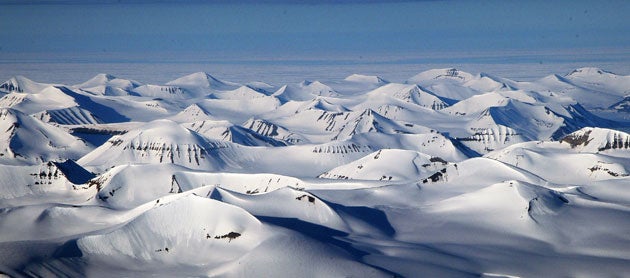
British scientists have discovered hundreds more methane "plumes" bubbling up from the Arctic seabed, in an area to the west of the Norwegian island of Svalbard. It is the second time in a week that scientists have reported methane emissions from the Arctic.
Methane is 20 times more potent than carbon dioxide as a greenhouse gas and the latest findings from two separate teams of scientists suggest it is being released in significant amounts from within the Arctic Circle.
On Tuesday, The Independent revealed that scientists on board a Russian research ship had detected vast quantities of methane breaking through the melting permafrost under the seabed of the shallow continental shelf off the Siberian coast.
Yesterday, researchers on board the British research ship the James Clark Ross said they had counted about 250 methane plumes bubbling from the seabed in an area of about 30 square miles in water less than 400 metres (1,300 feet) deep off the west coast of Svalbard. They have also discovered a set of deeper plumes at depths of about 1,200 metres at a second site near by. Analysis of sediments and seawater has confirmed the rising gas is methane, said Professor Graham Westbrook of Birmingham University, the study's principal investigator.
"The discovery of this system is important as its presence provides evidence that methane, which is a greenhouse gas, has been released in this climactically sensitive region since the last ice age," Professor Westbrook said. An analysis of sediments taken from the seabed show that the gas is coming from methane hydrates – ice-like crystals where molecules of the gas are captured in "cages" made of water molecules, which become unstable as water pressures fall or temperatures rise.
Professor Westbrook said the area surveyed off the west coast of Svalbard was very different to the area being studied by the Russian vessel because the water was much deeper and does not have a layer of permafrost sealing the methane under the seabed.
It is likely that methane emissions off Svalbard have been continuous for about 15,000 years – since the last ice age – but as yet no one knows whether recent climactic shifts in the Arctic have begun to accelerate them to a point where they could in themselves exacerbate climate change, he said.
"We were very excited when we found these plumes because it was the first evidence there was an active gas system in this part of the world," Professor Westbrook said after disembarking from the ship, which arrived back in Britain yesterday. "Now we know it's there we know we have to very seriously consider its effect."
Join our commenting forum
Join thought-provoking conversations, follow other Independent readers and see their replies
Comments
Bookmark popover
Removed from bookmarks