Is it possible to have an 'out-of-body'experience?
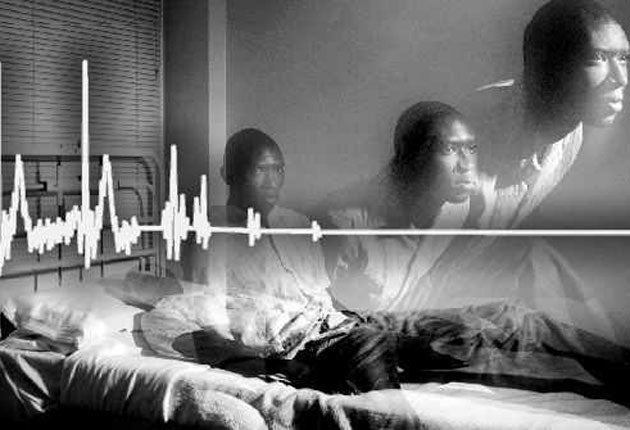
Floating above one's body or travelling down a long tunnel leading to a white light has become such a clichéd description of near-death experiences that many remain deeply suspicious of them. And yet time and again people from different walks of life have described the same scenario.
Traditionally debated by theologians and philosophers, the scientific community is now taking a look in an attempt to answer one of life's most enduring questions: what happens to our consciousness when we die?
A coalition of British and US scientists has launched an experiment to study more than 1,500 heart attack patients over the next three years to see if people with no heartbeat and brain activity can have genuine "out-of-body" experiences.
Key to the experiment is an investigation into whether those who say they briefly departed their body while clinically dead "physically" left themselves behind or were simply imagining it during their resuscitation.
The Awareness during Resuscitation experiment (Aware) is an expansion of a pilot scheme run by the Human Consciousness Project at the University of Southampton, which specialises in studying the human brain, consciousness and death.
About 25 centres in the US and Britain, including Addenbrooke's Hospital in Cambridge, University Hospital in Birmingham and the Morriston Hospital in Swansea, will take part in the experiment. Over the next three years about 15,000 patients will be brought to these hospitals suffering from cardiac arrest. Around 1,500 are likely to be resuscitated and hundreds will probably claim they had some sort of out-of-body experience when they were clinically dead.
To test whether such experiences involve the mind leaving the body, pictures will be placed around the areas of the hospital where heart attacks occur most frequently, such as accident and emergency and intensive care units. The pictures will only be visible from above. If patients are able to describe these pictures, project leaders argue that scientists will have to rethink how they understand the mind.
According to Dr Sam Parnia, director of the Human Consciousness Project, the research will help dispel the idea that death itself is a single event. "Death is not a specific moment," he says. "It is a process that begins when the heart stops beating, the lungs stop working and the brain ceases functioning – a medical condition termed cardiac arrest, which from a biological viewpoint is synonymous with clinical death.
"There then follows a period of time, which may last from a few seconds to an hour or more, in which medical efforts may succeed in restarting the heart and reversing the dying process. What people experience during this period provides a unique window into what we are all likely to experience during the dying process."
Mainstream scientific thinking generally describes out-of-body experiences as a "false memory" dreamt up by the brain during resuscitation. But survivors' testimonies and a number of recent studies have shown that 10 to 20 per cent of people who go through cardiac arrest and clinical death report lucid thought processes, reasoning, memories and even detailed recall of events.
The research may help explain how patients have given accurate testimonies of what was happening to them while they were technically brain dead.
"The study aims to settle this debate once and for all," says Dr Parnia. "It may be that out-of-body experiences are false memories but until that has been scientifically tested we can't say for sure."
For Heather Sloan, a former nurse from Southampton, the research may help her understand her sensation of leaving her body and entering a white tunnel as she lay in intensive care. "I've met so many people who had similar experiences," she says. "I have no doubt we are more than flesh and blood. If science could prove that, it would be marvellous."
Heather Sloan, former nurse: 'I headed towards a light'
Heather Sloan from Southampton suffered an internal bleed and says she had an out-of-body experience.
"The last thing I remembered was being rushed to the hospital. Then I passed out. When I came to I was standing next to my bed and, being a nurse, I started checking temperature and blood pressure. It was only after a while that I noticed I was looking at myself. Then I felt myself leaving my body and heading towards this light where hundreds of people were waiting for me. I started to get a bit distressed as I had an 18-month-old daughter at home. I asked these voices why I was there and they told me I had lost my baby. I didn't even realise I was pregnant. Eventually I felt like I was allowed to return and began making my way back to my body. The next thing I remembered was being conscious and surrounded by nurses. They told me that I'd lost a baby but of course I already knew."
Join our commenting forum
Join thought-provoking conversations, follow other Independent readers and see their replies
Comments
Bookmark popover
Removed from bookmarks