'Jurassic Park' technique resurrects extinct DNA
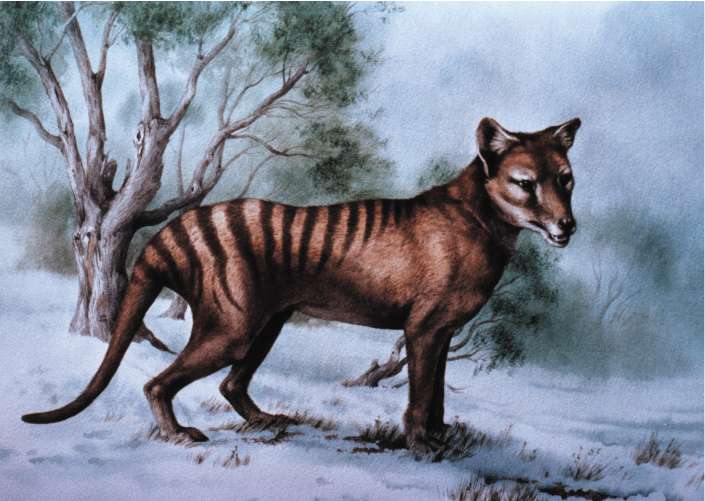
In an echo of the film Jurassic Park, DNA from an extinct animal has been re-activated in the laboratory for the first time.
Scientists took genetic material from the Tasmanian tiger – officially declared extinct 70 years ago – and inserted it into mouse embryos where it played a role in developing cartilage and future bone.
Dr Andrew Pask, from the University of Melbourne in Australia, who led the research, said: "This is the first time that DNA from an extinct species has been used to induce a functional response in another living organism. As more and more species of animals become extinct, we are continuing to lose critical knowledge of gene function and their potential."
In the film Jurassic Park, dinosaurs are brought to life by resurrecting their preserved DNA. Some scientists have suggested bringing back the Tasmanian tiger using cloning technology like that depicted in the movie. Others are sceptical, pointing out that the DNA needed is unlikely to be well enough preserved.
The new research proved that DNA from an extinct animal could be resurrected. The 5ft-long Tasmanian tiger (Thylacinus cynocephalus), a type of marsupial wolf, was hunted to extinction in the wild in the early 1900s and the last captive specimen died in Tasmania's Hobart Zoo in 1936. But some infant specimens were kept and preserved.
Dr Pask's team took DNA fragments and selected an "enhancer" element associated with a gene called Col2a1 that makes collagen. Although not a gene in itself, the element helped the gene to function.
Placed into mouse embryos, the DNA was "switched on" and assisted the development of cartilage, the first step in making bone.
The findings, published in the journal PLoS ONE, have enormous potential for the understanding of the biology of extinct animals, say the scientists.
Join our commenting forum
Join thought-provoking conversations, follow other Independent readers and see their replies
Comments
Bookmark popover
Removed from bookmarks