Lucky for some: Science of superstition
Black cats, broken mirrors; superstitions may seem silly, but, asks Sanjida O'Connell, could they be the secret of our survival?
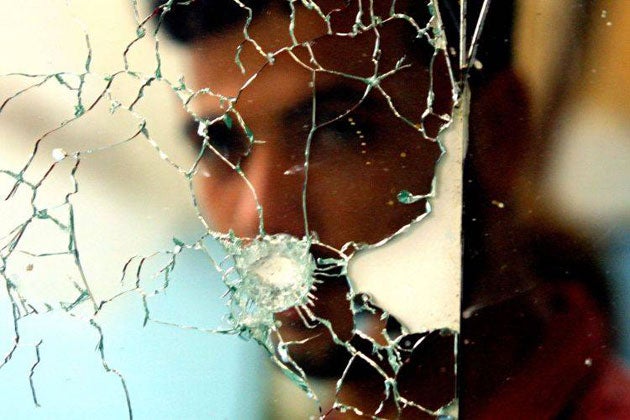
Barack Obama played basketball the morning of his victory in the Iowa primary, and continued the tradition in every subsequent primary. The athlete Kelly Holmes laid her kit out in an exact order the night before a race. Superstitious habits are common; who doesn't cross their fingers, start at the sight of a black cat, touch wood and avoid walking under ladders?
Superstitions seem irrational, but they pervade human life. The evolutionary biologist Dr Kevin Foster, from Harvard University, and Dr Hanna Kokko, from the University of Helsinki, have just published research showing how superstitious behaviour could evolve. Their findings suggest the possibility of a gene for superstition and that, far from being barmy, being superstitious is actually very normal.
Foster says: "In a world of uncertainties, you have to choose whether to believe or not to believe." The biologist defines superstition in a clinical fashion: superstition is where we believe that one thing has caused another, even if there's no evidence for it. So if your horoscope says the planets are in the correct alignment for new revelations, and your partner gets a promotion, you might be inclined to believe Mystic Meg in future.
Foster says: "All animals will display behaviours that imply a causal relationship that isn't there." Take pigeons; clap your hands, and they take flight. Pigeons are smart enough to tell a gunshot, which could kill them, from a handclap, which won't – yet they react superstitiously. Better safe than sorry.
Foster and Kokko created a mathematical model to put superstition in a biological context. They found that if animals had a gene for superstition and behaved superstitiously, they were more likely to be successful and pass their genes to future generations. "The results are clear," Foster says. "Being superstitious makes sense in an uncertain world." Species that are superstitious – reacting as if there's a predator around when that predator is extinct, say – will do better than less cautious creatures.
This is why humans, he says, are also superstitious. "Humans are heavily affected by culture as well as evolution. Nevertheless, our analysis suggests that cultural effects are shaped by an evolved tendency to readily associate events, so readily that individuals often make superstitious mistakes."
In primitive societies, that might mean doing a rain dance. Yet modern societies are equally superstitious. "It's hard to overcome," Foster says. "Even scientists can be superstitious." He cites alternative medicine; there's little evidence it works, yet believing that it does may well help someone get better.
Postulating that there could be genes for superstitious behaviour will, Foster says, annoy psychologists. He's right; when Professor Bruce Hood, an experimental psychologist from the University of Bristol, read his paper, he said: "The model says nothing about the psychology of superstitious belief. I would say that their definition of superstition is very narrow." Hood, whose book SuperSense: Why We Believe the Unbelievable will be published next year, says: "Humans are born with brains designed to make sense of the world and that sometimes leads to beliefs that go beyond any natural explanation."
Hood's theory is that we are born trying to understand the world and this ability to make sense of our surroundings is the same mechanism responsible for superstitious beliefs.
As we live in a world full of random events that we cannot control, Hood thinks we use this skill to make sense of our lives by acting as if every object and every event really has a purpose. Still, being superstitious is not a bad thing as, on Foster's model, it may help you propagate your genes. And, as Hood says: "What is magic today may become science tomorrow."
Sanjida O'Connell presents "Nature's Top 40", a guide to British wildlife spectacles, on BBC2 later this year
Join our commenting forum
Join thought-provoking conversations, follow other Independent readers and see their replies
Comments
Bookmark popover
Removed from bookmarks