Malaria fears escalate as most dangerous mosquito mutates into two species
Most dangerous mosquito is evolving to create a new problem for Africa, and for scientists fighting disease
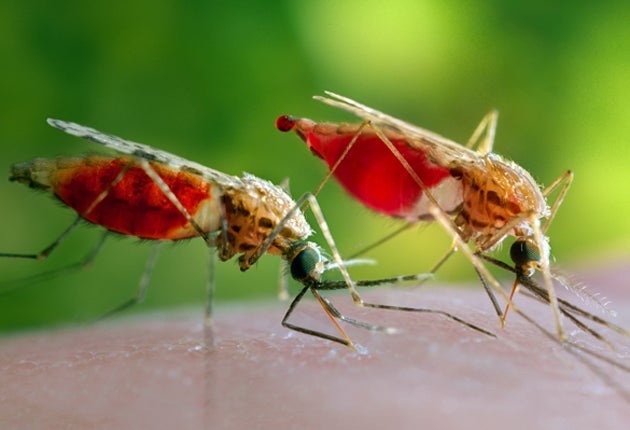
The most dangerous type of malaria-carrying mosquito, which kills up to a million people each year, is evolving into two different species, posing grave problems for controlling the transmission of the blood parasite.
Scientists have found that Anopheles gambiae, which is widespread across Africa and is responsible for about half of the 500 million new cases of malaria each year, has split into two genetically different strains that are well on their way to becoming distinct species.
The revelation could present real difficulties in controlling malaria because eradication strategies directed against one mosquito species may not be effective against another, according to the scientists who discovered the genetic differences between the two strains.
"From our new studies, we can see that mosquitoes are evolving more quickly than we thought and that unfortunately strategies that might work against one strain of mosquito might not be effective against another," said Mara Lawniczak of Imperial College London.
"Our studies help us to understand the makeup of the mosquitoes that transmit malaria, so that we can find new ways of preventing them from infecting people," said Dr Lawniczak, the lead author of one of the two studies published in the journal Science.
Malaria is caused by a microscopic blood parasite that is transmitted in the bite of female mosquitoes, which need a blood meal to produce their eggs. Out of the 500 million people who become infected with malaria following a mosquito bite each year, some two million die of the disease.
Anopheles gambiae is one of many dozens of mosquito species capable of transmitting malaria, but it is considered one of the worst culprits because it is so widespread across Africa.
It was known for some time that Anopheles gambiae consisted of two strains, known as M and S, but Dr Lawniczak said the full extent of the genetic differences between these two subpopulations had only emerged from full genome scans of their DNA.
"This Anopheles mosquito has always been thought of as one species and even though we knew they were diversifying and hybridising we didn't think it had got this far along the path to become two distinct species," she said.
"You really cannot tell by looking at them that they are so different genetically. Yet we have to know that any efforts directed at controlling mosquitoes will work in all the different groups that transmit malaria. A strategy that works in one group may not end up working in another."
Previous research had suggested that the differences in the DNA of each strain were concentrated on only parts of the insect's chromosomes. However, the latest studies found that significant differences could be found scattered throughout the genomes.
"We were surprised to find out just how different the two strains are genetically. We had thought that the differences were only going to be in defined areas of the chromosome but in fact we found differences all over the genome," Dr Lawniczak said.
It is likely that the "S" strain is the ancestral species because it is found all over sub-Saharan Africa, whereas the "M" strain is concentrated on central and west Africa. The "M" strain also appears to have become better adapted to laying its eggs in rice paddies, which are a relatively recent introduction to the continent.
Professor George Christophides, also of Imperial College, said the genetic studies into Anopheles gambiae demonstrated just how fast the species was evolving, underlining the importance of monitoring future changes in order to keep track of the most dangerous carrier of malaria.
"Malaria is a deadly disease that affects millions of people, and amongst children in Africa it causes one in every five deaths," Professor Christophides said. "The best way to reduce the number of people who contract malaria is to control the mosquitoes that carry the disease.
"Our studies help us to understand the makeup of the mosquitoes that transmit malaria, so that we can find new ways of preventing them from infecting people."
Join our commenting forum
Join thought-provoking conversations, follow other Independent readers and see their replies
Comments