Mind-enhancing drugs: Are they a no-brainer?
Advocates say they are an irresistible way of improving students' performance. Critics argue they are a dangerous fad. Jeremy Laurance explores the debate
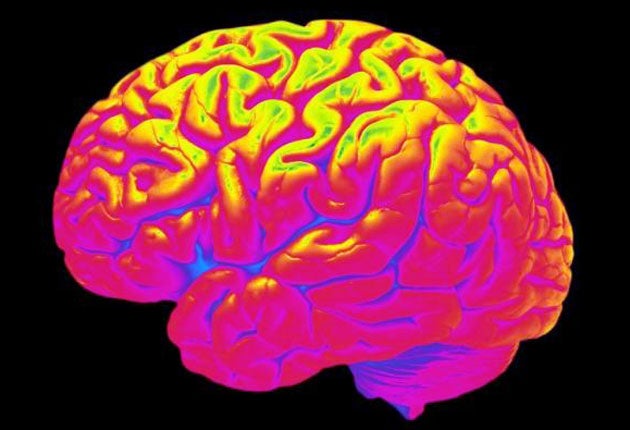
Alamy
Scientists are debating whether stimulants are an acceptable means for people to boost their brain's performance
In the middle of the exam season, the offer of a drug that could improve results might excite students but would be likely to terrify their parents. Now, a distinguished professor of bioethics says it is time to embrace the possibilities of "brain boosters" – chemical cognitive enhancement. The provocative suggestion comes from John Harris, director of the Institute for Science, Ethics and Innovation at the University of Manchester, and editor-in-chief of the Journal of Medical Ethics.
Ritalin is a stimulant drug, best known as a treatment for hyperactive children. But it has also found a ready black market among students, especially in the US, who are desperate to succeed and are turning to it in preference to the traditional stimulants of coffee and cigarettes. Users say it helps them to focus and concentrate, and this has been confirmed in research studies on adults.
David Green, a student at the University of Harvard, told The Washington Post: "In all honesty, I haven't written a paper without Ritalin since my junior year in high school."
Matt, a business finance student at the University of Florida, claimed a similar drug, Adderall, had helped him improve his grades. "It's a miracle drug," he told The Boston Globe. "It is unbelievable how my concentration boosts when I use it."
Some experts have condemned the trend and accused students of gaining an "unfair advantage" by doping, without explaining why it is any more unfair than hiring a private tutor or paying for exam coaching.
Professor Harris says that the arguments against the drugs "have not been persuasive" and that society ought to want enhancement.
"It is not rational to be against human enhancement," he writes. "Humans are creatures that result from an enhancement process called evolution and moreover are inveterate self improvers in every conceivable way."
Although no drug can be guaranteed safe and free of all side-effects, Ritalin has been judged safe enough for children with attention deficit hyperactivity disorder (ADHD), and has been widely used to treat them over many years, he says.
The drug is a stimulant which was introduced in 1956 and appears to influence the way the brain filters and responds to stimuli. It increases energy as well as confidence and has been compared to cocaine. Possible side-effects are typical of stimulants and include insomnia, loss of appetite, dizziness and depression on withdrawal.
Other drugs investigated for their mind-enhancing properties include donepezil, a treatment for dementia and modafinil, used in narcolepsy, the condition in which sufferers repeatedly fall asleep.
Both drugs are thought to boost highly skilled performance, where concentration and alertness are prerequisites. One study found commercial pilots who took donepezil for one month performed better than pilots on a placebo when dealing with emergencies on a flight simulator. A study of modafinil found that it boosted the performance of helicopter pilots flying on simulators who had been deprived of sleep.
Writing in the online British Medical Journal, Professor Harris says the use of cognitive enhancing drugs should be seen as a natural extension of the process of education. Drug regulatory agencies should assess the benefits and risks in the same way as they would for any other medical intervention.
"Suppose a university were to set out deliberately to improve the mental capacities of its students. Suppose they further claimed that not only could they achieve this but that their students would be more intelligent and mentally alert than any in history. We might be sceptical but if the claims could be sustained should we be pleased?"
His answer is an unequivocal yes. He concludes that it is unethical to stop healthy people taking Ritalin to enhance their mental performance.
But in total disagreement, Professor Anjan Chatterjee from the University of Pennsylvania argues in the BMJ that there are too many risks. In the US, the drug carries a "black box" warning, the most serious, because of its high potential for abuse, serious adverse risks on the heart and the risk of sudden death.
He adds that there are cognitive trade-offs in taking Ritalin, with a loss of creativity, and points out that "being smarter does not mean being wiser". He raises the spectre of children at top preparatory schools taking Ritalin in "epidemic proportions" and pilots, police and doctors being pressurised to take it when on-call.
Progress often carries risk, says Professor Harris. The development of "synthetic sunshine" (firelights, lamplight and electric light) could have forced people to work through the night. The answer was not to ban it but to introduce laws to regulate working hours. "The same is or will be true of chemical cognitive enhancers," he concludes.
A stimulating debate: The pills in question
Ritalin
A stimulant drug introduced in 1956 for the treatment of Attention Deficit Hyperactivity Disorder (ADHD) in children, it has become increasingly widely used, especially in the US. In recent years, reports have emerged of it being abused by students seeking aids to help them through their exams.
Amphetamines
The stimulant was first synthesised more than a century ago and has been used and abused to boost energy, increase wakefulness and prolong endurance. Its users have been as diverse as long distance lorry drivers wanting to ward off drowsiness and women trying to lose weight. Today it is prescribed for ADHD and narcolepsy, and has been investigated for its role in helping stroke victims re-learn motor skills.
Donepezil
Scientists in aviation medicine and in the military have been examining medicines which might increase alertness and concentration to minimise risk of pilot error and maximise endurance. Donepezil, used to treat of dementia, has been shown to boost the performance of pilots on flight simulators, especially in emergencies.
Modafinil
Modafinil, a drug used to treat the sleep disorder narcolepsy, has also been tested on pilots and other members of the armed forces. While commercial pilots have strict rules governing flying time and rest periods, fighter pilots may be called to action at a moment's notice. Tests on helicopter pilots flying on simulators who had been deprived of sleep showed the drug boosted performance.
View all comments that have been posted about this article.
Offensive or abusive comments will be removed and your IP logged and may be used to prevent further submission. In submitting a comment to the site, you agree to be bound by the Independent Minds Terms of Service.
- Print Article
- Email Article
-
Click here for copyright permissions
Copyright 2009 Independent News and Media Limited


Comments
Sports men and women use their own muscles whether they are on steriods or not. The differnce being steriods enhance the natural - at a cost, because for every chemical action there is a reaction.
Using this argument, the boosting of brain power will come at a cost. Humans are well know for their excesses - there in lies the problem.
The enhanced brain power, used temporarily to pass the exams, will not be maintained when that person gets the high profile job.
She is my sweetheart.....She is the sunshine in my heart.....She is my best match.....I knew I would not love any other woman since I met her...Thanks for ************Cougar Circle . com*********** which brought us happiness. Wish you are as lucky as me......
^^^^^^^^^^^^^^^^^^^^^^^^^^^^^^^^^^^^^^^^
I hope and pray that this PROFESSOR HARRIS never never never has any opportunity to put his drug induced views into practice anywhere near ANY education system. This is absolutely disgusting - a man of science quite blatantly advocating the use of pharmaceutical drugs for people.
The obvious question to ask is "Is he is the pay pocket of the pharmaceutical companies - are they paying his salary?" Most scientific institutions these days get their funding from the very multi-national corporations and drug companies that these scientific "experts" then promote throughout the media. Hmmmmmmmmm - joining the dots - one can smell another soul that has sold itself in order to keep its job! Not a pleasant smell - rotten to the core.
Why can't you accept that a Professor may support a drug because it provides some benfits to the user?
What exactly is it that you think is intrinsically unethical about advocating pharmaceutical enhancers for cognitive ability?
Human beings have always striven to improve their on natural abilities, both physical and cognitive, through exercise, training, education and so on, and this has often involved ingesting things, either as food, dietary supplements or drugs, that are thought - or proven - to aid in this aim.
While this can occasionally be dangerous, where such substances may have unwanted side-effects or encourage 'abuse' or addiction, such as with steroids, slimming pills, etc., their use can only be criticized (sometimes with rather spurious and self-serving justifications) as 'unethical' where the intention is to achieve an 'unfair' advantage over those who do not use those substances, such as in professional sports.
But where the purpose of taking such substances is purely one of self-improvement, and not to obtain a competitive edge over others, and where such substances are taken knowlingly and willingly by the person involved, rather than having them forced upon them either knowingly or unknowingly, it is hard to argue that this is in any way 'unethical'.
Of course, it is true that students taking cognitive enhancers may have a 'competitive advantage' over students who do not, but no two students are alike anyway, and some will always have advantages - genetic, environmental or financial - that other students will not: some will have higher IQs than others; some will have more supportive families and better home environments than others; some will have expensive private tutoring which others will not. But if cognitive enhancers are available, and affordable, for *all* students regardless, then their *relative* academic performances would be unaltered, though the overall academic performance of the entire student group would improve, which surely cannot be a bad thing, because in a world where mass stupidity and ignorance pose a constant threat to human survival, we desperately need more smart, well-educated people! (I believe the same argument appies to performance enhancing substances in sport, too; their use is only 'unfair' if not all sportsmen take them; if all sportsmen took them, voluntarily, then the Olympic medals would still go to the same people they would have if no one took them, but more world records would be broken :o) ).
In addition, cognitive enhancers could help level the educational playing field by allowing those students with learning difficulties, lower IQs or disadvantaged backgrounds to catch up with their more fortunate peers (assuming the latter did not also take them). Be honest, emeraldpool, if you knew that taking them could make the difference, for you or your children, between a life of educational failure and low-paid manual work or educational success and a well-paid professional career, would you honestly decline them?!
Speaking from my own experience, I have taken cognitive enhancers in the past (or 'nootropics', as they are properly called), and can personally attest to the positive effect that they had on my concentration, mental energy and consequent work output. I only wish I had discovered them sooner, when I was at university, as I may have got better grades in some of my exams, lol (though my degree grade was still quite respectable, I should add)!
So don't knock 'em until you've tried 'em, emeraldpool :o)
Forgive my sarcasm, but that one comment stood out. You reaction is quite close-minded and reactionary - I don't agree or disagree with Pr.Harris' views that drugs should be a part of education per se, but to say he is in the pay of the Pharma-Co.'s is totally unfounded. Anyway - Ritalin is an old out-of-patent drug that is available in generic form for pennies. Same probably goes for the others - anything older than 5 years old can be made into generic form by any company. So who would be profiting from a 53 yr-old drug?
Anyway - on further thought - human beings use stimulants daily in order to pep themselves up. Your mother does it, so does mine and my grandma was probably the worst. Tea or coffee anyone?
Same principle behind a cup of tea - taking stimulants to aid concentration. These things tend to self-regulate, like recreational drug taking (e.g. drinking) does in most sensible users. People will realise that there is a cognitive trade-off and not use them all the time. There's no such thing as a free lunch. But to use a bit of ritalin to get through some tough exams should be personal choice in my opinion.
So it is 'drugs in boys' before every board meeting, before the designers' final concept meeting, before the heart operation, before the final draft of the legal document is produced, before the debate on the key issue.
A degree is meant to show you will maintain that standard in your profession.
I find Jeremy laurence guilty of not presenting the correct weight on some of these pea brained ideas - giving equal weight - under 'exploring the debate' shows lack of perspective.
Prof Harris must be making a huge impression with that rot - how desparate are these types for attention?
The poor students having to listen to his perspective!
But cognitive enhancers work too, as I know from personal experience. :o)
Why is coffee completely acceptable, but chemicals are not? Is it because one is grown, and one is created in a lab?
Why are the many people who rely on drugs to keep them alive/healthy considered miracles, and not freaks of science who should have died a long time ago? (I'm playing devil's advocate here - this is not my actual opinion!)
Some people seem to have drawn a very firm line here, and what I'm trying to say is that the line is completely arbitrary and subjective. Trying to say that because something is synthesised it is automatically 'bad' is a false argument (look at the number of lifesaving drugs that are prescribed). The more interesting question is not "where do you draw the line", but "WHY do you draw the line".
My view is that *all* drugs are natural, because they are made from atoms (which are natural) by human beings (who, being members of the animal kingdom, are also natural). Any attempted distinction between 'natural' and 'man-made/artifical' substances is arbitrary, illusory and pointless, and speaks more about certain people's bizarre psychological hang-ups and confused thinking than it does about the existence of such distinct categories.
Well - for a start - as sickof... says, all chemicals are natural. Arsenic and digitalis toxin from foxglove are natural, (meaning they exist in nature with no human intervention) but that doesn't make them ok to take!
So why DO people draw a line? Because people are scared and ill-informed. Ignorance basically. They've got their opinions out of some tabloid, and react against things that are outside of the sphere of their normality, such as taking ritalin to help you study.
The scary thought though is, do they apply this kind of knee-jerk reaction to everything outside their sphere of experience? Would they react thus to gay-marriage, or transsexuals, or even racial minorities? It may be off-topic slightly, but it is, in essence, the same thing deep down - prejudice.
The only reason this pharmaceutical prejudice exists is because of the regime of Prohibition which is insisted upon us - despite the alcohol ban in the US in the 1920s showing us that Prohibition doesn't work! People have it ingrained in their heads that if you use a chemical for a purpose other than that stated on the box, then it's "bad". As long as your sensible and know what you're doing, it should be up to you and not subject to the moral pontification of other less-informed individuals.
And what people seem to be missing is that taking ritalin won't give you a huge performance increase anyway. It can't make you cleverer! Just makes you concentrate harder. And concentration is something you can do without drugs in normal life. It's just the artificial environment and pressures of examinations which has necessitated this phenomenon.
R
Why are young people being put under such pressure in the first place and are there natural alternatives such as fish oils and adequate rest periods?
Perhaps these are the kind of questions to be considered, rather than reach for the pill popping quick fix..
What is so immoral and wicked about wanting to improve on Nature's design and overcome the limitations of our bodies through pharmaceuticals? It is not as if Nature created us all physically and mentally perfect and free from defects in the first place. We are simply at a particular stage in the long evolution of our species, and may have a long way to go. Who is to say whether the future evolution of the human race cannot, and should not, be accelerated through such things as cognitive enhancers?
I'm with the transhumanists on this one; I think we should have safe, cheap nootropics available over the counter at every pharmacy, because we can never have enough smart, educated people in the world.
On that topic, there is a bioethics course taught at Harvard University where the ethics of enhancement drugs are explored, and there are some very good arguments for allowing these drugs to be used to students' advantage just as they receive varying advantages from genetic, socio-economic, and other sources. The one compelling argument against these drugs is the temporary nature of the advantage they give...
I do like that.
YOU WILL NOT BE ALLOWED TO SLEEP UNTILL YOU KILL YOUR QUOTA!!
YOU WILL NOT BE ALLOWED TO SLEEP UNTIL YOU HAVE FERRIED YOUR BUNCH OF WOUNDED SOLDIERS AND/OR TERRIFIED REFUGESS TO HOSPITAL AND/OR SAFETY.
Not all military pilots are involved in killing people. Some of them are involved in SAVING lives, too.
One must differentiate between the immediate *neurometabolic* effects of cognitive enhancers on brain function - e.g. increased bloodflow in the brain, increased levels of neurotransmitters, increased electrical activity, etc. - and the *intellectual* effects of those neurometabolic effects.
While the former will, in general, be only temporary, the latter can be permanent, for this simple reason; if cognitive enhancers give one increased levels of concentration, better short-term memory, heightened logical and analytical reasoning skills, etc., and one reads, studies and thinks about a subject while in this state, the new neuronal connections created by these activities - experienced as 'knowledge' and 'understanding' about the subject being studied and thought about - will be still exist even when the neurometabolic effects of the cognitive enahncers have worn off.
And because the number and strength of the neuronal interconnections established during the period of study will have been greater than normal because of the action of the cognitive enhancers, the subject will have a better knowledge and understanding of subject afterwards than they would have if they had not been under the influence of cogntive enahncers when studying and thinking about it. Therefore, the *intellectual* beneftis of temporary use of cognitive enhancers can be *permanent*, even if the *neurometabolic* effects rapidly wear off.
It is similar to the beneftis of taking sports energy drinks or other 'booster' suplements (e.g. c reatine, GABA) while exercising; by enabling the body to perform at a higher level while exercising, and to exercise harder and longer, the body accrues additional *physiological* benefits from the exercising which are *permanent*, even though the *metabolic* benefits of the drinks or supplements only lasted for the duration of the exercise session.
Tell me, do you see this? Good. I don?t. Part 1
On the WSJ's op-ed page, meanwhile, Peggy Noonan takes a moment to dance on the grave of Hillary's presidential hopes: "America dodged a bullet," she crows. "Clinton would have been a disaster as president."
And compact fluorescent bulbs actually reduce the mercury pollution from the single largest U.S. source: coal-fired power plants. "Probably the most important thing that people need to connect with compact fluorescents is that they save significant quantities of energy," Berlow adds. "We're talking about two thirds to three quarters of the energy associated with lighting being reduced."
I was sitting in the dentist's chair the other day having some root canal work done, and she said to me: "You work for the Financial Times, so you must know what's going to happen to the economy. Should I be worried?"
I couldn't answer because half my face was paralysed with local anaesthetic and in my mouth was a wooden wedge, a tube extracting water, a high-speed drill and a woman's hand.
But even without all this getting in the way I still could not have answered as I don't have the foggiest idea.
None of us, not even the experts, has the first clue as to how it is all going to pan out. A week ago I was at a dinner party with two prominent economists.
I thank you.
Firozali A.Mulla
? It?s not football without lines to mark touchdowns and out of bounds.
? It?s not basketball without a referee to call the fouls.
This is more than just a sports metaphor. Capitalism won?t work unless a negotiated price and promise to pay $100 is followed by payment of $100. And someone needs to enforce those rules. Otherwise it's not capitalism. It?s robbery.
Vitamin E 200 IU 110 Softgels, 21st Century
by 21st Century
No customer reviews yet. Be the first. >>>>>Read this <<<<<
Trojan Horse
by Global
60 Tablets
Super Combination for the Man's Power. 100% Natural blend of Vitamins, Minerals & Herbs. A 21st century formula for today's man. It's simply the Best.
Directions:
As a dietary supplement: Men take one or two (2) tablets three times daily, preferably with meals or as directed by a health professional.
Contains:
Each 6 tablets contain: Herbs, Co Factors, Glandular Extracts, Amino Acids, Vitamins, Minerals, Digestive Enzymes & Whole Foods.
NO SUGAR, STARCH, SALT, PRESERVATIVES, ARTIFICIAL COLORS OR FLAVORS.
Supplement Facts Serving Size: 6 Tablets
Servings Per Container: 30 Percent Daily Values (%DV) are based on a 2,000 calorie diet.
**Daily Value not established.<<<<<<>>>>>
Sudz by Kiss My Face Bar Soap, Sports, Rejuvenating, 8-Ounce Bars (Pack of 6)
SUDZ Our Price$29.70
2 used & new from $27.99
In stock on May 3, 2009
I thank you
Firozali A. Mulla
Robert Langreth, 06.16.09, 05:53 PM EDT
A big study finds that bad life events boost depression risk but not a gene that moves serotonin.
Scientists hoping to uncover genetic clues to depression took a step backward on Monday: A giant new study found that one of the few genes widely thought to boost depression risk under stressful circumstances actually does nothing to cause the disease. PHEW I feel beeter better much drunk but definitly better
I thank you
Firozali A. Mulla
(Interestingly, the percentage of children/teens that have bad and possibly suicidal responses to antidepressants is about the same as the general incidence of bipolar in the population at large. And if you take a bipolar and give him an upper, he may end up in a mixed mood, which is where most bipolar suicides occur - the despondence of depression combined with the frantic energy of mania.)
Different drugs hit people different ways. My son was stabilized by Adderall, but after a month or so he started developing tics. We took him off Adderall and he tried Ritalin, which also stabilized him and did it without the tics. Other people may be the opposite.
I have better results with Effexor than any of the other anti-depressants I've tried. My wife, however, didn't find that Effexor worked for her and the withdrawal symptoms were (as advertised) hell incarnate. I don't seem to have the same physical reaction she had to missing a dose, so I may not be as subject to those symptoms if I ever need to work myself off it.
In short - these things mess with the physiology of the brain and the body, and you don't know what they're going to do to you until they do it; everybody is different. You pays your money and you takes your chances, and the stakes you're playing with are your health and possibly your life.
Most professional atheletes (whether soccer or rugby, cricket or basketball) have to play hurt several times a season. None of these play without chemical pain relievers. Why? Because it would not only be cruel to ask them to play without them, it would also degrade their performance.