Pain-killing secrets of the opium poppy revealed
Scientific breakthrough paves way for production of artificial opiates
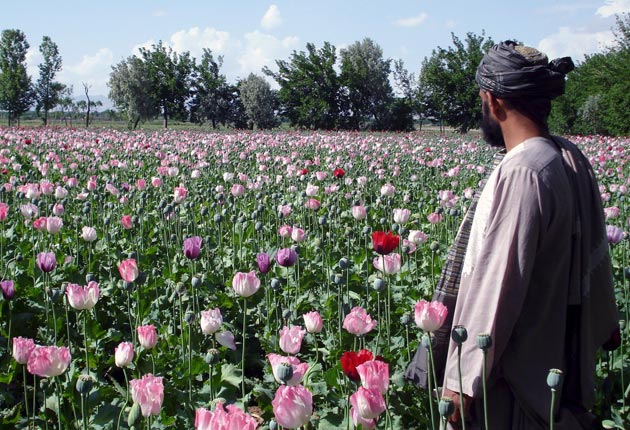
Scientists have identified the genes of the opium poppy responsible for the production of the painkillers codeine and morphine, which could lead to new ways of making the drugs without having to cultivate fields of poppies.
Opium poppies naturally produce morphine and smaller amounts of codeine in their seed pods. They are collected from the opium poppy by scraping the unripe seed capsule and collecting and drying the rubbery sap that is exuded from the scratched surface.
But about 10 times as much opium is made for the illegal heroin trade as for the legitimate manufacture of morphine and codeine. Finding ways of making the painkillers without having to grow the opium poppy could have an impact on attempts to control the heroin trade. The scientists, having isolated two key genes involved in the production of the enzymes in the metabolic pathway leading to the production of codeine and morphine, hope it may soon be possible to produce these complex molecules on an industrial scale using genetically modified microbes, such as yeast or bacteria, which can be grown in giant fermenting vessels.
"Our discovery now makes it possible to use micro-organisms to produce opiate drugs and other important pharmaceuticals," said Professor Peter Facchini, of the University of Calgary in Canada, who led the study published in Nature Chemical Biology.
"The enzymes encoded by these two genes have eluded plant biochemists for a half a century. In finding not only the enzymes but also the genes, we've made a major step forward. It's equivalent to finding a gene involved in cancer or other genetic disorder.
"With this discovery, we can potentially create plants that will stop production at codeine [and so not produce morphine]. We are also working towards the synthesis of codeine and other opiate drugs more efficiently and economically in controlled bioprocessing facilities."
Opium has been used as a painkiller for at least 6,000 years, and raw opium contains about 10 per cent morphine, widely used in the 19th century and sold as laudanum. About 1,000 tonnes of morphine is isolated from opium each year, although most is converted into codeine, produced naturally by the plant but in much smaller quantities because it is quickly converted to morphine.
"The evolution of these two genes in a single plant species has had such a huge impact on humanity over the past several thousand years," Professor Facchini added. "Our discovery allows this unique genetic power to be harnessed in many important ways."
Codeine is the world's most widely used opiate and one of the most common painkillers. It is converted into morphine in the liver, and it is morphine that suppresses pain signals to the brain. A similar conversion of codeine to morphine occurs in the poppy plant in a two-step process involving enzymes known as dioxygenases. By sifting through the 23,000 genes of the poppy plant, the scientists discovered the two genes responsible for the production of these enzymes. It may even be possible to genetically modify the poppy plant so it lacks the ability to convert codeine into morphine, therefor reducing supplies of heroin.
Join our commenting forum
Join thought-provoking conversations, follow other Independent readers and see their replies
Comments