Precious metals that could save the planet
Rare earth elements are driving a revolution in low-carbon technology. Cahal Milmo reports on the commodity that has become the new oil
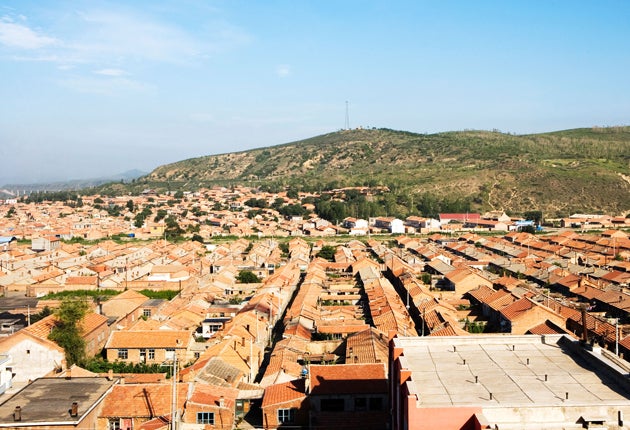
Baotou was of little interest to the outside world for millennia. When one of the first visitors reached its walls in 1925, it was described as "a little husk of a town in a great hollow shell of mud ramparts". Some 84 years later, this once barren outpost of Inner Mongolia has been transformed into the powerhouse of China's dominance of the market in some of the globe's most sought-after minerals.
The Baotou Rare Earth Research Institute is home to some 400 scientists whose work has put China at the pinnacle of research into a group of 17 metals which sound as if they were dreamt up as poisons for superheroes – yttrium, promethium, europium – but whose unique properties make them indispensable to technologies worth trillions of pounds.
The development of Baotou into the global capital of rare earths, which occupy their own obscure corner of the periodic table, is due to two things: its proximity to the Baiyunebo mine, a vast open pit that is the world's largest rare earth mine, and Beijing's deliberate policy of at least two decades to turn this "Mother Lode" into a stepping stone towards status as an economic superpower.
As a result, Baotou has rapidly become of great interest to the outside world. China, which by accident of geography holds about 50 per of the world's rare earth deposits and currently produces 97 per of global supplies, has made no secret of the nature or scale of its ambitions, summarised by former premier Deng Xiaoping when he said: "The Middle East has oil. China has rare earths."
In 1999, President Jiang Zemin went further on a visit to Baotou when he summed up Beijing's strategy as being "to improve the development and applications of rare earth, and change the resource advantage into economic superiority".
In the intervening decade, demand for rare earth elements (REEs) has ballooned from 40,000 tonnes to a predicted 200,000 tonnes by 2014. The reason is that the particular properties of luminescence, magnetism and conductivity of rare earths have been increasingly harnessed by scientists to create a vast gamut of technologies from fibre-optic cables to advanced X-ray machines; flat television screens to the movable fins on guided missiles; and filters for viruses to navigation systems.
Above all, they are an integral part of the technologies that politicians are relying on to try to avert the worst effects of global warming. From the generators of wind turbines to catalytic converters, and the batteries on hybrid cars to alloys that dramatically reduce leakage from overhead power cables, rare earths are at the heart of the green revolution.
As one senior delegate at a recent international conference on REEs put it: "There is hardly a day that goes by that a new application for rare earths isn't found in Baotou; they are almost entirely related to low-carbon tech. Ironic isn't it? The world's greatest polluter by volume is in pole position when it comes to the raw materials to save us from global warming."
The result is that the rare earth industry in China is rapidly moving from a role as a provider of rare earth extracts for export, worth a few hundred million dollars a year to Chinese GDP, to a producer of finished REE components worth billions. In response to Chinese reductions in exports, global manufacturers are forced to move factories making rare-earth rich components to China to ensure continued production.
Zhang Peichen, deputy director of the Baotou Rare Earth Research Institute, said: "Rare earth usage in China will be increasingly greater than exports." The term "rare" in rare earths is something of a misnomer. They occur more frequently in the Earth's crust than gold or platinum and some, such as neodymium (a key element of neodymium-iron-boron magnets used in electric and hybrid cars) are relatively cheap at about £20 per kg. But others are far less abundant. Terbium, which is soft enough to cut with a knife, is an irreplaceable component of low-energy light bulbs. It sells for up to £190 per kg and China needs its entire production to meet domestic demand. Dysprosium, whose Greek name translates as "hard to get at", allows lightweight magnets to function at high temperatures and costs about £80 per kg. China is responsible for 99 per cent of the global output of both.
China's control over rare earth supplies has sparked unease over their availability. Dr Ian Higgins, of British manufacturer Less Common Metals, said: "At present, any manufacturer is dependent on just one source. The strategic message is that there is an increase in demand for rare earths that eventually cannot be met from Chinese sources. It makes sense to have non-Chinese sources."
Senior players in the rare earths industry are anxious to avoid suggestions that Beijing is using its commanding position to hold the world to ransom, pointing out that other REE sources, including a new mine in Greenland, are likely to come on tap during the next decade and compete with Chinese producers, many of which are small illegal mines.
Questions remain as to whether mines outside China, such as the Mountain Pass site in California, which closed in 2002 and is being reopened, can be operated at economically sustainable levels. Nearly all operators outside China closed soon after 2000 when cheap Chinese REEs flooded the market, using highly polluting but cheap mining methods.
A Whitehall source said: "There is the risk something similar might happen, although that is reduced by high levels of demand. It's easy to point the finger at Beijing and say it is using trade as a tool of a muscular foreign policy. The reality is more complex – China needs our business. The problem is, a few years down the road, there will come a point when it doesn't need it quite so much."
What are the rare earth elements and how are they used?
First discovered in the 18th century, the rare earth metals were long considered chemical curiosities rather than the vital building blocks for technology.
After their discovery by a Swedish scientist in 1787, a total of 17 of the soft metals were identified. Despite their name, they are relatively abundant in the Earth's crust but the high cost of extraction means only areas with rich deposits, in particular China, are worth exploiting.
The arrival of new technology means that global production has risen from less than 5,000 tonnes in 1955 to the current level of about 120,000 tonnes a year.
*Cerium (Ce) – catalytic converters for diesel engines
*Praseodymium (Pr) – an alloying agent for aircraft engines
*Neodymium (Nd) – a key component of high-efficiency magnets and hard disc drives
*Lanthanum (La) – a major ingredient for hybrid car batteries
*Samarium (Sm) – lasers and nuclear reactor safety
*Promethium (Pm) – portable X-rays and a nuclear battery
*Gadolinium (Gd) – shielding for nuclear reactors, compact discs
*Dysprosium (Dy) – improves the efficiency of hybrid vehicle motors
*Terbium (Tb) – a component in low-energy light bulbs
*Erbium (Er) – fibre optics
*Europium (Eu) – used in flat screen displays and lasers
*Holmium (Ho) – nuclear control rods, ultra-powerful magnets
*Thulium (Tm) – lasers, portable X-rays
*Ytterbium (Yb) – monitoring equipment for earthquakes
*Lutetium (Lu) – oil refining
Two more elements, Scandium and Yttrium, are considered rare earths as they tend to occur in the same ore deposits and have similar chemical properties.
Join our commenting forum
Join thought-provoking conversations, follow other Independent readers and see their replies
Comments
Bookmark popover
Removed from bookmarks