Scientists succeed in mimicking the way spiders spin their super-strength webs
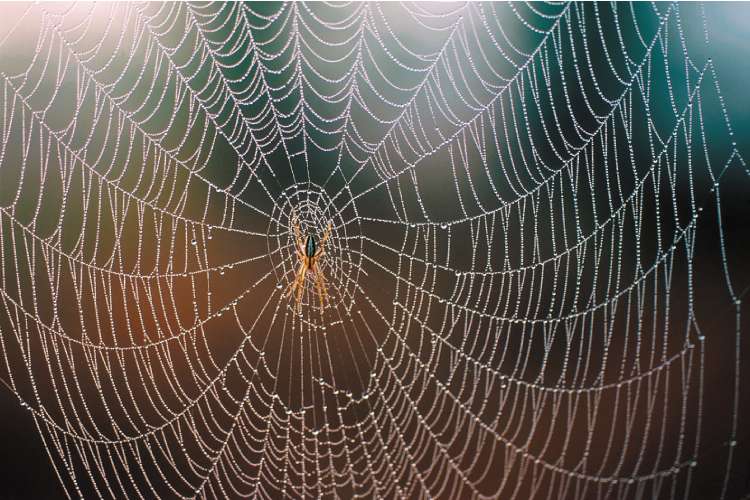
The dream of producing spider silk in industrial quantities has come a step closer to reality after scientists managed to mimic the way silk protein is spun naturally into fibres that are potentially stronger than steel.
Researchers have been trying to make artificial spider silk for decades because of its unusual and potentially lucrative properties. In addition to its extreme tensile strength, spider silk is highly elastic, and has the added advantage of being biodegradable. In the past, engineers have suggested a variety of potential uses of the silk, from bullet-proof vests and lightweight material for parachutes, to extremely strong ropes and fishing nets that will decompose quickly if lost at sea.
But the main sphere of interest is in medicine, where extra-fine threads made of spider silk could be used as biodegradable sutures for sealing up internal wounds, according to Professor Andreas Bausch, who led the latest study at the Technical University of Munich.
His team claims to have solved one of the most difficult problems of the silk-making process by creating an artificial spinning duct that mimics the spider's spinneret – an organ which instantaneously converts a liquid solution of stored protein into a strong, silken thread.
"The goal of the study was to understand the spinning process. The fibres we created were very similar to the one produced in nature but the next step is to investigate them further," Professor Bausch said yesterday.
The team used two types of proteins found in spider silk and manufactured in bacteria that had been genetically engineered with the relevant spider genes. It was the first time that a group had manufactured "kilogram quantities" of the two main silk proteins, Professor Bausch said.
Despite determined efforts over the past 20 years, scientists have failed to produce artificial fibres that match the unique properties of spider silk. One of the problems is being able to make the long protein molecules used in the fibres, while the other difficulty is being able to mimic the complex changes that take place during the spinning process.
Spiders store the silk proteins in a watery solution. Orb spiders, which spin aerial webs for catching flying insects, can convert that solution into the solid fibres of a thread within the fraction of a second it takes them to spin out a dragline.
Professor Bausch said that the artificial spinning duct he and his colleagues have created brings together the unfolded proteins dissolved in the storage solution. That is done by squeezing them through a smaller and smaller hole until they emerge as a folded, insoluble sheet of proteins which form the solid fibre of silk. However, the German team's study, published in the journal Proceedings of the National Academy of Sciences, does not provide details of the physical or mechanical properties of the resulting fibres, which has led other scientists to criticise the research.
"It is another little step towards producing spider silk but it is not the breakthrough because the fibres produced have no good qualities," said Oxford University's Professor Fritz Vollrath, one of the leading experts in the field.
"If they made a fibre with good properties, then I would say the proof was in the pudding and they had cracked it. But they cannot make fibres that are strong and match the properties of real spider silk."
The latest study comes eight years after a Canadian company called Nexia Biotechnologies revealed it had created genetically-modified goats that could make spider silk proteins in their milk. However, their "biosteel" product has yet to pass commercial tests.
Spiders evolved 400 million years ago and have been making various kinds of silk for much of this period. The oldest aerial webs for catching insects date back 180 million years. Dragline silk from the orb spider has the highest tensile strength.
Other amazing animal products
*Horn Made from tough proteins called keratin, horns are used for defence and sexual display. True horns are found among cattle, goats and antelopes, and grow throughout the life of the animal. Rhino horn is especially valuable and its price has led some species to be driven close to extinction.
*Coral Many marine animals convert dissolved calcium ions found in the sea into solid calcium carbonate. Coral reefs are made from the skeletons of one such creature, the coral polyp, which lives in a close relationship with algae. Coral reefs are one of the few biological structures that can be seen from space.
*Poison Some animals produce toxins to defend themselves or subdue prey. Many of the poisons are nerve agents that paralyse their victims. The poison arrow frog is thought to produce the most deadly toxin. Some toxins are being investigated for their potential medical uses.
Join our commenting forum
Join thought-provoking conversations, follow other Independent readers and see their replies
Comments
Bookmark popover
Removed from bookmarks