Shoot-'em-ups are good for you, say researchers
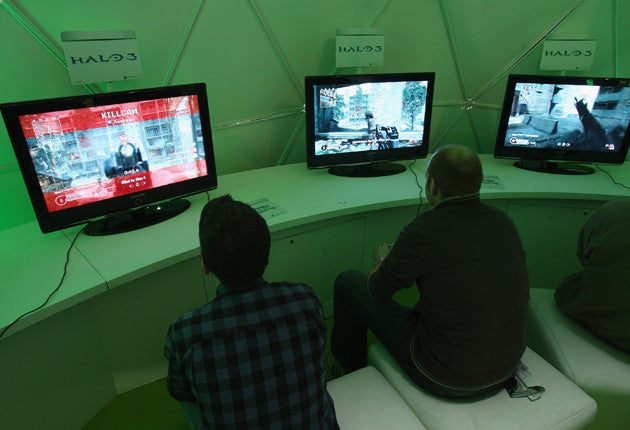
For many parents they are little more than the source of our children's tantrums, feet-stomping and long periods of hibernation in stuffy rooms behind locked doors.
Yet a new study into the effects of computer games has revealed that fast-paced action games turn us into faster and better decision-makers.
Scientists at the University of Rochester in New York conducted a series of tests to gauge whether regular bouts of high-speed gaming could help to improve our cognitive abilities.
The researchers tested dozens of 18- to 25-year-olds who were not ordinarily video-gamers, splitting them into two groups.
The first group were told to play adrenalin-packed action games such as Call of Duty 2 and Unreal Tournament, in which participants dash around online arenas shooting each other.
The second group were given The Sims 2, a more sedate, strategy-based game that mimics the pace of everyday life.
After 50 hours of playing, both groups were given a series of tests to see whether they could make quicker decisions.
Scientists discovered that those who had trained on the action games made decisions 25 per cent faster than their counterparts. They also answered just as many questions correctly as their strategy game-playing peers.
"It's not the case that the action game players are trigger-happy and less accurate – they are just as accurate and also faster," said Daphne Bavelier, a cognitive scientist at Rochester who has been testing how computer games affect the brain and eyes for much of the past 10 years. "Action game players make more correct decisions per unit time. If you are a surgeon or you are in the middle of a battlefield, that can make all the difference."
The findings are significant because they suggest how some computer games – often vilified for turning people into couch potatoes – help players to develop a heightened sensitivity to what is going on around them.
This benefit, researchers suggest in a forthcoming edition of Current Biology, has repercussions in the real world, such as improving our ability to multitask, drive, read small print and keep track of friends in a crowd.
According to Ms Bavelier, people make decisions based on probabilities that they are constantly calculating and refining in their heads – a process scientists call probabilistic inference. Before we execute an action, the brain weighs up every piece of visual and auditory information around us, helping to come to an accurate decision.
"Decisions are never black and white," she said. "The brain is always computing probabilities. As you drive, for instance, you may see a movement on your right, estimate whether you are on a collision course, and based on that probability make a binary decision: brake or don't brake."
Action-filled computer games – which force the brain to make a whole series of fast-paced decisions in a split second – appear to improve our ability to make those decisions quickly.
It is not the first time that computer games have been shown to have physical and mental benefits, although, until recently, most scientific research concentrated on negative aspects such as addiction and whether gaming stunts a child's social skills.
Last year, however, the same team at the University of Rochester published a study showing how action games enhanced our ability to see in the dark by improving the eye's ability to detect contrast.
There is also a growing number of studies which show how computer games increase hand-eye co-ordination. A study of surgeons two years ago in the United States, for instance, found that those who played the Nintendo Wii before going into an operating theatre performed better than those who didn't play games.
Computer games: Console blockbusters can improve reactions – but not your brain
First-person shooters
They may be angrily condemned by critics as violent, but first-person shooters are the games that are most likely to improve reaction time and eyesight. The frenetic pace of such games encourages the brain to make faster and more accurate decisions.
Role-play games (RPGs)
Relaxing and wholly immersive, these games may be addictive but they do little to aid reaction times and decision-making, researchers found.
Brain-training games
Manufacturers are increasingly marketing "brain-exercising" games at the adult market. Earlier this year, however, a test of 11,500 members of the public failed to find any improvement in mental performance after people regularly used brain-training games.
Join our commenting forum
Join thought-provoking conversations, follow other Independent readers and see their replies
Comments
Bookmark popover
Removed from bookmarks