The acid test: World's weirdest experiments
From Tusko the elephant's tragic LSD trip to the wine taste test that gets gourmets hot under the collar, Alex Boese puts the world's most weird and wonderful experiments under the microscope
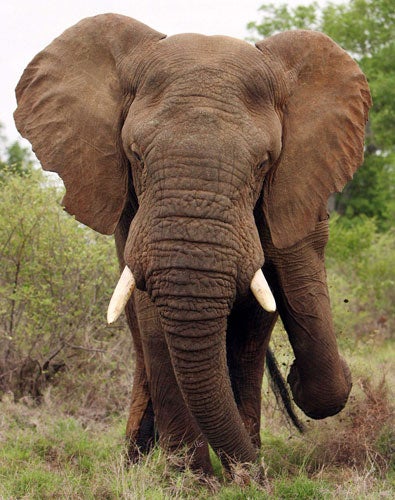
The pachyderm on a high
Tusko the elephant led a peaceful life at the Oklahoma City Zoo. So, on the morning of Friday 3 August 1962, he could hardly have foreseen that he was about to become the first elephant ever to be given LSD.
The experiment was the brainchild of two doctors at the University of Oklahoma School of Medicine, Louis Jolyon West and Chester M Pierce, and Warren Thomas, director of the zoo, who wanted to learn more about LSD's pharmacological properties.
LSD is one of the most potent drugs known to medical science. A mere 25 micrograms – less than the weight of a grain of sand – can send a person tripping for half a day. But the researchers figured that an elephant would need more than a person and they didn't want to risk giving too little. They upped the dose to 297 milligrams, about 3,000 times the level of a human dose.
At 8am, Thomas fired a cartridge syringe into Tusko's rump. Tusko trumpeted loudly and began running around his pen. Then he started to lose control of his movements, and toppled over. His eyeballs rolled upward. He started twitching. His tongue turned blue.
The researchers administered 2,800 milligrams of an antipsychotic, which relieved the violence of the seizures a little. Eighty minutes later, Tusko was still lying panting on the ground. Desperate, the researchers injected a barbiturate, but it didn't help. A few minutes later, Tusko died.
What had happened? Had the LSD concentrated somewhere in Tusko's body, increasing its toxicity? Were elephants allergic to LSD? The researchers had no clue. An autopsy determined that Tusko died from asphyxiation – his throat muscles had swollen, preventing him from breathing. But why his throat muscles had done this, the researchers didn't know. In an article published a few months later in Science, they simply noted: "It appears that the elephant is highly sensitive to the effects of LSD."
Red faces for wine-tasters
Wine connoisseurs can put on quite a show, swirling, sniffing and sipping. But is there anything to it? Frédéric Brochet, a cognitive neuroscience researcher at the University of Bordeaux, decided to find out. In 1998, he invited 54 specialists to taste wines and write down their impressions.
First, he served a red and a white. The tasters made notes. Next, he served a different red and white. Again, they jotted down comments. To describe the two reds they used terms such as plump, deep, dark, blackcurrant and spice. The two white wines evoked descriptions such as golden, floral, pale, honey, straw and lively.
Unbeknownst to the specialists, the second set of wines they tasted, the red and the white, were identical. Brochet had simply added flavourless food colouring to some of the white wine to create a faux red. Not a single person wrote down that the second pair of wines tasted similar, nor that the "red" tasted like a white. Their descriptions of the dyed white read exactly like descriptions of a red wine. The inescapable conclusion was that the specialists had all been fooled.
Brochet didn't design his studies to knock wine connoisseurs down a peg. His experiments demonstrate the power of perceptive expectation: "The subject perceives, in reality, what he or she has pre-perceived and finds it difficult to back away."
What this means is that the brain does not treat taste as a discrete sensation. Instead, it constructs the experience of flavour by taking into consideration information from all the senses – sight, sound, smell, touch and taste. Paradoxically, it places the greatest emphasis on sight – almost 20 times more emphasis, according to Brochet, than on any other sense. So if our eyes tell us there's red wine in the glass, our brain places more faith in that data than in the information from the taste buds.
Lassie, Get Help! or probably not
If you're trapped down a well, what would your dog do? Would it run to get help, or wander off to sniff a tree? If you own a trained rescue dog it would probably get help, but what about an average dog whose passions in life are 1) bacon, and 2) barking at cats?
To find out, researchers at the University of Western Ontario arranged for 12 dog-owners to pretend to have heart attacks while walking their dogs. At a predesignated point, the owners began breathing heavily, coughed, gasped, fell over, and then lay motionless. A hidden camera recorded what their dogs did next. In particular, the researchers wanted to see whether the dogs would seek help from a stranger 10 metres away. The dogs didn't do much to promote canine intelligence; they spent some time nuzzling their owners before taking the opportunity to roam around aimlessly.
Concerned that the scenario was too subtle for the dogs, the researchers designed a more dramatic test. They arranged for 15 dog-owners to bring their dogs to an obedience school, greet a person in the front lobby, and then walk into a second room, where a bookcase fell on the dog owner (in such a way that it would only look like an accident, without actually hurting the person). Pinned beneath the shelves, each owner let go of his or her dog's leash and implored them to get help.
Again, the canine response was lacking. The dogs stood by their owners, wagging their tails, but not one went to get help. The conclusion? "The dogs did not recognise these situations as emergencies and didn't understand the need to obtain help."
How to fall asleep on a plane
It's three in the morning and you're trying to get to sleep. But you're not having much luck because you're stuck in a cramped seat on a plane cruising at 30,000ft. If you find yourself in this situation, you might want to reflect on an experiment conducted in 1960 by Ian Oswald, a professor at Edinburgh University.
Three men served as Oswald's guinea pigs. He asked each of them to lie down on a couch. He attached one end of a piece of tape to each eyelid and the other end to the subject's forehead, keeping his eyes pried open. Next, Oswald placed electrodes on the subject's left leg. The electrodes produced a painful shock that caused the foot to bend sharply inward involuntarily. Oswald programmed the shocks to occur in a regular, rhythmic pattern.
He also positioned a bank of flashing lights in front of each man's face. Finally, he turned on some loud blues music.
Oswald then sat in a corner of the room and waited for them to do something that would seem unlikely in such a circumstance: fall asleep. Yet, within eight to 12 minutes, all three men were asleep. Their heartbeats slowed, their pupils constricted, and their brain waves, measured by an EEG, displayed a low-voltage slow-wave pattern characteristic of sleep.
Oswald's results seem hard to believe. How could someone possibly fall asleep under such conditions? Oswald explained it as a peculiar response of the brain to extremely monotonous sensory stimulation. Instead of becoming aroused by the stimulation, the brain becomes habituated to it and shuts down.
So, to return to the plane scenario, it's not the noise and lights that prevent you from falling asleep. It's the fact that they're not monotonously rhythmic. Airlines could remedy this situation by installing vibrating seats, pulsing lights and continuously looping baby screams. Electric shocks would, of course, be reserved for business class.
The white bear inside your head
It begins with a simple request. Sit in a room and say whatever comes into your mind for five minutes. But then the experiment takes an unexpected turn. The researcher says: "Verbalise your thoughts as you did before, with one exception. Try not to think of a white bear. Every time you say 'white bear' or have 'white bear' come to mind, though, ring the bell on the table before you."
This shouldn't be difficult. How often do you think about white bears anyway? But you start talking, and suddenly a white bear lumbers into your thoughts. You think of other things, but the bear keeps pushing its way back.
In 1987, psychology professor Daniel Wegner devised the white-bear experiment and tested it on 10 Trinity University undergraduates. Not one could stop thinking about white bears. So did all this have a point? Yes. The white bear image is arbitrary, and white bears represent unwanted thoughts. If you've found yourself unable to stop thinking about something – food, cigarettes, alcohol, an ex – you're familiar with these. Wegner's experiment, a classic of modern psychology, showed that the more we try to control what we think, the more control slips away.
You can try this one yourself. Just put down the paper and don't think about a white bear for a while. But don't say you weren't warned. White bears, once not invited in, can be devilishly hard to get rid of.
The tickle machine that wasn't
A blindfolded man sits in a chair. His bare foot, strapped to a stool, rests inches from a robotic hand. A woman in a lab coat sits down next to him. "You will be tickled twice," she states. "First, I will tickle you, and then the tickle machine will."
The setting is the UC San Diego psychology lab of Dr Christine Harris. In the late 1990s, 35 undergraduates agreed to endure tickle-torture to help answer the question: why can't we tickle ourselves?
Two contradictory answers to this question had been proposed. Theory one (the interpersonal theory): tickling is a social act and requires the touch of another person to elicit a response. Theory two (the reflex theory): tickling is a reflex that depends on unpredictability and surprise; we can't tickle ourselves because we can't surprise ourselves.
Harris designed her tickle-machine experiment to test these theories. If the interpersonal theory was correct, a machine-tickle should not be able to elicit laughter. But if it did, that would imply that the reflex theory was correct.
But, unbeknownst to the students, neither Harris nor the machine tickled anyone. The tickle machine was a stage prop that made a loud vibrating sound when turned on. The students were actually being tickled by a woman hiding beneath one of the cloth-covered tables in the lab.
Why the ruse? Harris was concerned that a robotic tickler might feel different from a human one, and she didn't want this to influence her results. All she needed was for participants to believe that a machine was tickling them.
Harris found that the students laughed just as hard when they believed they were being tickled by a machine, leading her to conclude that the reflex theory was right. In her words: "The tickle response is some form of innate stereotyped motor behaviour, perhaps akin to a reflex."
To order 'Elephants on Acid and Other Bizarre Experiments' by Alex Boese (Boxtree) for £9.50 (free post and packaging), call Independent Books Direct on 0870 079 8897, or visit independentbooksdirect.co.uk
Join our commenting forum
Join thought-provoking conversations, follow other Independent readers and see their replies
Comments