The Big Question: How important was Charles Darwin, and what is his legacy today?
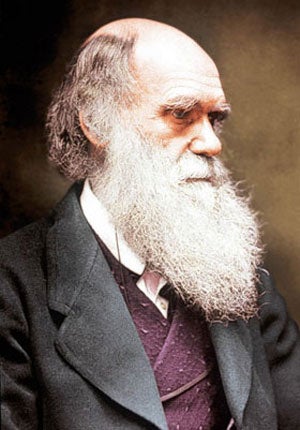
Why are we asking this now?
From the back of a £10 note to the awards in his name that celebrate those who remove themselves from the gene pool by dying in foolish ways, Charles Darwin's legacy is everywhere. He has been on more stamps than anyone save members of the royal family, and yesterday the Royal Mail unveiled another one, to celebrate 2009 as the 200th anniversary of his birth, and the 150th of the publication of his landmark work, The Origin of Species. But that's not the only way the occasion is being marked, and Darwin's influence is felt in far more profound ways than his popular cultural contributions to this day.
Why were Darwin's ideas so important?
It's a mark of how extraordinary a step Darwin took on humanity's behalf that a principle that seems so straightforward and uncontroversial today – that random mutations would make some species better suited to their environments than others, and that those species would be more likely to breed – could have caused such extraordinary upheaval as recently as 1859. Still, that's what happened.
The general idea of evolution preceded Darwin, and he shied away from making the explicit and incendiary claim that even humans were evolved from other creatures. But his explanation of natural selection as a mechanism that made evolution plausibly able to explain the origin of species without reference to a creator up-ended the contemporary orthodoxy. It set a new course that no subsequent scientific work could ignore. And according to the eminent late evolutionary biologist Ernst Mayr, "Eliminating God from science made room for strictly scientific explanations of all natural phenomena; it gave rise to positivism; it produced a powerful intellectual and spiritual revolution, the effects of which have lasted to this day."
How did Darwin first come to science?
Born in 1809, Darwin's early life was not especially distinguished. He was removed from school in Shrewsbury because of his poor progress, and dropped out of a medical course at Edinburgh University because he was revolted by working on bodies; "You care for nothing but shooting, dogs and rat-catching," his father wrote to him, "and you will be a disgrace to yourself and all your family." But on a divinity course at Cambridge, in preparation for life in the church, Darwin's interest in natural history really began to develop, as a protege of the botany professor John Stevens Henslow.
And how did he develop his ideas?
In 1831, after graduating from Cambridge, Darwin joined the HMS Beagle as the ship's naturalist on a five-year voyage around South America. Darwin later credited that trip with establishing the knowledge and working methods that would sustain his subsequent scientific career. His observations in South America, particularly on the variation in mockingbirds on different islands in the Galapagos, gave him the first inkling of what would subsequently become The Origin of Species. Famously, the first surviving record of his insight is in a sketch of a simple evolutionary tree under the tentative heading "I think". Over the next twenty-three years, he continued to develop and test that hypothesis, until in 1859 he was finally ready to publish the scientific theory that rocked the world.
Why was it so controversial?
Because before Darwin came to the subject, even the most devout adherents to the evolutionary theory had failed to come up with a good explanation of exactly how species became better suited to their environment over time. "Up until 1859," noted Ernst Mayr, "all evolutionary proposals endorsed linear evolution, a teleological march toward greater perfection."
Darwin stripped away that sense of fate. Simultaneously, he made available to the general public an understanding of the development of humankind that did away with the need for a creator. and introduced a way of looking at the world that seemed dangerous to many members of the establishment. Well aware of the subversive implications of his discoveries, he once said that explaining his beliefs was like "confessing to a murder".
What was the public reaction at the time?
The first public presentation of Darwin's ideas, alongside those of fellow pioneering evolutionary biologist Alfred Russell Wallace, drew little public reaction. But the publication of The Origin of Species sparked massive international interest, and the first print run of the book sold out before it appeared. While many hailed his findings as a huge step forward – including some within the clergy – the work also drew much opposition.
"Why not accept direct interference, rather than evolutions of law, and needlessly indirect or remote action?" one early review asked. "Having introduced the author and his work, we must leave them to the mercies of the Divinity Hall, the College, the Lecture Room and the Museum." And Darwin was denied a knighthood for his achievements by the influence of the church. Natural selection did not become a widely accepted principle until the 1930s. But in the end, one measure of how widely accepted Darwin's significance was, came in his death, when he became one of only five people outside of the royal family to be buried in Westminster Abbey in the nineteenth century.
So how influential are Darwin's ideas today?
Their importance in science is inescapable: the whole field of evolutionary biology is founded on his work. More generally, his influence can be felt in how the Christian orthodoxy that underpinned most science has fallen away, and even in our understanding of human interactions, summed up by the phrase "social Darwinism".
Even the church recently recanted its initial opposition to The Origin of Species, issuing a public apology in September. It read: "Charles Darwin: 200 years from your birth, the Church of England owes you an apology for misunderstanding you and, by getting our first reaction wrong, encouraging others to misunderstand you still." Still, many people remain sceptical. The continued influence of creationism and intelligent design in the US is well-documented, and here, a 2006 poll said that only 48 per cent of the general public accepted the theory of evolution.
What is being done to change that?
Many organisations devoted to the public understanding of science have seized on the bicentennial of Darwin's birth as a chance to make people more aware of why his work is important, and celebrate him as a great British figure. The Natural History Museum hosts the biggest ever Darwin exhibition until April 2009; moves are afoot to have his home and living laboratory of forty years, Downe, declared a World Heritage Site by Unesco; celebrations will take place across the country on 12 February, his birthday, or "Darwin Day". Even Hollywood has taken note of the romance of his marriage and tragedy of the death of three of his children, and a movie starring Paul Bettany will appear later this year.
So is Darwin the most important scientist of modern times?
Possibly. But any complacency about his place in history should be tempered by an awareness that his significance could easily be forgotten. In 2006, a public poll conducted by the BBC judged him the fourth greatest Briton of all time – one place behind Diana, Princess of Wales.
Is it important to celebrate Charles Darwin today?
Yes
*No advance has so upended our worldview since the realisation that the world was not flat
*Darwin's legacy is threatened by proponents of creationism. By commemorating him we defend it
*He's a genuine titan in the history of world thought, and he's British. If that's not worth celebrating, what is?
No
*Darwin wasn't the only proponent of natural selection – others were working in similar areas at the time
*His insights can't seriously be threatened when they are now so culturally ingrained for all of us
*Harping on the work of a long-dead scientist is a sad indictment of the lack of achievements to herald today
Join our commenting forum
Join thought-provoking conversations, follow other Independent readers and see their replies
Comments
Bookmark popover
Removed from bookmarks