The graphene story: how Andrei Geim and Kostya Novoselov hit on a scientific breakthrough that changed the world... by playing with sticky tape
Thin as an atom, with amazing strength and electrical properties, graphene is the scientific find of the century. But it all came about from mucking about in a lab in Manchester, one of men behind its invention tells Steve Connor
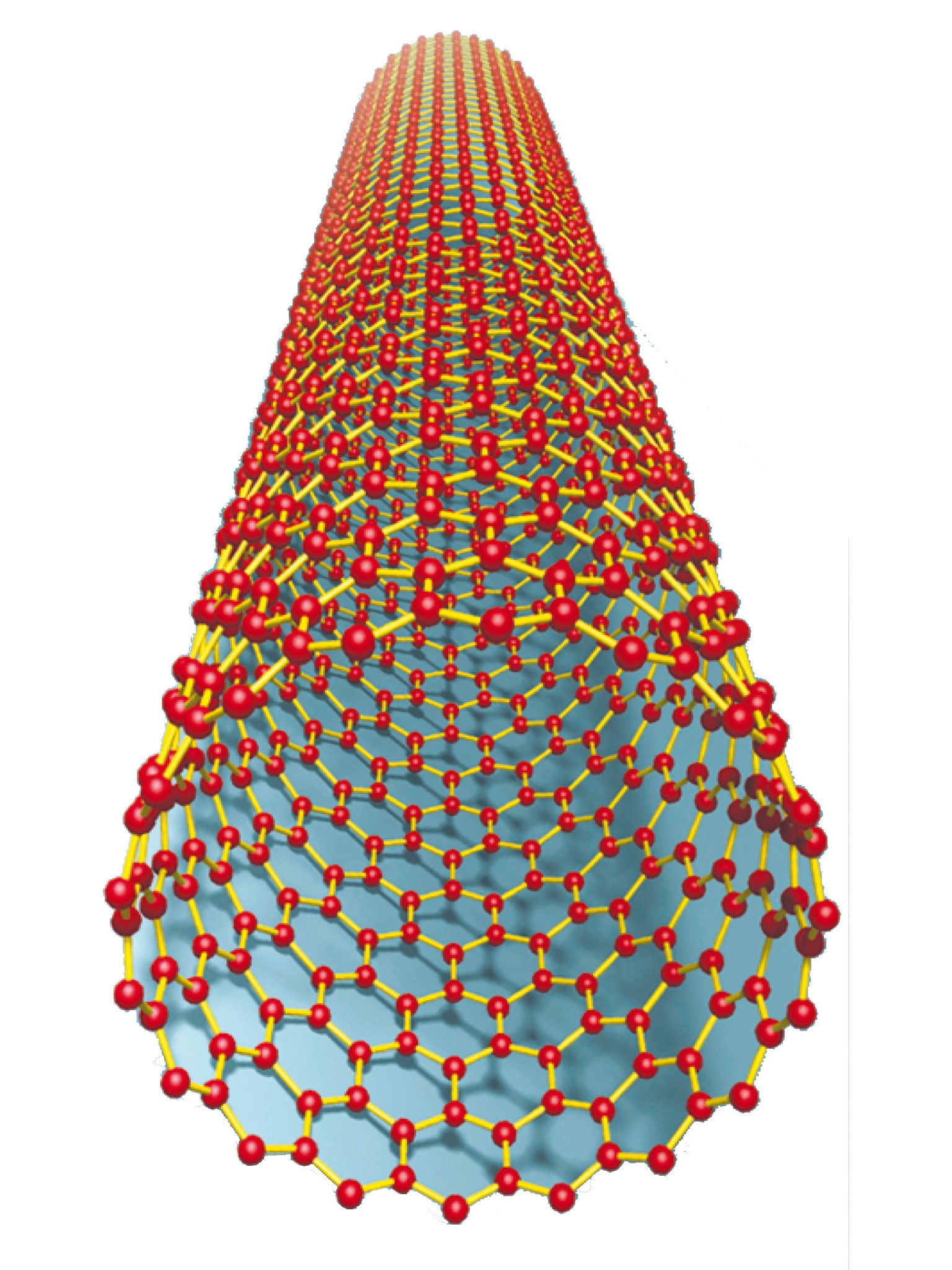
The creation of graphene, a wonder material that promises to transform the future, is already the stuff of scientific legend. As a piece of brilliant serendipity it stands alongside the accidental discovery of penicillin by Alexander Fleming – and it might prove just as valuable.
Two Russian-émigré scientists at the University of Manchester, Andrei Geim and Kostya Novoselov, were playing about with flakes of carbon graphite in an attempt to investigate its electrical properties when they decided to see if they could make thinner flakes with the help of sticky Scotch tape.
They used the tape to peel off a layer of graphite from its block and then repeatedly peeled off further layers from the original cleaved flake until they managed to get down to flakes that were only a few atoms thick. They soon realised that by repeatedly sticking and peeling back the Scotch tape they could get down to the thinnest of all possible layers, one atom thick – a material with unique and immensely interesting properties.
When the two scientists won their joint Nobel prize in physics in 2010 for their ground-breaking experiments, the Nobel committee made a point of citing the “playfulness” that was one of the hallmarks of the way they have worked together.
Playing about with Scotch tape on a Friday afternoon sounds a jokey thing to do, but it soon turned into a deadly serious game of scientific discovery which would have been impossible if not for the well-prepared minds of Geim and Novoselov.
“A playful idea is perfect to start things but then you need a really good scientific intuition that your playful experiment will lead to something, or it will stay as a joke for ever,” Novoselov says. “Joking for a week or two is the right way to go, but you don’t want to make your whole research into a joke.”
Geim, who is 15 years older than Novoselov and was once his PhD supervisor, has a reputation for playful experiments. He levitated a frog in 1997 to showcase his work in magnetism and invented a new kind of sticky tape based on the adhesive feet of Gecko lizards, which can walk up walls and hang upside down on ceilings.
The original idea of working with graphite was to see if it could be used as a transistor – the fundamental switching device at the heart of computing. In fact, Novoselov says, they had almost given up with graphite when they heard about how microscopy researchers working along the university corridor used Scotch tape to clean the mineral before putting it under the lens.
“It was not a new technique, and I’d heard of it before, but when you see it in front of you it makes it obvious what it can be used for,” Novoselov recalls.
Graphene, a two-dimensional crystal of pure carbon, is a superlative material. It is the thinnest and strongest substance known to science – about 100 times stronger than steel by weight. A square metre of graphene, a thousand times thinner than paper, made into a hammock would be strong enough to cradle a 4kg cat, but weigh no more than one of its whiskers. It is a good conductor of electricity, is stretchable and yet is almost transparent. It conducts heat better than any other known substance. It acts as a barrier to the smallest atom of gas – helium – and yet allows water vapour to pass through.
This particular property has allowed the two Russians to perform another playful experiment, this time in passive vodka distillation – water evaporates through a graphene membrane placed over a mug of watered-down vodka, leaving the concentrated alcohol behind.
The inventive step that made Geim and Novoselov into Nobel laureates was to find a way of transferring the ultra-thin flakes of graphene from Scotch tape to a silicon wafer, the material of microprocessors. Once they did this the extraordinary electrical properties of graphene could be witnessed and explored, including its “ghostly” quantum state when electrons start to behave weirdly as if these particles have no mass. “The excitement would exist even without these unusual properties because graphene is the first two-dimensional material. It seems obvious now because we can suspend it in the air and do almost anything with it, but at the beginning it was by no means obvious that it would be stable,” Novoselov says.
“And then on top of that there are other excitements such as the very unusual electronic properties that we’ve never come across before. Then there are the unusual optical properties, chemical properties and many more.
“We have a really unique opportunity here in that quite a few unusual properties are combined in one material; the strongest, the most flexible, the most stretchable, the most conductive, optically transparent and something which is a good gas barrier. So you can invent quite a few new applications that were not possible before,” he adds.
The potential uses for graphene appear almost limitless. They range from new types of flexible electronics that could be worn on clothes or folded up into a pocket, to a new generation of very small computers, hyper-efficient solar panels and super-fast mobile phones. Yet at the heart of graphene is a honeycomb structure of carbon atoms – described as “atomic chickenwire”. Carbon is the basic element of life, which means that graphene could be the focus of a new industrial revolution based on electronic components that are biodegradable and sustainable. If there was ever a building material for a new, green economy, graphene could be it. As a result, the Government has actively supported a new National Graphene Institute (NGI) in Manchester, which will be completed by 2015 at the cost of £61m, of which £38m is coming from government research councils.
The NGI, which will be built on the site of a Victorian gentleman’s club where Friedrich Engels once sipped aperitifs (presumably after working on the Communist Manifesto), is poised to reap the commercial spin-offs that are likely to tumble out of graphene research.
“The model is that we allow our scientists to work on the projects that they want to work on, and we put engineers from companies to work in the same labs,” Novoselov says. “If there is something interesting that the company believes should be pushed forward then there will be collaboration with the scientists to bring it to the next level,” he says.
Geim, who declined to be interviewed, is working closely with Novoselov on all aspects of the institute’s architecture as well as the way it will work to encourage both scientific discovery and its commercial exploitation. They both hope to foster an industrial revival to rival the one that began in this part of north-west England 200 years ago – but with carbon in the form of graphene rather than coal.
Wonder stuff: uses for graphene
Drinking water
Graphene could be used to desalinate seawater to make it drinkable. Scientists believe that passing seawater through graphene’s tiny pores, the crystal lattice could let water molecules through, while blocking out the atoms that make salt. Using a graphene filter, Lockheed hopes to transform salt water into drinking water by the end of the year.
Smartphones
Being both transparent and conductive, graphene could be perfect for the new generation of smartphones. Samsung are among the consumer electronics companies that are developing touchscreen interfaces.
Computers
It is hoped that graphene can replace silicon chips. Electronics firms are testing graphene in numerous electrical devices. IBM has already piloted computers that use the material to achieve the record-setting speed of 100GHz.
Satellites, planes and cars
Graphene has properties that provide light but super-strong composite materials for next-generation satellites, planes and cars. The new form of carbon could further reduce aircraft weight, subsequently cutting the burning of fuel and dumping of carbon in the atmosphere.
Building materials
Scientists believe that graphene’s flexible nature may prove the ideal building material, with the trick being to incorporate it into a matrix like a polymer or a metal, where the load is borne by the graphene layer.
Rust-free cars
Graphene repels water and is highly conductive. This combination keeps steel from coming into contact with water and delays the electrochemical reactions that oxidize iron. New York scientists designed a polymer coating containing this form of carbon and found that it protected steel from rusting for up to a month.
Military equipment
Graphene foam can pick up small concentrations of the nitrates and ammonia found in explosives. A postage-size sensor developed in the US could soon be mandatory for bomb squads. Australian researchers found adding an equal amount of graphene and carbon nanotubes to a polymer produced a super-strong fibre that could be spun into fabric used to make bulletproof vests.
Nuclear clean-up
Graphene oxide can absorb radioactive waste. Researchers at Rice University and Lomonosov Moscow State University found that tiny bits of graphene oxide bind to radioactive contaminants, transforming them into large extractable clumps. This could help after nuclear accidents like the Fukushima disaster.
Join our commenting forum
Join thought-provoking conversations, follow other Independent readers and see their replies
Comments