The way we speak now
<b>Genevieve Roberts:</b> English dictionaries are groaning with new words, while other tongues are dying out.
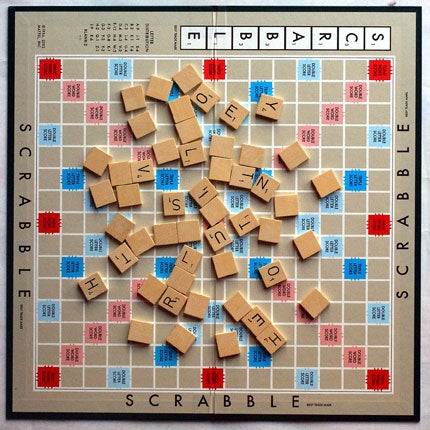
What's in a word? The English language has almost doubled in size in the past century as we are living in a rich linguistic peak.
A recent report concluded that the vocabulary is expanding by 8,500 words a year. After researchers from Harvard University and Google scanned five million books, they came to a total of 1,022,000 words in the language – including "dark matter" that will never make it into a dictionary.
Professor David Crystal, author of Evolving English, says vocabulary growth is never steady but depends on new concepts in society. "There was a peak in Shakespeare's time around the Renaissance, another during the Industrial Revolution, and another peak now with the Electronic Revolution," he says.
While there are over a million words in the English language, most readers of The Independent probably know some 75,000 words, 50,000 of which they will use actively, he estimates.
In comparison, Elizabethan English used approximately 150,000 words. Shakespeare used just under 20,000 in his plays, 12 per cent of the language. "Today, we know fewer words percentage-wise because language has increased so hugely," Professor Crystal says.
While there's a theory that English has more words than other languages, David Willis, Professor of Linguistics at Cambridge University, says it is impossible to know: "Some say English and Russian have huge vocabularies but I'm not sure if that says more about languages or dictionaries."
Eskimo languages' grammar formations mean it's possible to express what we would consider almost an entire sentence in one verb, with users forming their own, such as "to hunt rabbits repeatedly". "Once you can freely create new language, it has an infinite number of words," Willis says. "Though by other measures, it may have fewer words than English."
Vocabulary predominantly evolves through exposure to other languages. Island lexicons tend to be conservative in terms of progression, such as Icelandic. In contrast, our island's language is innovative: its Germanic roots have been influenced by the Danish, Welsh and French spoken on our soil over two millennia, and Old English is now foreign to us.
But while English is expanding, the loss of linguistic diversity is rapid. There are said to be between 4,000 and 6,000 languages, though that is falling. In February, when 85-year-old Boa Sr, the last member of the Bo tribe on the Andaman Islands, died, the language of her people, thought to date to the first migrations of man, died too.
"We'll certainly lose half of the world's languages in the next 200 years," Professor Willis says.
Fewer new languages are coming into existence. But in the last 30 years Nicaraguan sign language arose when the deaf community was brought together, while over the last century tok pisin, the national language of Papua New Guinea, has emerged.
Safeguarding language seems almost impossible. The French Academy has long been obsessed with protecting elements of identity through language, denying words such as "le chewing gum" and "le strip tease" official status, though "le pipeline" and "le bulldozer" have been deemed acceptable, on condition they are accompanied with suitably Gallic pronunciation. And last month Germany's Transport Minister Peter Ramsauer enforced a strict ban on the use of 150 English words and phrases, including "laptop", "ticket" and "meeting" within his ministry.
But Professor Willis says the rejection of single words has very little effect. "Language changes and it is a futile exercise to try to stop it," he says.
As for new-fangled words – the Collins dictionary added "Cleggmania", "tweetheart" and "fauxmania" to their latest edition – some come and go. Professor Willis says the verb "to google" is now so established that it would survive even if the brand didn't, just as "to Hoover" is in common use. Other innovations may vanish: he gives "cougar" a five-year shelf life.
In general, the creation of new words is a sign that languages are surviving: the Welsh language recently added the verb "trydaru", meaning "to tweet", to their lexicon.
"If a language is creating words, it shows it's alive," Professor Willis says. "If it doesn't change then it's dead."
Join our commenting forum
Join thought-provoking conversations, follow other Independent readers and see their replies
Comments
Bookmark popover
Removed from bookmarks