The world's population: Growing, growing, gone?
It is about to pass the seven billion mark; by the end of the century, it could reach 15 billion, with the number of people in Africa trebling. How much more can the planet take? Steve Connor investigates
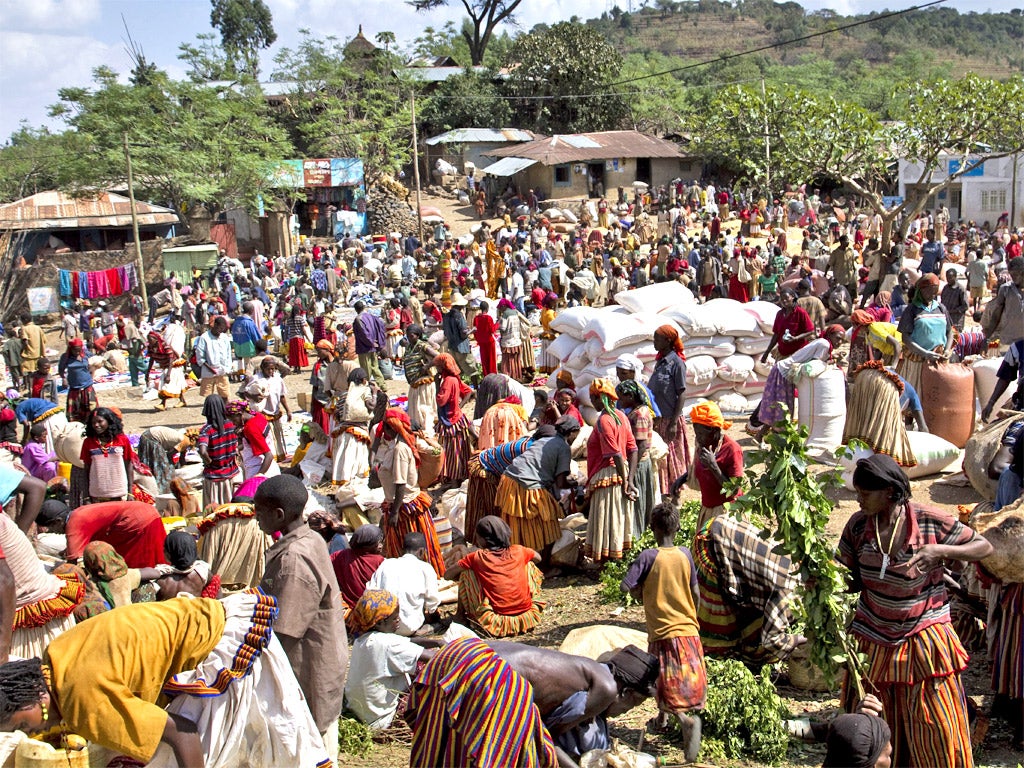
Africa will struggle to escape from poverty and hunger this century because its rapidly expanding population will continue to grow significantly faster than any other region of the world, says a United Nations report. Every continent has seen the stabilisation of their populations, with Asia's expected to peak in the middle part of the 21st century, but the number of people living in Africa by 2100 is likely to treble, the report says.
Click HERE to view graphic (280k jpg)
The UN calculates that the global population, which on 31 October 2011 is estimated to reach seven billion people, will hit 9.3 billion by 2050 and more than 10 billion by the end of the century. But it warns that, if fertility rates in Africa do not begin to fall from present levels as demographers predict, then the global population in 2100 could reach as high as 15 billion, more than twice the present level.
John Cleland, a demographer at the London School of Hygiene and Tropical Medicine, is quoted in the report as saying that the reason why the focus is on population growth in Africa is clear. "The escape from poverty and hunger is made more difficult by rapid population growth," Dr Cleland said.
Much of the global population increase this century will come from "high-fertility" countries where women have on average many more babies than the 2.1 replacement rate. There are 30 high-fertility countries in Africa, nine in Asia, six in Oceania and four in Latin America, the UN report showed.
Fertility rates worldwide have fallen dramatically since 1950. In Central America, for instance, the rate has fallen from 6.7 children per woman to 2.6, while in East Asia it fell from six to 1.6, helped largely by China's draconian "one-child" policy. The State of World Population 2011, published yesterday, adds: "In some parts of Africa, there has been only a modest drop in total fertility, which today remains at more than five children per woman." Asia will remain the most populated region of the world this century, due largely to the two most populous nations, China and India, but Africa is catching up, with its present population of one billion expected to rise to 3.6 billion by 2100, the report says.
"Africa's population has been growing at 2.3 per cent per year, a rate more than double that of Asia's population (1 per cent per year). The population of Africa first surpassed a billion in 2000 and is expected to add another billion in just 35 years (by 2044)," the report says.
This growth in Africa's population will continue despite an expected fall in average fertility rates from the present level of about 4.6 children per woman to about three children per woman by 2045, it says. But in some African countries, such as Niger, Mali and Uganda, fertility rates will remain far higher than the African average.
An extrapolation of future population trends found that, if existing fertility and mortality rates remained unchanged – which is highly unlikely – then by 2300 the global population would reach a staggering 3.5 trillion people, which is far too high to be sustainable.
Joseph Chamie, former director of the Population Division of the United Nations Department of Economic and Social Affairs, said that, if Africa's fertility rates remained unchanged over the coming decades, its population alone would reach three billion by 2050 and 15 billion by 2100.
"Globally, it now seems likely that Africa will be the last continent to advance through the demographic transition: that is, the progression from high to low rates of birth and death," Mr Chamie said.
And there's room for 10.9m more in the UK...
The UK is on course to outstrip Germany and France to become the most populous nation in the European Union by 2043, the Office for National Statistics (ONS) said, with the UK's population estimated to reach 74.4 million that year, more than Germany's 73.7 million.
Statisticians said this could be partially explained by lower fertility rates in Germany. Only three countries – Luxembourg, Cyprus and the Republic of Ireland – are projected to grow faster than the UK over this period.
The ONS also said more than two-thirds of the UK's population increase would be a result of immigration.
Join our commenting forum
Join thought-provoking conversations, follow other Independent readers and see their replies
Comments
Bookmark popover
Removed from bookmarks