Science

Rain (AM and PM) 9° London Hi 15°C / Lo 8°C

Unlocked: the secrets of schizophrenia

Scientific breakthrough offers hope of new treatments for mental condition
By Steve Connor, science editor

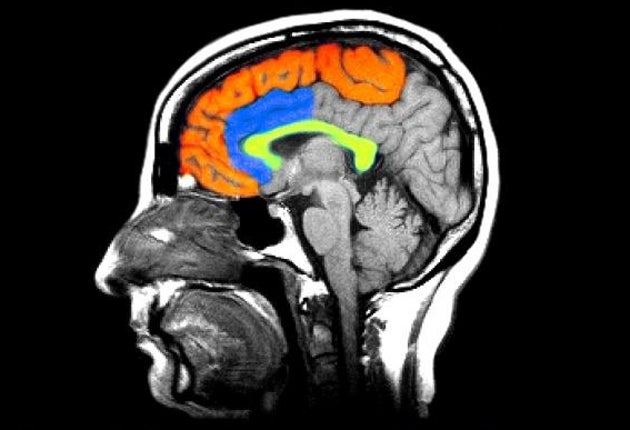
A colour enhanced MRI image of the brain shows one of the theories into what may be the chemical basis for Schizophrenia. Researchers have found reduced receptors for dopamine in the brain (areas colourized)

NEIL BORDEN/ SCIENCE PHOTO LIBRARY

A colour enhanced MRI image of the brain shows one of the theories into what may be the chemical basis for Schizophrenia. Researchers have found reduced receptors for dopamine in the brain (areas colourized)

Scientists have discovered a remarkable similarity between the genetic faults behind both schizophrenia and manic depression in a breakthrough that is expected to open the way to new treatments for two of the most common mental illnesses, affecting millions of people.

Previously doctors had assumed that the two conditions were quite separate. But new research shows for the first time that both have a common genetic basis that leads people to develop one or other of the two illnesses.

Three different international studies investigated the genetic basis of schizophrenia by pooling their analysis of about 15,000 patients and nearly 50,000 healthy subjects to find that thousands of tiny genetic mutations – known as single nucleotide polymorphisms (SNPs) – are operating in raising the risk of developing the illness.

Each mutation on its own increased the risk of developing schizophrenia by about 0.2 per cent but collectively they were found to account for at least a third of the total risk of developing schizophrenia. The condition is known to have a strong inherited component, accounting for about 80 per cent of the total risk, but it is also influenced by upbringing and environment.

However, one of the most surprising findings to emerge from the three studies was that the same array of genetic variations in SNPs was also linked with bipolar disorder, a discovery that is at odds with the orthodoxy in psychiatry stating that the two conditions are clinically distinct, the scientists said. The findings are a milestone in the understanding of both schizophrenia and manic depression – also known as bipolar disorder – which could eventually lead to new ways of either preventing or treating conditions that cause untold human misery and cost the NHS hundreds of millions of pounds each year.

"If some of the same genetic risks underlie schizophrenia and bipolar disorder, perhaps these disorders originate from some common vulnerability in brain development," said Thomas Insel, director of the US National Institute for Mental Health in Bethesda, Maryland, which part-funded the studies. "Of course the big question then is how some people develop schizophrenia and others develop bipolar disorder."

Although the schizophrenia studies have so far only identified a handful of the many thousands of genetic variations implicated in the mental illness, scientists believe it represents a breakthrough that will accelerate the understanding of the condition and the development of new drugs and treatments. "This is a pretty major breakthrough for us because before today you could count on the thumb of one hand the number of common [genetic] variants that have been reliably identified for schizophrenia," said Michael O'Donovan, professor of psychiatric genetics at the Medical Research Council's neurogenetics centre in Cardiff.

"However, what we've found so far explains only a tiny fraction of the total risk of schizophrenia. Some of us were surprised to find that not only did these genes contribute to schizophrenia but they also contribute to bipolar disorder. So that really suggests that the two disorders are not really as distinct as we thought in psychiatry."

The three studies, published in the journal Nature, have been possible because of technical advances in the analysis of the genomes of patients, enabling scientists to rifle through vast amounts of DNA in order to make comparisons between patients and healthy "controls".

Eric Lander, the founding director of the Broad Institute, one of the 11 research centres of the consortium formed from laboratories in the United States, Europe and Australia, which were behind the studies, and a member of Barack Obama's Council of Advisers on Science and Technology, said that the pace of research into schizophrenia was accelerating fast. "Over the past year, using techniques designed to study common DNA changes, psychiatric disease geneticists have detected more statistically compelling findings than in the previous 100 years," he said.

Some of the genetic variations associated with schizophrenia appear to occur within a region of the genome known to be involved in controlling the immune system. This might help to explain why babies born in winter and spring when influenza is rife, or to women who have had flu during pregnancy, are at slightly increased risk of developing schizophrenia in later life, the scientists said.

"Discoveries such as these are crucial for teasing out the biology of the disease and making it possible for us to begin to develop drugs targeting the underlying causes and not just the symptoms of the disease," said Kari Stefansson, the head of deCode Genetics, the Icelandic company involved in one of the three studies. "One of the reasons this study was so successful is its unprecedented size. Pooling our resources has yielded spectacular results, which is what the participants from three continents hoped for."

The study also found links to schizophrenia with DNA variations in certain genes involved in the growth of nerve cells in the brain and the production of a protein messenger molecule that helps the transmission of signals from one brain cell to another.

Schizophrenia affects one in 100 people at some time in their life. It is a chronic, long-term illness resulting in persistent delusions and hallucinations and is estimated to cost the taxpayer about £2bn a year in care and treatment. The costs to society at large – from the families of affected patients to the money spent by the criminal justice system – are thought to be at least twice as high.

Professor David St Clair, chair of mental health at the University of Aberdeen, said the global drugs bill alone for schizophrenia is £12.5bn, not to mention other huge costs such as hospital stays, lost employment and diminished quality of life. "Our findings are a real scientific breakthrough since they tell us a lot more about the nature of the genetic risk of schizophrenia than we knew as little as a year ago," he said.

"However, this is not a breakthrough that is going to change clinical practice any time soon. It will still be many years before our findings can be translated into new drug treatments. Much more work is also still required for us to piece together the overall genetic architecture of schizophrenia."

Curses of the mind

Schizophrenia

Schizophrenia is a severe, chronic brain disorder that usually strikes in late adolescence or early adulthood and is marked by hallucinations and delusions. Sufferers may hear voices or believe that other people are controlling them or reading their minds. Such experiences can be terrifying and can cause fearfulness, withdrawal or extreme agitation. People with schizophrenia have reduced brain receptors for the dopamine messenger. They may not make sense when they talk, or they can appear to be perfectly fine and normal until they are asked what they are really thinking. Treatments can be effective, but most people have some residual symptoms that can stay with them for life.

Bipolar disorder

Bipolar disorder, or manic depression, is marked by unusual shifts in mood, energy, activity levels and the ability to carry out day-to-day tasks. Like schizophrenia, bipolar disorder often manifests itself in late adolescence or early adulthood, although it may not be diagnosed for many years. The ups and downs are different from the normal ones that everyone experiences and they can result in damaged relationships, poor performances in school and jobs and even suicide. Sometimes a person with severe episodes of mania or depresssion has psychotic symptoms such as hallucinations or delusions, such as believing that he or she is famous or has lots of money.

£2bn

Cost per year to British taxpayer for care and treatment.

Post a Comment

View all comments that have been posted about this article.

Offensive or abusive comments will be removed and your IP logged and may be used to prevent further submission. In submitting a comment to the site, you agree to be bound by the Independent Minds Terms of Service.

Comments

Page 1 of 3
<<[1] [2] [3] >>
A fine article.
[info]dubby_m wrote:
Wednesday, 1 July 2009 at 11:31 pm (UTC)
I was disparaging about an earlier article penned by Mr Connor (Re: Ben Goldacre) but this has redressed the balance.
I am not qualified to critique the science but feel that I know a lot more now than ten minutes ago.
Thank you.
Schizophrenia
[info]wezg wrote:
Wednesday, 1 July 2009 at 11:32 pm (UTC)
Schizophrenia is a fake disease. It cannot be scientifically proven yet it can be forcibly treated. Research such as this spells danger for those patients that are trapped in the UK mental health system who have to endure daily abuse of their human rights at the whim of scientifically unsound charlatan doctors. There is no cure for the disease which they diagnose and a lifetime of hell is promised, not by suffering from the disease, but by being constantly abused by slaveholding psychiatrists. Never do the press stray from the accepted 'truths' which are nothing of the sort.
Re: Schizophrenia
[info]metadata2012 wrote:
Thursday, 2 July 2009 at 01:08 am (UTC)
You wouldn't happen to be a $cientologist, would you?
Re: Schizophrenia - [info]ancientoneuk - Thursday, 2 July 2009 at 01:46 am (UTC) Expand
Re: Schizophrenia - [info]antonphd - Thursday, 2 July 2009 at 05:02 am (UTC) Expand
Re: Schizophrenia - [info]perrytenitiss - Thursday, 2 July 2009 at 05:46 pm (UTC) Expand
Re: Schizophrenia - [info]merppp - Thursday, 2 July 2009 at 12:57 pm (UTC) Expand
Re: Schizophrenia - [info]johnmc09 - Thursday, 2 July 2009 at 01:01 pm (UTC) Expand
Re: Schizophrenia - [info]uanime5 - Thursday, 2 July 2009 at 02:23 pm (UTC) Expand
Re: Schizophrenia - [info]perrytenitiss - Thursday, 2 July 2009 at 05:50 pm (UTC) Expand
Re: Schizophrenia - [info]johnmc09 - Monday, 6 July 2009 at 06:27 am (UTC) Expand
Re: Schizophrenia - [info]johnmc09 - Monday, 6 July 2009 at 06:20 am (UTC) Expand
Re: Schizophrenia - [info]luigi_2070 - Thursday, 2 July 2009 at 06:29 am (UTC) Expand
Re: Schizophrenia - [info]fastguyeddie - Thursday, 2 July 2009 at 08:29 am (UTC) Expand
Re: Schizophrenia - [info]ecp007 - Thursday, 2 July 2009 at 01:30 pm (UTC) Expand
Re: Schizophrenia - [info]pasosolvidados - Thursday, 2 July 2009 at 04:41 pm (UTC) Expand
Re: Schizophrenia - [info]grosskurth - Thursday, 2 July 2009 at 07:12 pm (UTC) Expand
Re: Schizophrenia - [info]happierguy - Thursday, 2 July 2009 at 07:58 pm (UTC) Expand
Re: Schizophrenia - [info]ledocmd - Thursday, 2 July 2009 at 08:09 pm (UTC) Expand
Re: Schizophrenia - [info]amberbug - Friday, 3 July 2009 at 05:17 am (UTC) Expand
the genetic link between schizophrenia and bipolar
[info]santatiger wrote:
Thursday, 2 July 2009 at 12:09 am (UTC)
Nice to see that progress is finally being made in this area. I told my doctor some time ago now that there was a link between mental illnesses. I think given time that more links between diffrent illnesses such as autism will be found. I wounder if those psychiatrists that refused to belive in the genetic origins of these abnormalities will be looking for new jobs soon, what a waste of years of training.
[info]michelina09 wrote:
Thursday, 2 July 2009 at 01:38 am (UTC)
Very good news for sufferers of mental illness. Although mental health issues being a 'burden' to taxpayers is mentioned rather too many times; This seems to reinforce the negative stereotype that depressive illnesses are of less importance than physical illness.
mental vs. physical
[info]timfast2 wrote:
Friday, 3 July 2009 at 01:15 am (UTC)
So true, that is what the did in the 70's. As soon as they designed a drug (1st generation anti-psychotic) that worked on the dopamine receptors, they ejected a large numbers of mental health patients from the wards and out onto the streets. Well, those drugs did a horrible job on the alleviation of symptoms. That started a nasty trend where they began to account for a large portion of the homeless populace. Talk about money savings there. No more paying for room and board, just forget them and forget to fill their perscriptions.

Same thing is going on in the millitary. Is it so hard to believe that a person could be more genetically predisposed for Post-traumatic stress disorder than the next soldier. Nope, he's a pussy and we refuse to pay for his treatment...nice.
Antipsychotics block dopamine pathways
[info]micfrey wrote:
Thursday, 2 July 2009 at 01:54 am (UTC)
how long were the study patients taken Anti psychotics before having there MRI scan?

also don`t bipolar also take Anti psychotics


also
There are variations between human populations, so a SNP(single-nucleotide polymorphism) allele that is common in one geographical or ethnic group may be much rarer in another.

were did they get their 50,000 healthy subjects from??
Re: Antipsychotics block dopamine pathways
[info]uanime5 wrote:
Thursday, 2 July 2009 at 02:38 pm (UTC)
They got their 50,000 healthy subjects from the UK population of 60 million (0.08%).
Genetic Link between Bipolar and Schizophrenia
[info]lehighmtnhawk wrote:
Thursday, 2 July 2009 at 03:55 am (UTC)
My family includes members who have suffered from either schizophrenia and/or bipolar, which supports the connective thesis put forth in "Unlocked: the Secrets of Schizophrenia".
The science of genetics is a joke
[info]sfanalyst wrote:
Thursday, 2 July 2009 at 05:29 am (UTC)
Findings such as this disturb me. I am not completely against psychiatry, nor am I a Scientologist, but I do believe that schizophrenia and bipolar disorder (and depression) are best treated with a minimum of psychiatric interventions. The French psychoanalyst Jacques Lacan developed an unprecedented working theory of the familial cause of these disorders, and his successors (see the analysts of GIFRIC, for example) have evolved Lacan's theories into a successful working practice. The 388, GIFRIC's clinic for the treatment of young adults with psychoses in Quebec City, Canada, boasts a 65% success rate over 27 years and 500+ patients. No psychiatric hospital can claim, like the 388, that 65% of its patients enter psychotic and leave fully able to function in society without medication. If we spent as much money funding people who intelligently consider the human mind as we do funding people hoping to solve the problems of humanity by tinkering with petri dishes, we might live in a more comfortable society.
Nonsense.
[info]dr_julien_arbor wrote:
Thursday, 2 July 2009 at 05:53 am (UTC)
There is no such thing as "mental illness", the symptoms are the result of other conditions, these conditions are safely, effectively, naturally, holistically, humanely and far more cost-effectively treated and without dangerous side-effects and further complications to health. Genes have an on-off switch and the presence of pollution can alter DNA within 3 days time!

For further information see the following...

http://www.medicalnewstoday.com/articles/139938.php

However... that should read TRAUMA rather than strictly child abuse.

http://www.curezone.com/forums/fm.asp?i=1447959#i

http://www.curezone.com/forums/fm.asp?i=1447968#i
[info]cvnet1 wrote:
Thursday, 2 July 2009 at 06:44 am (UTC)
I am by no means studied in psychology, but after reading this article and considering the described symptoms of schizophrenia vs bipolar, is it really that surprising that they may have a common cause.

Schizophrenia is described as causing hallucinations and delusions, so couldn't that also be described as wild swings in the way the rational center of the brain perceives and interprets stimuli from its environment?

Bipolar is described as causing swings in mood... which I would propose fall into the emotional center of the brain and these wild swings from manic to depression would involve how the emotional center of the brain perceives and interprets reality.

It would be amusing if eventually, further study concludes that these disorders are really the same disease manifesting differently when different centers of the brain are attacked.

Something perhaps similar to how strep manifests different symptoms when it is attacking the tonsils than what manifests when it attacks the heart and also different from what manifests when strep infects the skin
Unlocked: the secrets of schizophrenia
[info]pozac wrote:
Thursday, 2 July 2009 at 06:54 am (UTC)
Scientists just now finding this out? They should have consulted me...I was married to a woman with a bipolar
condition for 13 years...I should have taken a better look at the mother. We had 2 daughters in that marriage and they both have the same condition. The BIG problem is...none of them would ever admit to having the condition, including the mother who was institutionalised at least 5 times while we were married and saw a psychologist on a regular basis. After we were divorced...when her psychologist moved to another city...so did she! How strange is that? None of them will give me the time of day at this point in their lives and both girls are over 30.

I remarried after being divorced for over 2 years and have the most wonderful wife, daughter and son.
This daughter is a Presidential Scholar at Southern Methodist University in Dallas...she interned with NASA in Houston when she was 16 and skipped 2 years of high school to attend the Texas Academy of Math and Science at the University of North Texas. When she graduated she had 70 hours of college credit and received several awards...one from Cal-Tech for the research she did at NASA. She has 3 years left on her SMU scholarship and STILL carries a 4.0GPA. She is 20 YO.

My son is not as endowed with the mind my daughter has but he is a National Junior Scholar. He is 130lbs. and 5'3" short. Very athletic...throws a 76 MPH fast ball with pinpoint accuracy...set a local track record for the 800M (2:25)and won the 2400M in the District Track meet while in the 7th grade.

My wife says "she loves me"...which leads me to another obvious conclusion,

There is a GOD!
Re: Unlocked: the secrets of schizophrenia
[info]richdibo wrote:
Thursday, 2 July 2009 at 08:28 pm (UTC)
There is a GOD! Is this the same god who caused the problems in your first marriage, including afflicting your first wife and 2 children with bi-polar disease. Apparently this god favors second marriages, or uses human suffering as a ploy to convince you of his loving existence.

This god gave your 2 daughters a serious mental illness, while giving your son a 76-mph fastball. He has his favorites.

I think that you may be the one with delusions.
Re: Unlocked: the secrets of schizophrenia - [info]pozac - Thursday, 2 July 2009 at 11:04 pm (UTC) Expand
Re: Unlocked: the secrets of schizophrenia - [info]pozac - Friday, 3 July 2009 at 12:11 am (UTC) Expand
Re: Unlocked: the secrets of schizophrenia - [info]me4194754538 - Friday, 3 July 2009 at 05:27 pm (UTC) Expand
Re: Unlocked: the secrets of schizophrenia - [info]pozac - Monday, 6 July 2009 at 07:34 am (UTC) Expand
Re: Unlocked: the secrets of schizophrenia - [info]me4194754538 - Friday, 3 July 2009 at 05:54 pm (UTC) Expand
drugs are not the answer in either schizophrena or depression
[info]mind_ful wrote:
Thursday, 2 July 2009 at 07:06 am (UTC)
OF course there are genetic similaries between how humans feel. What do you really expect? When will peolpe understand that it is the envirnmental factors (life basically) that not only trigger these emotional and mental states, (and the chemical reactions controlled by the genes) but that these, and how one reacts to them, are the real reason for the disease. this sort of study does nothing except give drug companies lots of money. The media are mesmarised by genetic-determinism. But we only have a few genes which are shared by every living thing, so they will nearly all be involved in states of unhappiness such as depression and mental illness like this. it was only doctors (psychiatrists who use drugs to medicate unhappy people instead of tryng to understand them) who thought these two states are unconnected. And this research appears to conect these two in only a third of cases anyway. both states represent unhappiness in ones lives, expresed according to your personality (which is inteself a product of your uprigning). the important part is the unhappiness not the genes!
Very happy they're working on it
[info]glenjs wrote:
Thursday, 2 July 2009 at 07:16 am (UTC)
You get some ignoramus's like 'dr_julien_arbor' at the bottom there and 'wezg' a couple of comments below me who, because they've never experienced mental illness believe it to 'not exist' or be 'fake'. I can tell you it's very real because I have it (schizophrenia,) I live with it everyday. For 'dr_julien_arbor' to write that mental illness doesn't exist is a pathetic claim of egotism to try and make himself look like the 'one who's right' over millions of doctors, patients and families of sufferers who know better. Maybe he should take himself to the nearest locked phsyciatric hospital near him to see some people who are never going to get out of hospital for proof that mental illness exists and he is wrong.

On the article, I'm very pleased that research is being successful in this area as it means better treatment is on it's way in the future for sufferers like myself. I'm happy they're working on it as today's medication still needs improving for sufferers to have a more normal life, it can be a very hard illness to live with. Thanks to the independent for running this on the front page of today's newspaper, showing they believe it's their most important story for today, I'm glad to know people still care about mental illness.
Very happy they're working on it
[info]glenjs wrote:
Thursday, 2 July 2009 at 07:33 am (UTC)
You get some ignoramus's like 'dr_julien_arbor' at the bottom there and 'wezg' a couple of comments below me who, because they've never experienced mental illness believe it to 'not exist' or be 'fake'. I can tell you it's very real because I have it (schizophrenia,) I live with it everyday. For 'dr_julien_arbor' to write that mental illness doesn't exist is a pathetic claim of egotism to try and make himself look like the 'one who's right' over millions of doctors, patients and families of sufferers who know better. Maybe he should take himself to the nearest locked phsyciatric hospital near him to see some people who are never going to get out of hospital for proof that mental illness exists and he is wrong.

On the article, I'm very pleased that research is being successful in this area as it means better treatment is on it's way in the future for sufferers like myself. I'm happy they're working on it as today's medication still needs improving for sufferers to have a more normal life, it can be a very hard illness to live with. Thanks to the independent for running this on the front page of today's newspaper, showing they believe it's their most important story for today, I'm glad to know people still care about mental illness.
Mood disorder v Thought disorder
[info]drlizmiller wrote:
Thursday, 2 July 2009 at 07:35 am (UTC)
I hate these scholarly attempts to understand what is largely a response to stress. Bipolar disorder is a MOOD disorder and schizophrenia is a THOUGHT disorder.
If your moods are all over the place, your thoughts may become disturbed and if your thoughts are disturbed then your moods may go haywire.

I suggest these "scientists" find out a little more about "mood". Dopamine controls arousal and serotonin, well being. I have a book on mood publishing this Autumn. It is not a scientific book, largely because there is not a lot science to mood. It is a practical book, "MoodMapping" It explains the two axis of mood - arousal (dopamine and adrenaline) and wellbeing (serotonin and endorphin). These give rise to the four basic moods that are always with us, Depression/exhaustion, Anxiety, Active and Stress

Manic depression / bipolar disorder is a condition with extreme and unstable moods.

Schizophrenia is not a mood disorder, it is a thought disorder. It is a condition where a person becomes so embroiled in their own thoughts and so poor at communicating with mere words they come to seem weird to the rest of us. This will be described in greater detail in my second book, in 2010 called "Matrix Psychology"
Re: Mood disorder v Thought disorder
[info]had_it wrote:
Thursday, 2 July 2009 at 08:08 am (UTC)
And if genetic make-up puts the dopamine, adrenaline, serotonin and endorphin stess-response systems permanently out of balance, why should you hate scholarly attempts to discover how this happens and how it might be countered?
Secrets of Schizophrenia
[info]thambiah wrote:
Thursday, 2 July 2009 at 07:45 am (UTC)
This offers hope, but maybe not for my wife who has suffered from bi-polar for 26 years. This disease is a life- sentence. It destroys families, careers, carers and the sufferer's dignity. Without a loving carer the sufferer will sink to the bottom of the social pit, but it will also eventually crush the hopes and morale of the carer. My wife became ill with bi-polar five days after our 2nd child was born. The first 10 years were murder, but fortunately she had almost 15 years of almost complete remission aftert that. I even thought the disease was gone. The drug that gave the best result was Lithium, however when this drug was withdrawn 6 months ago (as it was causing kidney damage and hypercalcaemia) the ilness has returned with a vengeance. To me it looks like an inherited disease as her mother suffered from it and finally committed suicide. When very ill, my wife can't at times stand the mental torment and torture the disease brings upon her, that she often cries for god to free her from the misery. For all those carers and sufferers out there, a breakthrough can't come sooner.
Re: Secrets of Schizophrenia
[info]texwoman wrote:
Thursday, 2 July 2009 at 01:41 pm (UTC)
This might be caused from hormones being out of balance. If this started right after her 2nd child was born... That really sounds hormonal... When a woman gives birth her levels of progesterone drop to almost zero along with her DHEA.. This can cause problems in some women. You need to see a doctor that specializes in biodentical hormones...stay away from synthetic hormones. I hope this helps! God Bless and prayers to your family...
Re: Secrets of Schizophrenia - [info]pozac - Friday, 3 July 2009 at 06:55 am (UTC) Expand
[info]styants wrote:
Thursday, 2 July 2009 at 07:47 am (UTC)
i have bi polar and it took 37 years to get a diagnoses, the nhs wants to get gp.s to do their jop more efficently, bi polar was allowed to wreck havoc in my life while doctors? gave me the wrong medicatins that made it worse, they get paid enough!!!!!
Schizophrenia
[info]phineus67 wrote:
Thursday, 2 July 2009 at 07:47 am (UTC)
The most important outcome of these findings is what we already know: environment and more particularly the home setting have a huge impact on the development of mental illness in later life. Research and early intervention in relation to this factor, rather than the development of yet more medications would go further in reducing the prevalence of these conditions.
One would go as far as to say that the time has arrived for a debate on the quality of parenting and what impact this has on mental illness (and in truth on criminality).
Ultimately some more direct interventions in parenting may be deemed necessary by 'society', whatever that is. A true nanny state, with all its implications for personal freedom and choice, might then emerge. Effectively all of these kind of researches are leading to one question: what do we do about situations in which parents are not aware of the impact that their parenting has on their offspring and 'society'?
No News is Bad News!
[info]simentalist wrote:
Thursday, 2 July 2009 at 08:01 am (UTC)
I believe that any new scientific breakthrough in mental health is a positive move towards progress, towards doing things differently/better. However be aware that in such early stages of research this progress may lead to great developments for caring for the mentally ill or merely become a stranded piece of mental health research jigsaw awaiting its relevant interlocking components.
Mood Disorder v Thought Disorder
[info]drlizmiller wrote:
Thursday, 2 July 2009 at 08:30 am (UTC)
"And if genetic make-up puts the dopamine, adrenaline, serotonin and endorphin stess-response systems permanently out of balance, why should you hate scholarly attempts to discover how this happens and how it might be countered?"

I don't hate scholarly attempts to discover more about mood disorders
1 - the brain is the most flexible and plaatic organ in the body. The dopamine, adrenaline, serotonin and endorphine stress-responses are not "permanently out of balance". Most of the difficulty lies in external stresses, poor diets, lack of omega3 and lack of basic coping strategies
2 - the answers do not lie in drugs. The answer lies in people understanding themselves how their mind works, how they can live a healthy and happy life, and only using drugs as a temporary measure when all else fails.
3 - Many people have had periods during their life when they "suffered" from bipolar disorder and schizophrenia and are now fine back at work, and back functioning normally within society.

4 - The scholarly approach does not allow for a person's ability to manage their moods and their thoughts and assume that everyone is simply a product of their DNA, very few of us are. Most people are reactive, interactive self fulfilling human beings. If you email me, I will make sure you get a copy of my book when it is published "liz at moodmapping dot com"
Re: Mood Disorder v Thought Disorder
[info]iaintom wrote:
Thursday, 2 July 2009 at 09:22 am (UTC)
Your last point is not really true. There is a lot of scholarly research being done at the moment (and has been for some time) on mood and emotion regulation. This research is being done by psychologists, psychiatrists and neuroscientists and some of it is being directly applied to different types of treatment for various mood and anxiety disorders (e.g. cognitive behavioural therapy). Much of this research involves looking at the interaction between environmental and genetic factors in the brain circuitry that underlies our ability to regulate our moods appropriately.

(Disclaimer: I'm one of the said scientists)
Phinnaes
[info]drlizmiller wrote:
Thursday, 2 July 2009 at 08:34 am (UTC)
"The most important outcome of these findings is what we already know: environment and more particularly the home setting have a huge impact on the development of mental illness in later life."

This is close to the truth - we also need to live a healthy life, so that we recover from the injuries and stresses of life - including omega 3 fish oils - which were everywhere, but are now largely restricted to wild animals, oily fish and flax and hemp seed oil
GIVE THIS TO TONY BLAIRE AND LIZA THEY NEED THE MOST CRAZYY ????
[info]famulla wrote:
Thursday, 2 July 2009 at 08:35 am (UTC)
Elizabeth Nash in Madrid..The post doesn't actually exist yet, and won't unless Irish voters TONY EU president
I do not understand why you want to mend any external politics staying in the UK when you have a cycle without the pump; tires eaten by the dogs, no handbrakes, all tong the steering and the brakes parts.
I thank you
Firozali A.Mulla
Mental Illness
[info]marky_buoy wrote:
Thursday, 2 July 2009 at 08:39 am (UTC)
I can honestly say that awareness about mental health and well being are getting better all the time generally. Unfotunately, I've had two very serious nervouse break downs where manic deppression/bipolar disorder was a strong factor. My experiences of the illness in two different decades and two different governements with their own policies and beliefs are realsitically very contrasting. I still feel there is stigma and prejudice some times against people like myself. Obviously it does not help when people blame an illness for a crime they commit rather than their selves. With a strong sense of self belief and help from family, freinds and community my condition is improving slowly all the time. Your article is of obvious benefit. Hopefully, the future of my life will be what I aim it to be and quite different in some ways from my past which saw me underachive in certain areas. Being stable and recovery is not impossibble and I salute those who get themselves together from experiencing being stuck in a crisis they find they seemingly cant get out of!
Enviromental factors the cause?
[info]santatiger wrote:
Thursday, 2 July 2009 at 08:43 am (UTC)
For those that are of the opinion that environmental factors, parenting, upbringing and the likes are the cause of afflictions like bipolar and schizophrenia could you please open your minds for a moment and think about this. I have just finished reading a book, an unquiet mind by Dr Kay Redfield Jamison. It is a life story about her battle with bipolar and describes her early life in some depth. She has bipolar, in fact is one of the leading authorities on manic-depressive illness. I have bipolar and all similarities between our environmental factors stop there! I grew up in a lower social setting, for want of a better description, so is that to blame for my condition. I think not. If I had been brought up in the best of conditions I would still have what I have. Because of my factors my behaviors may manifest in different forms. This is the sum total of the impact of environmental factors. People suffer from these conditions from all walks of life, we can not all have the same environmental factors. Those who choose to think this way are the "crazy ones".
Where will it all end?
[info]googleogre wrote:
Thursday, 2 July 2009 at 09:00 am (UTC)
Discovery of genetic causes of mental illness may eventually lead to genetic engineering to produce certain personality types.
Re: Where will it all end?
[info]recov09 wrote:
Thursday, 2 July 2009 at 09:47 am (UTC)
This is a misleading article. They are just discovering thoughts and mood are linked? manic and 'schiz' ? These are invented psych labels that serve BIg Pharma, busily working on yet more toxic drugs to make more billions out of human distress and that is what is behind this 'research'.

I believe in human distress. I don't believe in schizophrenia. It is an unscientific llabel for varied symptoms of distress and suffering. Scientists know it is unsound. It gives power to Drugs companies who FUND research like this to reinforce the false notion of 'disease'. It is laughable (in an era when we know how the mind and body are linked in everything), were it not for the devastation caused stress by the power and abuse reserach like this gives to some psychiatrists to control a person's life that they have 'diagnosed'. Psychiatrists too often see themselves as custodians of society - a kind of jumped-up Police. I am not a scientologist. I believe drugs may help in short term crisis. Drugs may also cause psychotic symptoms. (Check out Coming off Psychiatric Drugs by the Icarus Project) I have witnessed 2 cases of so called 'schizophrenia' both FULLY RECOVERED - one married and working at a top job for 30 years, without drugs, the other is still recovering but has lost all symptoms of distress after having long term CBT. The cure? A healthy disbelief in 'scientific' stories such as these which encourage the disempowering and false 'disease' model, and which change every year. Most of all a disbelief in the power of 'science' to FIX a human spirit that is broken. Talking treatment, loving support, and good nutrtuion and spirtuality did what drugs cannot do.

The diagnosis is in itself a cause of extreme distress - witness the (false) references this article to its (alleged) chronicity and long term nature and then combine with tabloid hype with axe wielding murderers -how would anyone feel after receiving that as a diagnosis!! Our own attitudes and beliefs and the attitudes of others have a huge effect in chances of recovery in many illnesses. The person needs a temporary respite, NOT to be told they have a long term 'disease'(!!!) which is scientifically unproven. The system of enforced drugs exists -it takes away human rights and traumatises those who end up 'sectioned' -that is the real scandal. I've witnessed this treatment of a loved one by UK psychiatry -and yes drugs ARE enforced. The abuse of power and lies written down to get a section passed are frightening. I saw a section which basically consisted of the label 'scizophrenia' like a smear written all over it, as much as to say, well of course anyone with this label means we must get this section. It's a shocking SYSTEM and is happening all over this country today. There's a news story there - why not headline with thAT? These ENFORCED drugs are toxic -and the physical body is then in danger. There are alternatives not heavily funded by drug companies such as talking treatment like Cbt or some psychotherapy or nurtition - all can help. Google your info. Most of all the person in distress needs loving treatment and unwavering belief in their recovery from family. I have seen this - it works. The full recoveries I and many others have witnessed show that there is no 'disease' going on here. When people are given drugs and a 'diagnosis' they often go into a total decline and stop believing in themselves. I have seen that too. That is why the Western model of medicine, where research is funded by Big pharma, desperate and greedy for the next billion, has much worse outcomes for mental health compared to other countries where a belief in recovery and support are the main remedies.

Ask for more than drug treatment and it will change. It is changing now through the democratisation of the internet. No diseases here - there is hope and there is recovery going on! People can heal from anything. Society needs to heal its fear of madness and stop drugging it away. Then there'll be breakdowns that are temporary and of course recoverable from always.
Re: Where will it all end? - [info]santatiger - Thursday, 2 July 2009 at 11:43 am (UTC) Expand
Re: Where will it all end? - [info]chrisdanes - Thursday, 2 July 2009 at 09:49 am (UTC) Expand
Mood disorder v Thought disorder
[info]drlizmiller wrote:
Thursday, 2 July 2009 at 09:58 am (UTC)
"Your last point is not really true. There is a lot of scholarly research being done at the moment (and has been for some time) on mood and emotion regulation. This research is being done by psychologists, psychiatrists and neuroscientists and some of it is being directly applied to different types of treatment for various mood and anxiety disorders (e.g. cognitive behavioural therapy). Much of this research involves looking at the interaction between environmental and genetic factors in the brain circuitry that underlies our ability to regulate our moods appropriately."

I would say that the "fatal flaw" of that research which is based around cognitive therapy is the failure to appreciate that mood, not thought comes first. You don't wake up and think yourself into a mood. You wake up in a mood, and then that mood reflects your thoughts.

Mood comes first! then your thoughts reflect your thoughts. Until "scientists" appreciate that mood rather than thinking is fundamental, then the reseach lacks face validity.

Mood management is not based solely on thinking - it also depends on your surroundings, your physical health, your emotional intelligence, your life experiences and "who you are". We spend our lives adjusting our mood, everything we do is to make ourselves feel better in the short and long term.

I am interested to know of research that takes this broader approach so far as I have read, mood regulation research is based around genetics and cognitive behaviour therapy - ie "thinking". Mood is a far broader brush
Re: Mood disorder v Thought disorder
[info]uanime5 wrote:
Thursday, 2 July 2009 at 02:56 pm (UTC)
What evidence do you have that mood comes before thought?

Also is there anything that comes before mood?
Re:Re: Mood disorder v Thought disorder - [info]santatiger - Thursday, 2 July 2009 at 03:37 pm (UTC) Expand
Page 1 of 3
<<[1] [2] [3] >>

Most popular